Spicy Carrot Soup
Medically reviewed by Christiana George Updated Date: June 8, 2023
If there’s anything I am paranoid about, it’s catching a cold. For a long time, a friend kept passing on to me horrible mutant colds that her niece passed on to her from daycare. Which I would then pass on to Chris. It was a vicious cycle.
I finally wisened up to the fact. I mean, after the third time, as I lay splayed out across the couch half-delirious and shivering, Chris in the next room in pretty much the same condition, I had to admit the obvious: my friend was a germ magnet.
But I didn’t have to be! And it started with establishing defensive measures: washing my hands as soon as I got home and washing my hands before eating, for instance. I also started wiping down handles and doorknobs, holding my breath after someone around me sneezed, and cancelling plans with potentially sick friends.
And if Chris shows any symptoms of anything, he’s banished from my presence. “Get out of here!” I’ll say, after his fourth sneeze in a row. (I sneeze in three’s myself, so anything up to that point is generally okay.)
I’m not a terrible partner, honest. You just can’t fathom how many times Chris and I have transmitted colds to each other.
“I might be sick!” I warn him when he leans down to kiss me.
“Oh, who cares?” he’ll say, believing himself invincible for that one moment. The next thing he knows, he’s sick. And glaring daggers at me from his position on the couch, swaddled in blankets and surrounded by used tissues (which I remove with tweezers. Just kidding.)

So imagine my reaction when Chris informed me on Saturday morning that he thought he might be getting sick. “Oh, I’m sorry,” I said sympathetically, as I slowly sidled away from him. Later, after he failed to put into action Sick Protocol (i.e. distancing himself from me), I got mad and yelled at him for being inconsiderate.
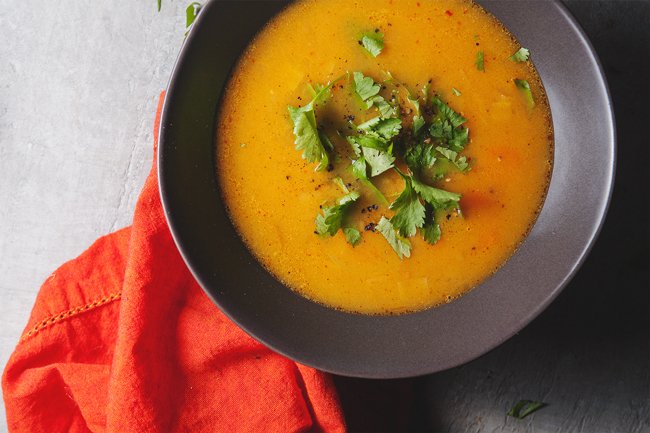
Afterwards, I felt bad. So I made him some soup.

It was a wise decision, I think, because soup is a magical cure-all to all ailments: the cold, hangovers, physical cold. Especially when harissa, the most magical of condiments, is mixed in. It imparts the perfect amount of heat to clear sinuses, warm up internal organs (or so I imagine), and cause the sweat glands to kick into action. The stuff is good for colds.
As for taste, I was a bit dubious about this soup initially. With only, what, four ingredients, you wouldn’t imagine that there’d be much complexity. Sure, carrots have a distinctive flavor, but is it enough to act as the backbone to this recipe? The vegetable for which this soup is named after? Why yes, they are, but only if you use good-quality chicken stock, and the aforementioned harissa. With them, you’ve got a possibly-sick, soup-despising man slurping the stuff up like it’s liquefied pizza (his favorite food). That is the sign of a successful recipe. Another sign: the man’s not sick after all. You see? Soup cures everything. Correction: spicy carrot soup cures everything.
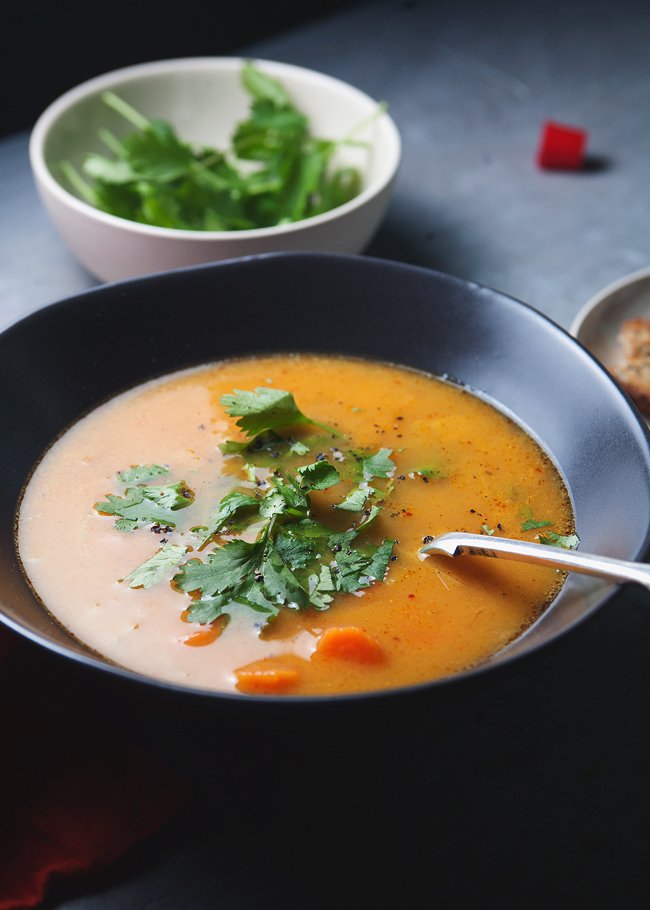
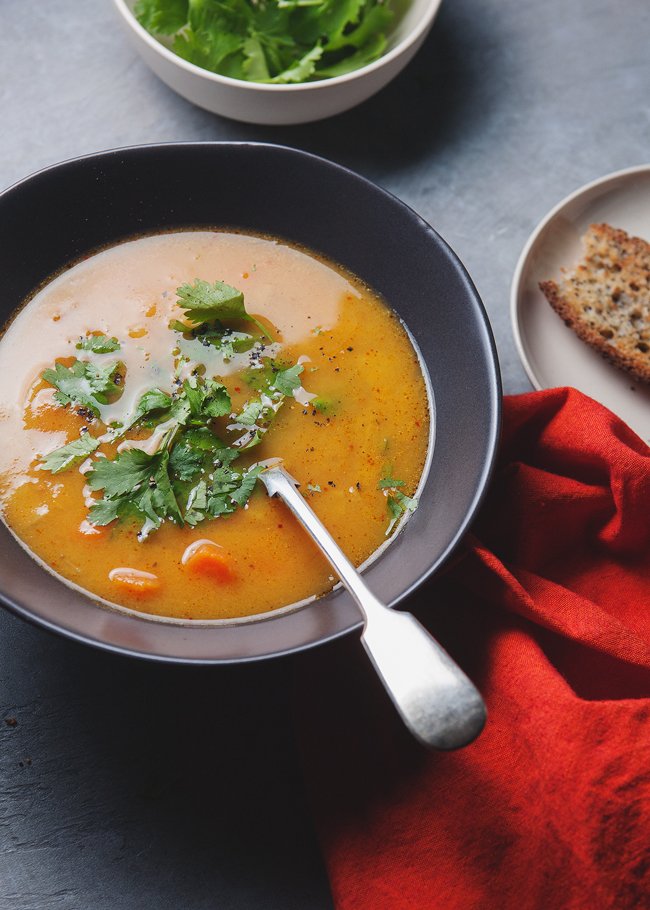
SPICY CARROT SOUP
Adapted from Martha Stewart
Serves 2 to 3
Ingredients:
1 tablespoon extra-virgin olive oil
1 medium leek, white and pale-green parts only, halved lengthwise and sliced crosswise 1/4 inch thick, rinsed well
1 bunch carrots (about 6 medium ones), peeled and sliced crosswise 1/4 inch thick
2 tsp harissa
Coarse salt
3 cups chicken stock
cilantro to garnish
Directions:
Heat oil in a large saucepan over medium heat. Cook leek until just soft, 4 to 5 minutes. Stir in carrots and harissa and season with salt. Cook until carrots are just soft, 5 minutes or so. Add chicken stock, and bring to a simmer. Cook until vegetables are tender, 10 minutes or so.
Using an immersion blender (or regular blender), puree half the soup until smooth. Stir the puree into remaining soup and divide it among 2 or 3 bowls. Garnish with cilantro.
Subscribe for New Racipies
Get mental health tips, updates, and resources delivered to your inbox.
Is Brown Sugar Acidic? Brown Sugar and Acid Reflux

Acid reflux is a pervasive condition that affects millions of people globally, disrupting daily life with symptoms like heartburn, regurgitation, and discomfort in the chest. The primary cause is stomach acid flowing back into the esophagus, often due to a weakened lower esophageal sphincter (LES). While occasional reflux can be a nuisance, chronic acid reflux, known as Gastroesophageal Reflux Disease (GERD), requires careful management to prevent further complications such as esophagitis or Barrett’s esophagus.
A key factor in managing acid reflux is dietary choices. Certain foods and beverages can exacerbate symptoms, while others may alleviate discomfort. Sweeteners like brown sugar often raise questions: Is it acidic, and could it aggravate acid reflux? Understanding the properties of brown sugar, including its pH level, and its effects on the digestive system is crucial. In this article, we’ll break down the science behind brown sugar’s acidity, its connection to acid reflux, and alternative sweeteners that might be gentler on your stomach.
What is Brown Sugar?
Composition and Difference from White Sugar
Brown sugar is essentially white sugar with added molasses, giving it its characteristic color, flavor, and moisture content. Unlike white sugar, which is refined and stripped of impurities, brown sugar retains a small percentage of molasses, contributing to its slightly richer taste.
Nutritional Composition of Brown Sugar
To better understand its potential impact on acid reflux, let’s examine the nutritional profile of brown sugar:
| Nutrient | Amount per 100g | Comment |
| Calories | 380 kcal | High caloric content, similar to white sugar. |
| Carbohydrates | 98 g | Primarily simple sugars. |
| Sugars | 96 g | Includes glucose and fructose. |
| Calcium | 85 mg | Derived from molasses content. |
| Potassium | 130 mg | Trace amount beneficial for health. |
| Iron | 0.71 mg | Present in small quantities. |
While brown sugar offers minimal minerals like calcium and potassium due to its molasses content, its nutritional differences from white sugar are not significant enough to consider it a health food.
pH Level of Brown Sugar
The pH level of brown sugar typically ranges from 5.0 to 6.0, making it slightly acidic. While it is not as acidic as lemon juice or vinegar, its acidity level can still influence those sensitive to acidic foods.
Is Brown Sugar Acidic?
Scientific Explanation of Its Acidity
Acidity is measured on a pH scale, where values below 7 are acidic, and values above 7 are alkaline. Brown sugar falls on the acidic side due to its molasses content. Molasses, being mildly acidic, slightly lowers the pH of brown sugar compared to white sugar, which has a nearly neutral pH.
Comparison with White Sugar and Natural Sweeteners
- White Sugar: With a pH closer to neutral (around 7), white sugar is less acidic than brown sugar. However, its effect on acid reflux is similar due to its high glycemic index and refined nature.
- Natural Sweeteners: Alternatives like honey (pH 3.9–4.5), maple syrup (pH 5.5–7), and stevia (neutral) may offer better options for acid reflux sufferers due to their varying pH levels and lower glycemic impact.
Brown Sugar and Acid Reflux
Can Brown Sugar Trigger Acid Reflux?
Brown sugar may contribute to acid reflux symptoms for some individuals. While it is only mildly acidic, the real issue lies in its impact on the digestive system:
- High Sugar Content: Excess sugar consumption can lead to increased stomach acid production, which may trigger acid reflux.
- Molasses Content: Though minor, the acidic molasses in brown sugar may irritate sensitive individuals.
- Indirect Triggers: Consuming sugary foods can lead to weight gain, a known risk factor for acid reflux.
Benefits and Risks of Consuming Brown Sugar for Acid Reflux Sufferers
- Benefits:
- Slightly less refined than white sugar, which may be marginally better for some.
- Trace minerals from molasses could contribute to nutritional diversity.
- Risks:
- Increased acid production in the stomach.
- Potential for triggering heartburn if consumed in large quantities.
For those with acid reflux, moderation is key. A small amount of brown sugar might not cause symptoms, but frequent or excessive use could exacerbate issues.
Alternative Sweeteners for Acid Reflux
Low-Acid Natural Sweeteners
For those looking to reduce acid reflux symptoms, consider these alternatives:
- Honey:
- Natural and slightly acidic.
- Known for soothing throat irritation caused by acid reflux.
- Maple Syrup:
- Ranges from mildly acidic to neutral.
- Less processed and has a unique flavor.
- Stevia:
- A natural, zero-calorie sweetener with a neutral pH.
- Ideal for those managing both acid reflux and blood sugar levels.
- Coconut Sugar:
- Low glycemic index.
- Slightly acidic but often better tolerated than refined sugars.
Exploring Sugar Substitutes for Acid Reflux Relief
Managing acid reflux often involves making strategic dietary adjustments, and one effective approach is substituting traditional sugars like brown sugar with alternatives that are gentler on the stomach. Sugar substitutes can offer several benefits, such as lower acidity levels, reduced impact on stomach acid production, and, in some cases, added health benefits like lower calorie content or additional nutrients.
Natural sweeteners like honey, stevia, and maple syrup are popular choices among individuals with GERD. Honey, for example, is known for its soothing properties, which can help coat the esophagus and alleviate irritation caused by acid reflux. Stevia, a zero-calorie natural sweetener, is pH-neutral and less likely to exacerbate symptoms compared to refined sugars. Maple syrup, ranging from mildly acidic to neutral, offers a flavorful alternative that is often better tolerated by those with sensitive stomachs.
Additionally, sugar substitutes like coconut sugar and erythritol have a lower glycemic index and may help reduce overall acid production in the stomach, making them viable options for long-term dietary management. Experimenting with these alternatives can help find the right balance between satisfying your sweet tooth and avoiding reflux flare-ups.
Author Tip: Sugar Defender Reviews: Does It Really Work?
Why Choose Alternatives?
Switching to these sweeteners can:
- Lower the likelihood of triggering acid reflux.
- Provide added nutrients and health benefits.
- Reduce overall sugar intake, aiding in weight management—a crucial factor in controlling GERD symptoms.
Conclusion
Brown sugar, while mildly acidic, may not be the primary culprit in triggering acid reflux for most individuals. However, its sugar content and slight acidity can aggravate symptoms in sensitive individuals when consumed in large amounts. For those managing acid reflux, it’s essential to adopt a balanced approach by moderating sugar intake and opting for natural, low-acid sweeteners where possible.
Understanding your body’s reactions to certain foods is key. Consulting a healthcare provider for personalized dietary advice can help you make informed choices and effectively manage acid reflux symptoms.
FAQs
1. Is brown sugar good for acid reflux?
Brown sugar is not inherently good or bad for acid reflux. Its mild acidity and sugar content can trigger symptoms in sensitive individuals, but moderate consumption may not cause issues for everyone.
2. How does brown sugar compare to white sugar for acid reflux?
Brown sugar is slightly more acidic due to its molasses content. However, its overall impact on acid reflux is similar to white sugar.
3. Can brown sugar cause heartburn?
In some individuals, brown sugar can cause heartburn, especially when consumed in large amounts or as part of a high-sugar diet.
4. Are there better sweeteners for acid reflux?
Yes, alternatives like honey, stevia, and maple syrup are often better for acid reflux sufferers due to their lower acidity and potential health benefits.
5. What are other dietary tips for managing acid reflux?
- Avoid highly acidic foods like citrus and tomatoes.
- Eat smaller meals to prevent overloading the stomach.
- Stay upright after eating and avoid eating late at night.
Subscribe for New Racipies
Get mental health tips, updates, and resources delivered to your inbox.