
Matchstick Fries, and Lately I’ve Been Loving, Part 2

Medically reviewed by Christiana George Updated Date: June 8, 2023

Apologies to those who want me to get straight to the food commentary. (Although it’s becoming apparent that I’m always kind of long-winded when it comes to writing about food, isn’t it?) Feel free to jump past this section, of course.
To all you others, lately I’ve been loving…
– Jeni’s Splendid Ice Cream, lemon and blueberry fro-yo to be exact. I had the pleasure of trying the salted caramel flavor this weekend, and while it was delicious and pleasantly salty, the lemon was stunning. Luckily the recipe can be found online.
– Niagara grapes, a replacement to the Muscats I can’t get on this coast.
– The perfect wedding ring has been found. It was love at first sight; I was mesmerized by the shine and didn’t want to take it off.
– The Book Thief may fall in the YA category, but it was so creative and lovingly written. Apparently, 1,249 people agreed, yowza.
– Fashion Week street style. I can’t help loving the grand display those fashion insiders put on twice a year.
– Jeanne Damas. Specifically, I love her hair. So much so, I was inspired to carve out a set of bangs for myself the other day. It soon became clear that I’m rusty in the bangs-cutting department. They turned out shorter than I would’ve liked. A LOT shorter, and crooked too. This is why there are professionals to do this sort of thing—but surely I’m not the only person in the world staunchly opposed to forking over money simply to get my bangs cut?
And the latest Pinterest love:
– This photo pretty much captures love, don’t you think?
– The perfect wedding takes place in the forests of Northern California. (I want a forest wedding!)
– This wedding veil is utterly romantic. I must get it.
– One of my favorite food photos as of late. It is so moody and evocative.

On to today’s recipe. Chris and I got home famished, after an afternoon rummaging through the Brooklyn Flea. I remembered that we had been given a bunch of potatoes, big dusty Idahos, that had been sitting on the counter for awhile. We hardly ever have potatoes in the house, because neither of us really like them except when they’re deep-fried.
So that’s what I decided to do. I whipped up a batch of these matchstick fries in no time, doused them in salt, pulled out a couple beers from the fridge, and suddenly, happy hour had been transported home with us. Minus the lack of seats.
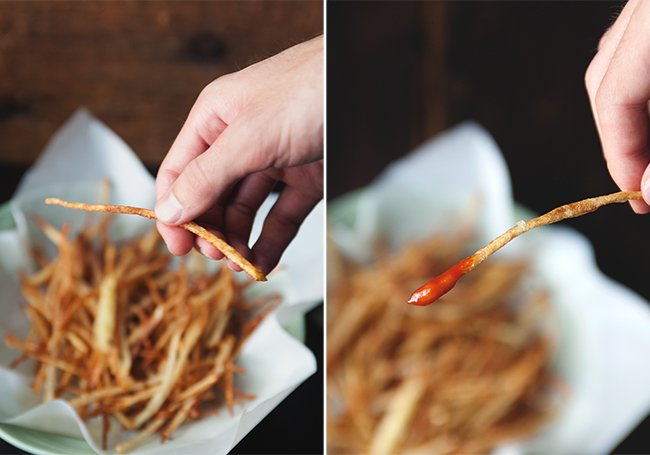
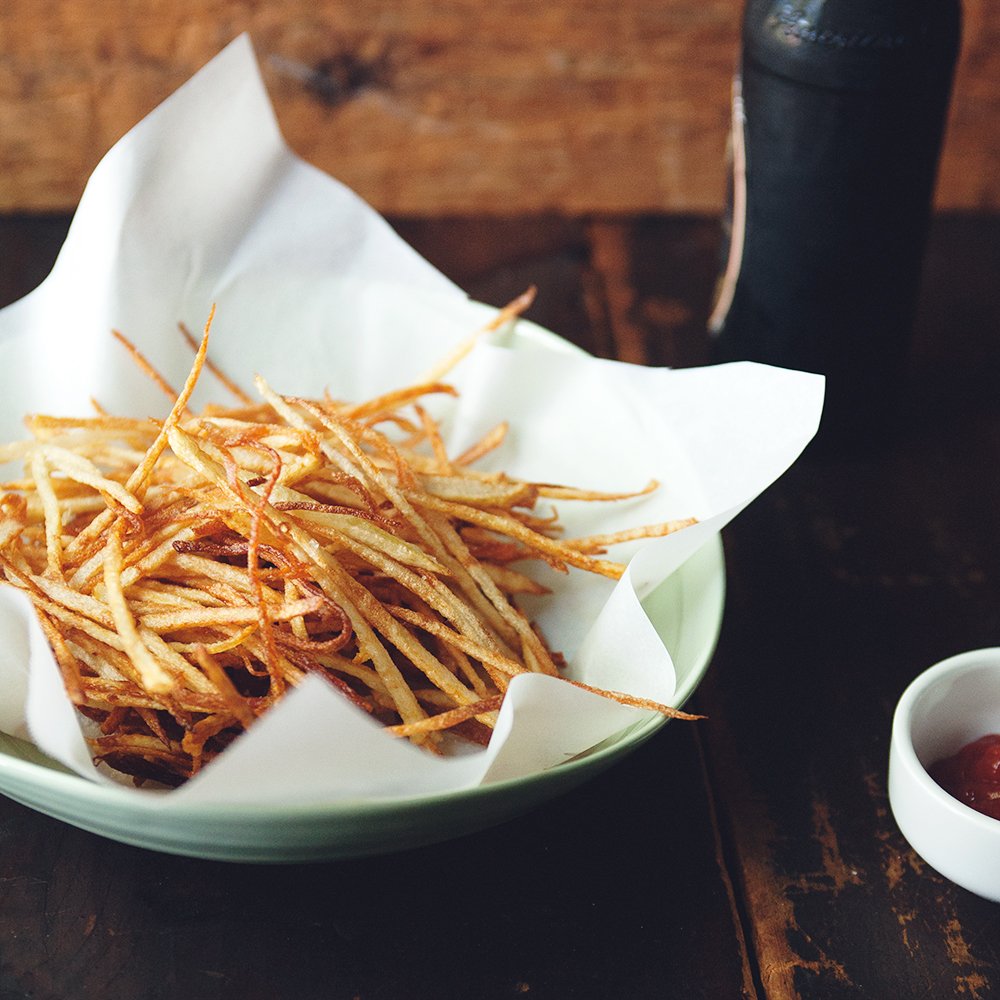
MATCHSTICK FRIES
Recipe adapted from Barefoot Contessa
Serves 2
Ingredients:
Vegetable oil
1 Idaho potato, peeled
Salt
Directions:
Slice the potato into matchsticks of about 1/8″ thick. You can use a mandoline, but I just hand-sliced without too much difficulty.
Heat about 1/2-inch of oil on medium heat in a medium saucepan with steep sides.
When the oil starts to shimmer, gently drop enough potatoes in the pan so it’s full but not overcrowded (overcrowding will cause the potatoes to stick together). Cook until they turn golden brown, about 5 minutes. Remove them with a slotted spoon and drain them on a paper towel. Continue cooking batches until you run out of potatoes.
Serve with your favorite condiments. Chris likes them as simple as can be, amply salted, and I like them with ketchup.

Related Posts


Subscribe for New Racipies
Get mental health tips, updates, and resources delivered to your inbox.
Fast Food Paneer Curry


Nope, there are no pomegranates in this recipe. In fact, if there are any stray arils lying around, they are going straight into my mouth, no recipe involved, because it is unimaginable for me to eat them any other way. That being said, this pomegranate did get the chance to do a little modeling—flashing its resplendent seedlings at the camera—before disappearing promptly. Into my mouth.
How exactly does one dress up curry anyway? It’s remarkably… drab. And lumpy, and unappealing-looking, much like those people in the world who don’t give any thought to how they appear. And then you talk to them and discover that they’re Fields medal-winning mathematicians (one of Chris’s professors in college dressed like a teenage gamer), and world-class cardiologists (my friend’s brother-in-law who received a huge makeover when he started dating his now-wife), and brilliant writers (I suspect our neighbor across the street is one of these. He’s always just returning from the liquor store, wearing a rumpled blazer, one hand in his pocket and the other giddily clutching his goods.)
Curries like these are the Louis CK’s of the world.
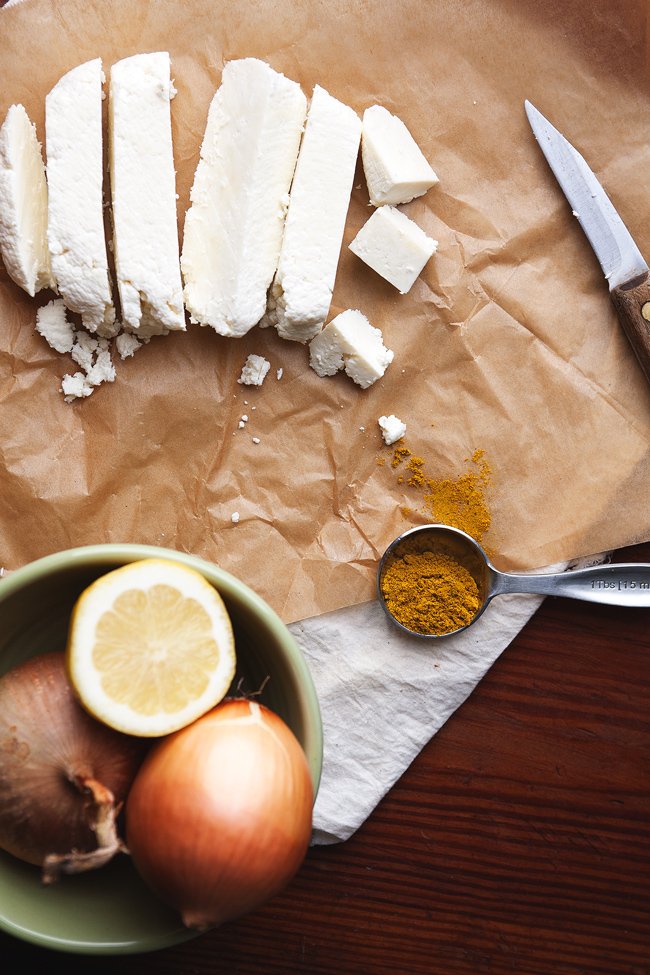
So elaborate analogies aside, what I’m trying to say is that this recipe is really really good. Don’t get me wrong, there’s nothing complex about it at all. It relies heavily on curry powder, an admission which I realize puts me squarely in the Blue Box Mac & Cheese camp. But I certainly have no compunctions about using it if it gets the job done. And it does! It does.

As for its name, this recipe comes from Nigel Slater’s Real Fast Food (although he calls it ‘Chicken with spices and cream,’ heh), a collection of recipes that are all supposed to come together in 30 minutes or less. Plus, it’s got a fast food quality to it, with its commercially-blended seasoning powder and all. I imagine that the Curry Up Now food truck uses a very similar recipe for its famous curry burrito that it serves to the masses in the streets of San Francisco’s Financial District.
Oh! And one last thing I should mention, I like my curry thick and hearty so I halved the amount of stock. But if you adhere to the amount the recipe calls for, you should end up with plenty of sauce.
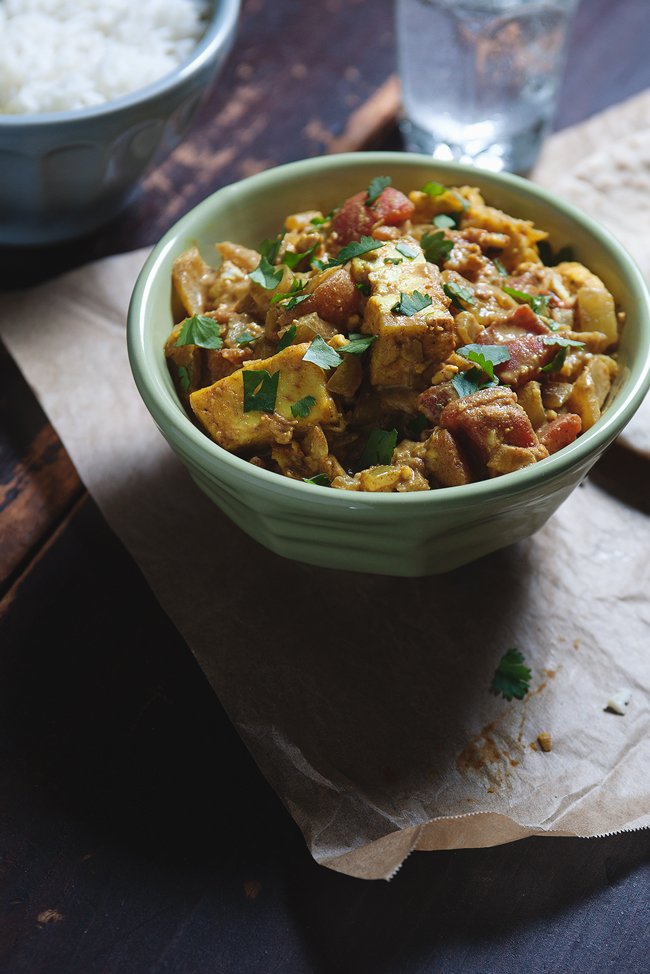
FAST FOOD PANEER CURRY
Adapted from Nigel Slater’s Real Fast Food via The Wednesday Chef
Serves 4
Ingredients
1/2 lb. paneer
Salt & pepper
2 Tbsp vegetable oil
2 Tbsp butter
2 medium onions, roughly chopped
4 large cloves of garlic, minced
2 Tbsp curry powder
1/2 tsp ground cinnamon
1 14-ounce can of diced tomatoes
1 cup chicken stock (I only used 1/2 cup)
1/2 cup heavy cream
Juice of 1/2 lemon
Directions
Before prepping the onions and garlic, marinade the paneer in the oil and season with salt and pepper to taste.
When ready to begin, in a shallow, preferably non-stick pan, place the paneer in a single layer and turn on the stove to medium. In a minute or so, flip them over to let the other side brown. Remove the paneer from the pan and set aside.
In the same pan, cleaned of residue, melt the butter and add the onions and garlic, cooking over medium heat until soft, about 7 minutes. Stir every once in a while. Stir in the curry powder and cinnamon and cook for an additional few minutes, until the spices are cooked. You may want to add a couple tablespoons of water to the pan to keep the spices from burning. Add the tomatoes, chicken broth, and paneer, and cook until everything is hot, about 5 minutes. Stir in the heavy cream, season with salt to taste, and squeeze in the lemon juice. Simmer another minute or so, then turn off the stove and serve.
Naan (or pita in my case, haha) makes the best accompaniment in my opinion, but you probably already have your favorite way of eating curry.
Related Posts



Subscribe for New Racipies
Get mental health tips, updates, and resources delivered to your inbox.