
Luzia’s Strawberry Rhubarb Tiramisu, Absent The Strawberries

Medically reviewed by Christiana George Updated Date: January 6, 2026
For this post, I’d like to introduce my friend Luzia.
Luzia and I met about a year-and-a-half ago on the bus ride to the starting point of the Inca Trail. For the next four days, we shared the unforgettable experience of hiking the 26-mile-long trail together, culminating in our arrival at the ancient Inca city of Machu Picchu. There were 14 of us in our group, but out of everyone, Chris and I got along best with her and her boyfriend Berni.
When we parted ways, we kept in touch since we knew we’d be taking approximately the same path south, and about three months later, the four of us finally met for dinner in Ushuaia, the southernmost town on the South American continent.
If that’s not poetic, I don’t know what is. They actually continued on to Brazil for Carnaval before heading back to Switzerland, whereas we ended our trip in Buenos Aires. And that was that.
But actually, it wasn’t, because she and I kept in touch. We’ve kept up a pretty consistent correspondence for the last year, exchanging lengthy emails, in English, and despite it not being her native tongue, she still rocks it. (How do the Swiss do it? She also became practically fluent in Spanish, whereas I at best mastered five phrases.) We are modern-day pen pals.
I’ve always loved exchanging letters with faraway friends. When I was nine, after my family had moved back to the U.S. from Hong Kong, I kept in touch with my best friend by exchanging long, handwritten letters. We kept up our penpalship for years, and I remember it to this day with much fondness. That’s what this correspondence with Luzia has felt like.

Coincidentally, Luzia and Berni also love to cook. About 6 months ago, I asked if she could share a Swiss recipe with me, something traditional that I could make for the blog. She returned with two, one she called Älplermagrone, or Macaroni for the Alpine Herdsman, which, hahaha, I had a pretty good laugh over because the direct translation is just too funny. The other was this strawberry rhubarb tiramisu, which, while it isn’t Swiss at all, is her favorite dessert. That pretty much clinched it. Once rhubarb season rolled around, I would make it. She warned me that it looks disgusting and recommended that I serve it in glasses. Thanks for the tip, Luzia! I am passing it on to the rest of you.
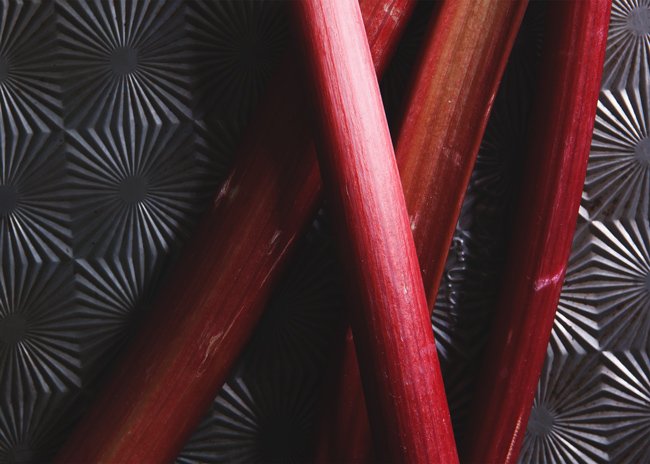
All in all, I loved it! If this recipe is any indicator, we Americans like our desserts much sweeter than European standards. Stewed rhubarb, according to Martha Stewart, calls for 2/3 cup of sugar per 10 ounces of rhubarb (or over a cup per pound). Luzia recommended 5 tablespoons, or just a little over 1/4 cup, per pound. That’s a pretty dramatic difference. In the end, I settled on 6 tablespoons for my pound of rhubarb and that felt just about right to me. The rhubarb retained its pucker, but was nicely balanced by the creamy sweetness of the mascarpone cream and ladyfingers (that’s what we call them, Luzia, odd-sounding, I know), as well as a few splashes of Grand Marnier. It was such a perfect variation of a normally decadent dessert, and really ideal for the springtime.
I have to point out that unfortunately, I am doing this recipe a disservice because I didn’t include the macerated strawberries. My access to most fruits has been limited to the bland-tasting crap being shipped over from who-knows-where, and I know that for this dessert, Luzia is quite particular about using only local, fresh strawberries. I will make amends by doing it right next time, but readers, please take note.

Luzia, thanks so much for everything! Not only for the recipe, but also for your steadfast communication and friendship. I envision you, Berni, Chris, and I sitting together one day over a home-cooked meal, and it will be great. Promise me that we will make it happen?
LUZIA’S STRAWBERRY RHUBARB TIRAMISU
Serves 6 to 8
Adapted from my friend Luzia
Since I didn’t make the strawberries, I doubled the stewed rhubarb portion.
Ingredients:
For the stewed rhubarb:
- 1/2 lb. rhubarb
- 3 Tbsp sugar
- 1/2 tsp vanilla extract
- 1 Tbsp water
- 2 Tbsp Grand Marnier liqueur
For the strawberries:
- 1/2 lb. strawberries, plus extra for garnish
- 1 Tbsp sugar
For the mascarpone cream:
- 2 eggs, separated
- 2 Tbsp sugar
- 8 oz. mascarpone
- 12 to 16 ladyfingers
Directions:
For the stewed rhubarb:
In a saucepan over a low flame, add the rhubarb, sugar, vanilla, and water and cook until soft, 7 to 10 minutes. Turn off the heat, and remove about 1/4 cup of the liquid. Set it aside. Stir in the Grand Marnier. Set aside to cool. This step can be prepared a day in advance.
For the strawberries:
Slice the strawberries, stir with the sugar, and set aside.
For the mascarpone cream:
In a medium bowl, whisk together the egg yolks and sugar until well combined. Stir in the mascarpone and mix well. Whisk the egg whites until stiff (I used my stand mixer), and carefully fold it into the yolk mixture.
Assembling:
I would layer the tiramisu this way: a layer of ladyfingers that had been dunked in the liquid removed from the stewed rhubarb on the bottom, a layer of stewed rhubarb, a layer of mascarpone cream, a second layer of ladyfingers, a layer of strawberries, a second layer of mascarpone cream. Feel free to garnish the top with extra slices of strawberry. (Note: I served the tiramisu in individual glasses using 2 ladyfingers per glass. However, if you decide to use a larger dish, make sure to split the ladyfingers and mascarpone evenly between their layers.)
After assembling, refrigerate for at least 1 hour before serving.
Related Posts
Subscribe for New Racipies
Get mental health tips, updates, and resources delivered to your inbox.
Pepe’s Cafe Key Lime Pie

Until Chris met me, he had never eaten a cherry tomato. Astounded upon learning this fact, I felt the need to remedy it immediately–he didn’t know what he was missing out on!—so I took him to the nearest Safeway where we bought a little prepackaged bagful. When we got back, I insisted he eat one straight away, right out of the package. I didn’t think one unwashed tomato would kill him, and I was sure he would fall in love straight away. Instead, he got food poisoning.
He has since let this incident go, which I think is very gracious of him considering the fact that I continue to guilt him into eating foods he has no interest in trying. I guess I have this underlying belief that I know better than him, at least in matters of the palate. That my refined tastebuds trump his any old day, that his will become elevated through my influence. Bombastic, sure, but we’re talking about a guy who didn’t eat his first cherry tomato until he was in college. Enough said, right?

I think I’ve mentioned that I dislike citrus-flavored baked goods, right? Besides this (like I said, Meyer lemons are in a league of their own), I’ve never met a citrus-y dessert that didn’t taste like a cough drop.
But last week, a bag of key limes fell in my lap, and I took it as a sign that it was finally time to tackle a classic that I’d never before tried: key lime pie. If you’d seen the limes, you, too, might have wanted to do something with them right away. They are so cute! Like toy dog versions of regular limes, except I know a lot of you don’t like toy dogs, and I normally can’t stand them either except I watched Seven Psychopaths recently and Bonny the shih tzu stole my heart.
I knew I was taking a major risk, but sometimes denial gets the better of me. After all, isn’t key lime pie a thing? Aren’t people fanatical about it? Maybe there was something more amazing than amazing about it that would sway my food prejudices.
Chris, on the other hand, took the realistic approach. “Don’t make it. You won’t like it, and I don’t want you to force it on me.”
I plowed ahead anyway. An afternoon later, the pie was ready.
I took it out of the fridge. It looked lemon-y. I smelled it. It smelled lemon-y. I started feeling uneasy.
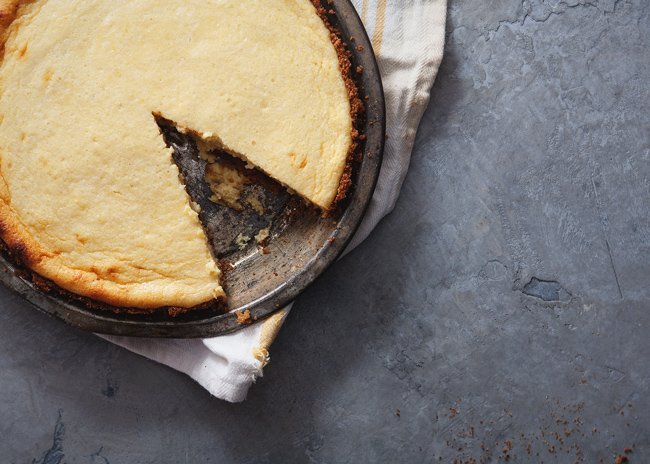
In the end, with great hesitation, I ate a slice. It was… disappointingly citrus-y, tasting like every other citrus dessert I’ve ever eaten. But then, the flavor sort of, I don’t know, mellowed out, and distinguished itself. The lime emerged, cool, invigorating. It went fantastically with the graham cracker crust, a pairing that legitimized its taste. With whipped cream for the finishing touch, the whole experience was luscious but understated. The sugary-tart foretaste never diminished, unfortunately, but for a lot of you, that’s a good thing.
Chris’s turn. I showed him a bite to try, and his face twisted into simultaneous disgust, fear, and suspicion. It’s so hard to get one past him these days, I tell you! But he relented, and took a tentative bite.
“Do you like it?” I asked. “It’s not bad, right?”
“I don’t like it,” he said. And that was that.
In the end, even in the face of Chris’s rejection, I ate way more slices than I care to admit. I’m pretty sure you’d call that a breakthrough!
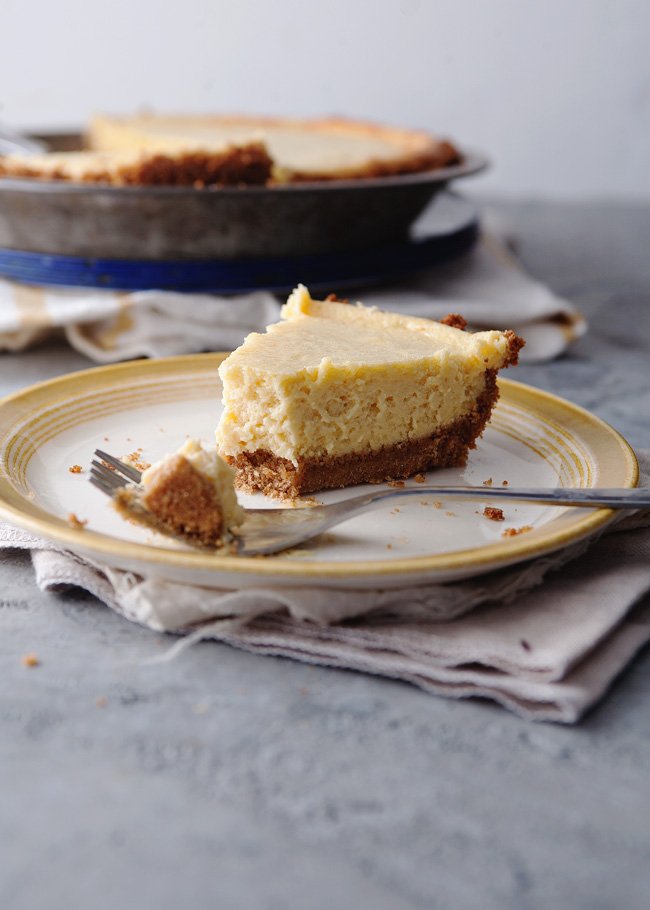
PEPE’S CAFE KEY LIME PIE
Adapted from Epicurious
Makes one 9-inch pie
Another reason I wanted to make this pie was because of this article. It’s fascinating! I love food history! Also, in case you’re wondering, Pepe’s Cafe is a cafe in the Florida Keys, quite an establishment I take it, that serves a very classic version of this pie. It’s always good to start with the classics.
Ingredients:
1-1/2 cups graham cracker crumbs
1/4 cup sugar
3/4 tsp ground cinnamon
1/4 tsp ground cardamom
5 tablespoons unsalted butter, melted
2 large egg whites
4 large egg yolks
1 (14-ounce) can sweetened condensed milk
1/2 cup Key lime juice (I must’ve squeezed 20 of these suckers)
Whipped cream to serve
Directions:
Preheat oven to 350 degrees F.
Make the graham cracker crust: Combine the graham cracker crumbs, sugar, cinnamon, and cardamom in a medium bowl. Stir in the melted butter until well-combined. Press the mixture evenly in a 9-inch pie tin. Bake for about 10 minutes, until golden brown. Let cool and set aside.
Make the filling: In the bowl of a stand mixer with the whisk attachment, beat the egg whites until stiff peaks form. In a large mixing bowl, whisk together the yolks and condensed milk. Add the lime juice and whisk until combined. Gently fold in about half of the whipped egg whites, then fold in the other half, stirring until just evenly combined.
Pour the mixture into the graham cracker crust and bake until set, about 20 minutes. Remove from oven, cool, then let cool further in the fridge for about 2 hours.
Serve with whipped cream if desired (whip together about 1 cup heavy cream, a few Tbsp powdered sugar, and a dribble of vanilla extract).
Related Posts
Subscribe for New Racipies
Get mental health tips, updates, and resources delivered to your inbox.