
Black Sesame Bread

Medically reviewed by Christiana George Updated Date: June 8, 2023
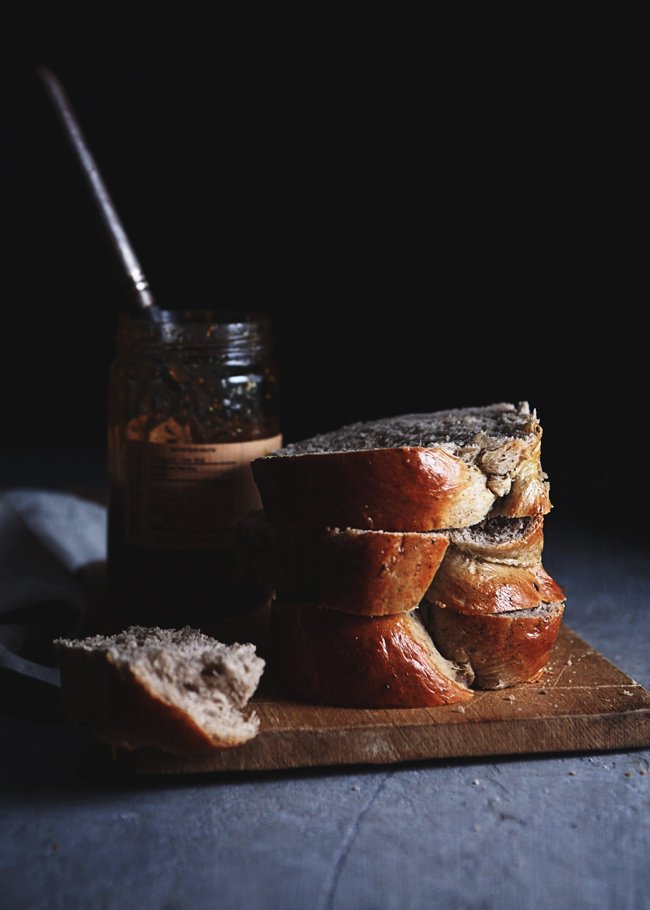
Guys, I’ve been meaning announce this for almost two weeks now: my blog just celebrated its first anniversary! For the occasion, I’d actually made a cake, four layers of chocolate wedged with peanut butter mousse in between, but it turned out to be an absolute dud, so I made another one. Again, I was not impressed. While third time’s usually the charm, I’d lost patience with cake-making (which happened to coincide perfectly with the fact that the weather started heating up) so I gave up and racked my brain for other ways to commemorate the occasion.
…And then two weeks passed.
Whoops. But the fact still remains the same: this blog is now over a year old. Whoa.
Thinking back on last summer, I still remember how hellish it felt at times with the combination of the weather and the oven/stove on and the lack of air conditioner/ventilation and our tight living quarters, but those are memories I prefer to repress most of the time because they’re painful to think back on. I guess I was just a woman possessed, taken over with such a fervor towards my new pasttime that all hardships could be ignored, or at least, soothed over with the discovery of how beautifully food could be photographed. In short, I’d never felt so passionate about anything in my life. I was completely smitten.
A year later, and that enthusiasm has settled to more manageable levels. From my perspective now, I prefer this more balanced lifestyle—hell, I finally have time to hang out with friends and get out into the city more, which is totally healthy, right? It seems unimaginable now to willingly choose that boot camp all over again. But it was pretty crucial, those months, kind of like nursing a young one past infancy (in a small, small way). I’m still in love, but it’s a more sustainable kind of love, one that’s not going to take over my life or burn me (literally).
I wanted to tell you how thankful I am for this little web space of mine, and all the wonderful people I’ve met over the year and had the chance to work with. I’ve also really appreciated all the kind comments I’ve received. You’ve all been tremendously encouraging. Thank you. I can’t wait to see where I am a year from now.
Now let’s talk about this bread. Have you ever heard of the tangzhong method? I ate a lot of Chinese bakery bread growing up, and all the rolls and loaves we bought, a), always gave off a really distinctive smell I couldn’t explain, and b), were always soft, moist, and incredibly tender, and pulled apart in silky, glutinous strands. You could basically gorge on the stuff because it was light and fluffy and completely addicting.
The tangzhong method produces that kind of bread. What? You want me to explain? Okay, basically, you make a paste, called the tangzhong, that consists of water and flour that’s been heated over a stove until the flour does its thickening thing and turns the whole mixture pudding-like. This is because the flour has trapped the moisture from the water (I imagine amoeboid action going on here), thereby producing the moistness and softness and all the aforementioned attributes I described. It’s pretty scientific, isn’t it? But seemingly foolproof, and so much easier than I’d imagined.
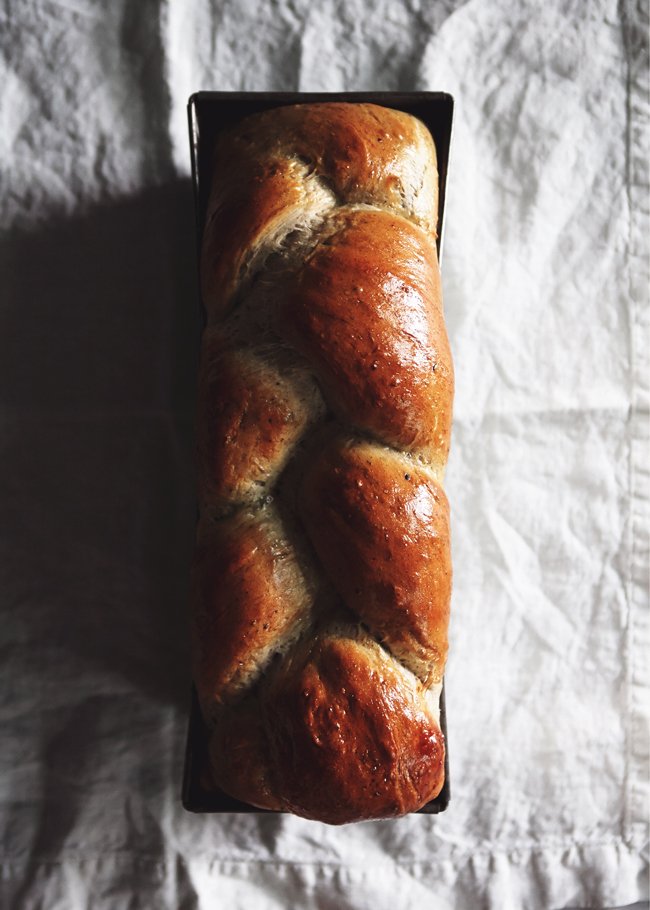
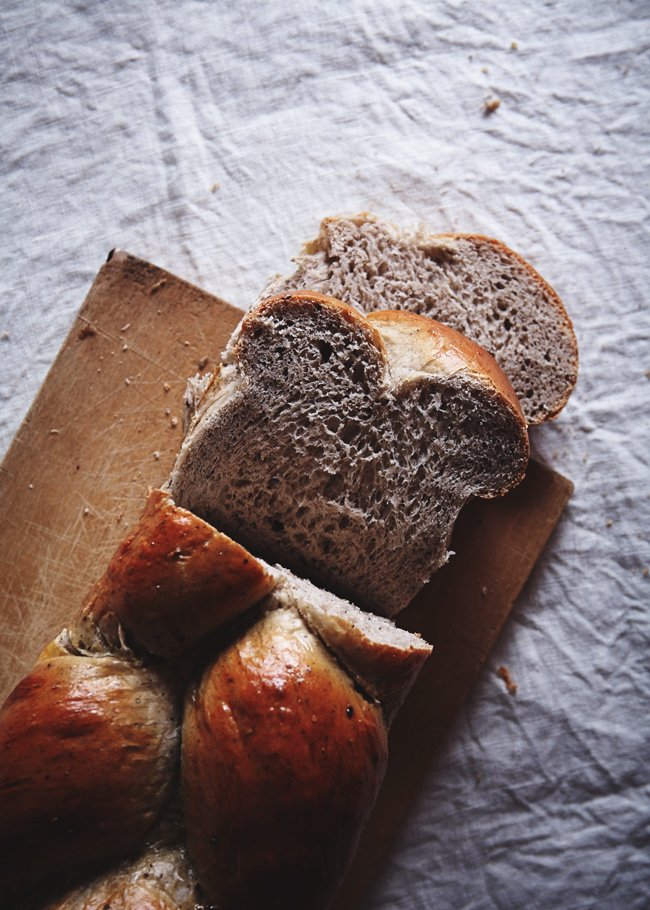
I finally got around to trying this method, and the results were amazing. The first thing I noticed when I took the loaf out of the oven was how, well, distinct it smelled, like I’d somehow bottled the Chinese bakery scent and unleashed it in my kitchen. That alone, funnily enough, would’ve made the whole experience worth it. But the loaf itself was beautiful, all glazed and golden brown, and springing with gluten-y goodness. And when I finally cut it open, what appeared were the silky, sticky strands (not an oxymoron) and effervescent pockets of air. The bread was colored a purplish-gray due to the black sesame seeds, and it was lovely.
Finally, I got around to tasting the stuff, and yes yes yes, it was soft and tender and delicious, and Chris and I and his dad (his parents are visiting this week) somehow managed to eat almost the entire loaf over the weekend. All in all, I’d reproduced Chinese bakery bread at home!
If you can’t tell, I haven’t felt this exhilarated in awhile. Actually, scratch that, last last week’s homemade farfalle made me feel the same way. There’s just something about making from scratch things you would normally buy, like marshmallows, cheese, ice cream, and preserved lemons (although I have yet to use them, oops), that I find most rewarding.
One year ago: (I’ve really been looking forward to doing this!) Quinoa with corn, mint, and scallions
BLACK SESAME BREAD
Adapted from many sources, including The Fresh Loaf and Maameemoomoo
Makes 1 loaf
Ingredients:
For the tangzhong:
- 1/3 cup all-purpose flour
- 2/3 cup water
- 1/3 cup milk
For the bread:
- 1/2 cup milk + 1 Tbsp, lukewarm
- 2 tsp active dry yeast
- 3 cups all-purpose flour
- 1/4 cup sugar
- 1 tsp salt
- 1 large egg
- 2 to 3 Tbsp black sesame powder
- 1/2 the tangzhong which comes out to 1/2 cup (refrigerate the other half—it’ll keep for a few days. Or, halve the tangzhong or double the bread)
- 3 Tbsp butter, softened and cut into pieces
- 1 egg for the egg wash
Directions:
First, make the tangzhong:
Whisk the ingredients together in a small saucepan and cook at medium-low heat, stirring constantly. After a couple minutes, the mixture will start thickening. When it’s uniformly thickened to about the consistency of pudding, remove the saucepan from the heat and let the tangzhong cool. You can use it right away or keep it in the fridge for a few days.
For the bread:
In the bowl of your stand mixer, add the milk, yeast, and a pinch of sugar. After about 10 minutes, the pool should be bubbly, meaning the yeast is ready to go. Add the rest of the ingredients except for the butter, and, using the dough hook, start mixing on medium-high. When the ingredients are reasonably combined, add the butter in pieces until it’s smoothly incorporated. Continue mixing on medium-high for about 20 minutes until the dough is not so sticky that you can’t manage it with your hands. Turn off the mixer, cover the dough with a towel, and let it rise until it’s doubled in size, about 1 hour.
On a floured surface, cut the dough into three equal-sized balls. Roll them into long ropes and press the ropes together at one end. Braid the ropes. Once you’ve reached the other end, press the dough together and tuck both ends under the braid. Place the braided dough into a loaf pan so it fits comfortably, then cover and let it rise for another 30 minutes or so.
At this point, you can brush the top of the dough with an egg wash. Beat the egg and brush.
Preheat your oven to 350 degrees F. Put the loaf in the oven and bake for about 20 minutes until it’s golden brown. Let it cool before removing the loaf from the pan.
Related Posts


Subscribe for New Racipies
Get mental health tips, updates, and resources delivered to your inbox.
Is Lamb Healthier Than Beef? 4 Things Nutritionists Won’t Tell You!

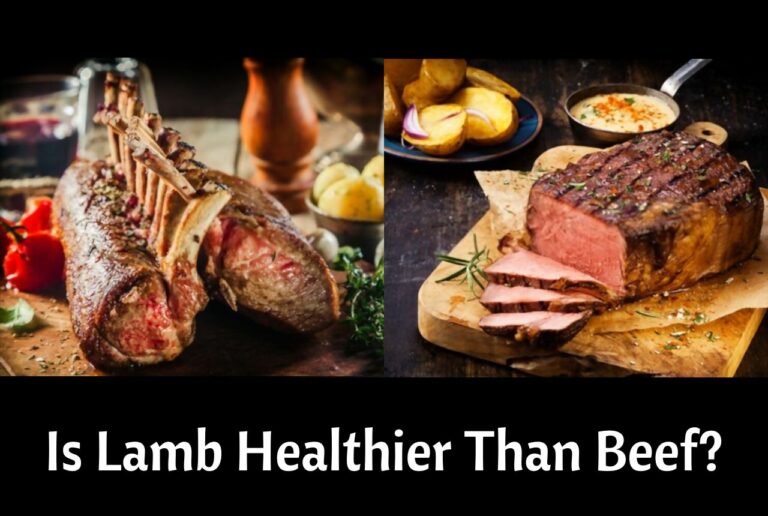
If you are looking for the authentic meaty taste in each bite, this is perhaps not the right page.
Just kidding!
Lamb may not be the staple meat in the US, but each time you go to any Mediterranean restaurant, the lamb kebab always attracts your attention.
But what about health and nutrition? Is lamb healthier than beef?
Lamb has 200% more heart-healthy Omega-3 fatty acids than beef. Lamb also has 30% more selenium than beef, which is good for immunity and cognitive functions. Beef has 6% fewer calories and 22% less fat, and 35% more zinc than lamb. It helps in diabetes control and muscle growth. Both have equal protein and minerals.
If you are really interested in the health benefits, side effects, and other good qualities of lamb compared to beef, I have tons to share with you! Stay with me before you light up your grill for a juicy steak or lamb chops.
Lamb Versus Beef Nutrition Facts
Nutritionally, there is not a huge difference between beef and lamb meat. However, preference varies according to people’s tastes and health conditions.
| Lamb (3.5-oz serving) | Beef (3.5-oz serving) | |
| Calories | 283 | 256 |
| Omega 3:6 ratio | 1:3.5 | 1:9.15 |
| Total Fat | 19.7 g | 15.3 g |
| Saturated fat | 8.1 g | 5.8 g |
| Monounsaturated fat | 8.3 g | 6.6 g |
| Polyunsaturated fat | 1.4 g | 0.5 g |
| Selenium | 40% of the DV (Daily Value) | 31% of the DV |
| Protein | 25 g | 27.7 g |
| Niacin | 34% of the DV | 27% of the DV |
| Zinc | 31% of the DV | 42% of the DV |
| Potassium | 7% of the DV | 7% of the DV |
| Iron | 11-23% of the DV | 11-26% of the DV |
| Vitamin B12 | 43% of the DV | 44% of the DV |
Lamb vs Beef Liver Nutrition
Why on earth am I talking about livers?
That must be the question on your mind right now. Right?
After the meat, the liver is the most popular organ people enjoy. It’s essential to know how nutritious those livers are.
| Lamb Liver (100 g) | Beef Liver (100 g) | |
| Calories | 249.3 g | 191 g |
| Total Fat | 10g (15% of DV) | 5.3 g (8% of DV) |
| Saturated Fat | 3 g | 2.9 g |
| Polyunsaturated Fat | 1.5 g | 1.1 g |
| Monounsaturated Fat | 2.1 g | 1.1 g |
| Cholesterol | 568 mg (189% of DV) | 396 mg (132% of DV) |
| Total Carbohydrates | 2.9 g (1% of DV) | 5.1 g (2% of DV) |
| Protein | 34.7 g | 29 g |
| Sodium | 64 mg | 79 mg |
| Potassium | 250.7mg | 352 mg |
| Vitamin A | 565.3% of DV | 634% of DV |
| Vitamin C | 7.6% of DV | 3.2% of DV |
| Calcium | 0.7% of DV | 0.5% of DV |
Lamb vs Beef: Which One Is For You?
It’s not easy when you have two great options: beef and lamb. However, some prefer the tenderness of the lamb, whereas others prefer the strong beefy taste of beef. Let’s see which one is for you.
Lamb vs Beef Taste
Lamb is more tender than beef and has a milder taste. It’s also sweeter, with a delicate flavor that’s hard to describe but can only be tasted by those who have tried it.

As such, lamb is often used as an ingredient in other dishes, such as stews and soups.
On the other hand, beef tends to have a more robust flavor profile than a lamb—it’s often described as “gamey” or “meaty.”
This may not sound appealing at first glance, but if you give yourself time before eating your steak (or any meat), you’ll find it much more palatable once you’ve delivered your palate some time to adjust.
Beef vs Lamb Protein
Protein is the most important nutrient for building muscle. The protein content of beef is slightly higher than lamb, but it’s still lower than other meats like chicken or pork.
Lamb has less protein than beef, but it’s still better for you in some ways because it contains an adequate amount of iron and B vitamins (which help with energy production).
Lamb vs Beef Cholesterol
Lamb is lower in cholesterol than beef, with a total fat content of 7 grams per serving. Beef contains more saturated fats and cholesterol than lamb. It is good news if you’re trying to lose weight or lower your risk for heart disease by avoiding saturated fats in your diet.
Besides, lamb also has more unsaturated fats, which helps lower LDL (bad) cholesterol while raising HDL (good) cholesterol.
Lamb vs Beef Calories
In terms of calories, however, beef is the leaner option. A 3.5-ounce serving of lamb contains approximately 283 calories, while the same serving of beef has only about 256 calories.
So, when it comes to calories, beef is the better choice. But lamb is the healthier option for other nutrients, such as omega-3 fatty acids.
Lamb And Beef Shawarma Calories
Shawarma is a delicious Middle Eastern dish that traditionally features lamb or beef.
Both options are incredibly flavourful, but there is often debate about which is healthier. So, what are the differences between lamb and beef shawarma?
For starters, lamb is generally higher in calories and fat than beef. Lamb also contains higher levels of certain nutrients, including iron and zinc. However, beef shawarma does have some advantages as well.
Beef is a good source of protein, and it also contains more B vitamins than lamb. Ultimately, the best option for you depends on your personal preferences and dietary needs.
If you’re looking for a juicy and meaty option, go for lamb shawarma. But for more protein, opt for beef. Or, if you can’t decide, try a mixed plate!
Lamb vs Beef Price
Lamb is a luxury meat that costs more than beef, while beef is a staple food that’s easy to find.
If you’re thinking about switching your diet, lamb may be right for you because it’s healthier than beef and has less fat, sodium, and cholesterol.
But if you only care about price, stick with the cheaper cuts of steak or hamburger patties!
Beef vs Lamb Meat Health Benefits
When it comes to red meat, there are many different options. But what are the health benefits of beef vs lamb? Is one better for you than the other? Here’s a look at the facts.
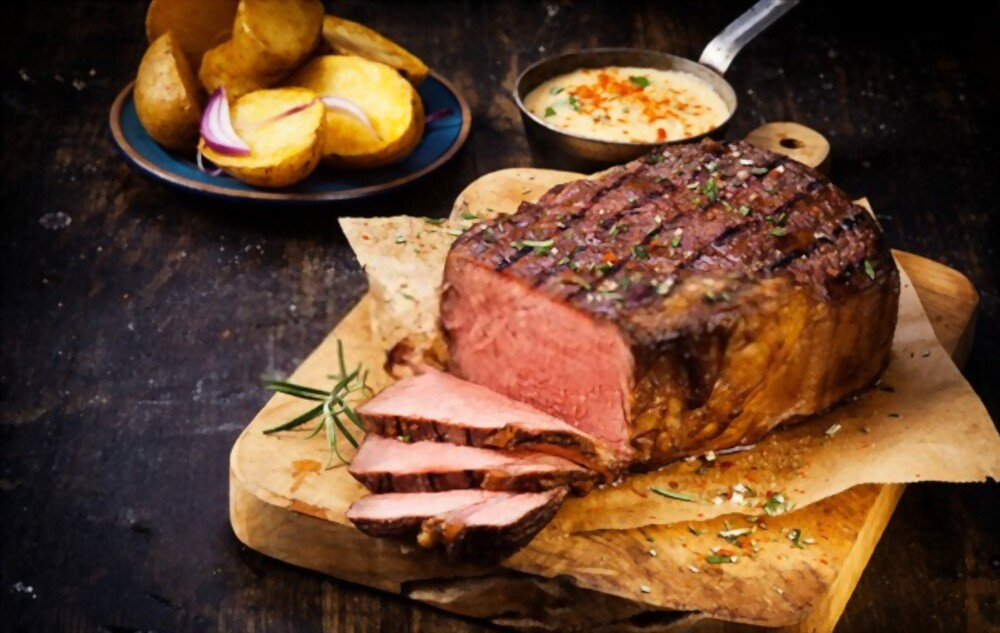
Lamb is a good source of protein, providing about 22 grams in a 3-ounce serving. It’s also a good source of niacin, vitamin B6, and phosphorus. Lamb is also relatively lean, with only about 7 grams of fat in a 3-ounce serving.
Beef is also a good source of protein, providing about 26 grams in a 3-ounce serving. It’s also a good source of niacin, vitamin B12, selenium, and zinc. Beef is slightly lower in fat than lamb, with about 5 grams in a 3-ounce serving.
So what does this all mean for your health? Both lamb and beef are excellent sources of protein and essential nutrients. However, beef may be the better option if you’re looking to save on calories and fat.
Lamb Is Always Better, And Healthier
- Lamb is more tender than beef, so it will be easier to prepare in your favorite recipes.
- Lamb has more flavor than beef, so you can use it to make a wide variety of dishes, from soups and stews to main dishes like burgers and steak fajitas!
- Lamb is slightly less healthy than beef because of its higher fat and cholesterol levels. However, the overall nutritional values make the meats ideal for those who want less fat while maintaining their health goals!
- In addition to being balanced in calories per pound, lamb has more protein per serving than most other meats; this helps keep you fuller longer after eating them (like how certain types of beans help us feel full longer too).
Related Article: 10 Best Foods to Eat to Lose Belly Fat
So, Lamb or Beef? Who is Winner?
Lamb and beef can both be part of a healthy diet, but they have some differences in terms of nutrition.
One major difference is that lamb tends to be higher in saturated fat and cholesterol than beef. This means that if you are trying to reduce your intake of these nutrients, it may be better to choose lean cuts of beef over lamb.
On the other hand, lamb is a good source of certain nutrients that are not as prevalent in beef. For example, it is higher in certain B vitamins, such as B12 and niacin, as well as minerals like zinc and iron. It is also a good source of conjugated linoleic acid (CLA), a type of fatty acid that has been linked to a number of health benefits.
Overall, it is important to choose a variety of protein sources in your diet and to consider both the nutritional profile and your personal preferences when deciding which meats to eat.
Related Posts





Subscribe for New Racipies
Get mental health tips, updates, and resources delivered to your inbox.