
Brussels Sprouts With Bacon And Juniper Berries

Medically reviewed by Christiana George Updated Date: June 8, 2023
We recently sorted out that we’re hosting Thanksgiving this year. Nothing big, just some friends over for a small gathering, but still, Thanksgiving! The most important meal of the year! Talk about performance pressure. But, I think I’m just going to take it one step at a time. I’ve already decided we’re spatchcocking, and besides the turkey, isn’t everything else just gravy from there?
Did you know, up until I met Chris, I’d never eaten turkey? Thanksgivings with my family were such non-events, I can’t at all recall what we used to do. Really, I have no clue, and I’m really racking my brain here. I don’t think my sister and I ever felt like we were missing out though, because you can’t really desire something you’ve never experienced. It meant a week off from school, and that was good enough for us.
When Chris and I started dating, Thanksgiving was always fraught with separation anxiety. We were young, barely into college, and the idea of being apart for FIVE WHOLE DAYS was unimaginable. Obviously, our relationship survived. But just barely. Just kidding. (Actually, the first winter break we spent apart, my family decided to take a month-long trip to China, where all communication was virtually impossible. I’m still mad at myself for spending so much time moping around feeling sorry for myself that I didn’t really get to enjoy the visit.)
Now that I’ve been through a couple real Thanksgivings, complete with turkey and pumpkin pie and the whole nine yards, I can confidently voice my day-of preferences: NO cranberry sauce, NO stuffing, LOTS of mashed potatoes and gravy, dark meat, two slices of pie, and more Brussels sprouts please!

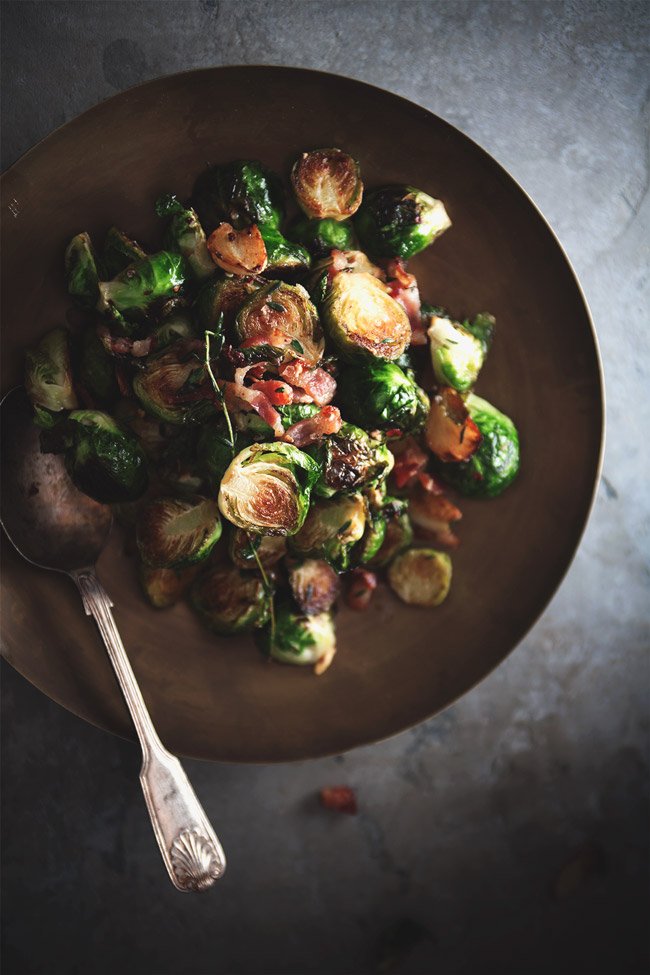
You see, somewhere along the way, I discovered the wonder that is Brussels sprouts. I mean, it’s seen such a huge lift in popular opinion in recent years that I’m pretty sure we’re all Brussels sprouts converts. What’s not to love, when it’s served Momofuku-style, all tart and spicy and refreshing? And who could possibly resist the rendition I present to you this year, tossed with lots of bacon, garlic, thyme and a hint of juniper. Not I. Especially since it comes from the cookbook of another lauded chef, the great April Bloomfield.
Here’s what Bloomfield has to say:
“In this dish, each bite is different—in some you get a nutty, sweet nibble of garlic, in others you’ll fork a sprout along with a big piece of pancetta. The juniper comes through just now and again. You might eat a sprout and not get the juniper, and you might eat another and get the juniper. I kind of like that.”
I kind of like that too, April. This sentiment is echoed throughout the book actually, and I find it unusually wise. The trick is to include just enough of an ingredient to leave you wanting more, but not so much that it gets taken for granted.
One last thing before I leave you with the recipe. The use of juniper berries as an ingredient would ordinarily go against all my instincts. It’s, well, GIN after all, herbal and pungent and seemingly not compatible with any kind of food. But it shines here, in a big but small way, an undertone that just works. Please please please seek out the juniper berries.
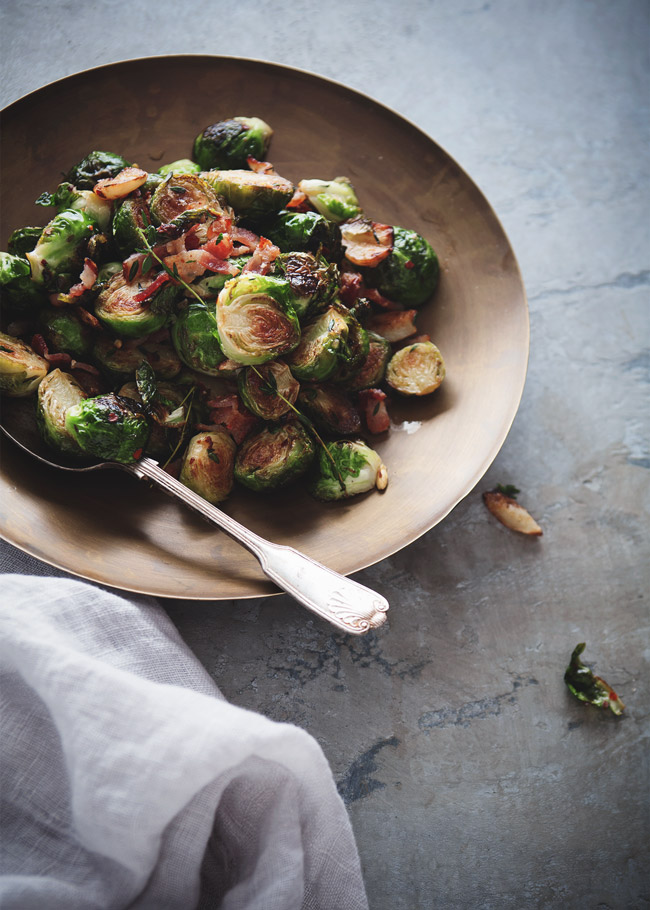
BRUSSELS SPROUTS WITH BACON AND JUNIPER BERRIES
Adapted from A Girl and Her Pig
Serves 3 to 4 as a side
Ingredients:
- 1 lb. Brussels sprouts
- 4 Tbsp olive oil
- 4 large garlic cloves, sliced lengthwise
- 3 slices bacon
- 1 tsp Maldon salt
- pinches of red pepper flakes
- 2 juniper berries, smashed and finely chopped
- 1-1/2 tsp thyme leaves
- squeeze of lemon juice
Directions:
Trim the Brussels sprouts and slice them in half.
In a large saute pan, heat 3 Tbsp olive oil on medium-high until it ripples. Add the garlic and let the pieces turn golden brown on one side, then flip them over and repeat. Remove the garlic and set aside. They’ll burn quickly once browned, so act fast.
Turn the heat to medium and add the bacon. Let it cook fully, until the slices are crisp, then set them aside on a paper towel to drain.
Add the Brussels sprouts, cut side down, in one layer across the pan. Cook, using tongs or chopsticks to occasionally check the undersides, until the bottoms are golden brown. Flip and continue to cook until they’re at your desired level of doneness. This step will take about 10 minutes. Don’t rush it. Take this time to chop your bacon into bits.
Stir in the salt, pinches of red pepper, smashed junipers, and reserved garlic cloves. Remove the pan from the heat and stir in the thyme, another Tbsp of olive oil, the bacon pieces, and a nice big squeeze of lemon juice. Serve.
Related Posts

Subscribe for New Racipies
Get mental health tips, updates, and resources delivered to your inbox.
Are Pineapples Acidic? Pineapple and Acid Reflux [Good or Bad]

Pineapple is a tropical delight enjoyed worldwide for its sweet and tangy flavor. But if you’re prone to acid reflux, you might be wondering, “Are pineapples acidic?”
The short answer is yes. But the relationship between pineapple and acid reflux is more nuanced than a simple yes or no.
This article dives deep into the acidity of pineapples, their potential effects on acid reflux, and how you can enjoy this tropical fruit responsibly.
What is Acid Reflux?
Acid reflux, also known as heartburn or gastroesophageal reflux (GER), occurs when stomach acid flows back up into the esophagus.
This backflow irritates the esophageal lining, causing a burning sensation in the chest. Frequent or severe acid reflux can lead to gastroesophageal reflux disease (GERD), a more serious condition.
The Acidity of Pineapples: The pH Factor
pH is a scale that measures how acidic or alkaline a substance is. The scale ranges from 0 to 14, with 0 being the most acidic, 7 being neutral, and 14 being the most alkaline. Pineapples typically have a pH between 3.3 and 3.6, making them quite acidic. For comparison:
| Food | Approximate pH |
| Lemon Juice | 2.0-2.4 |
| Pineapple | 3.3-3.6 |
| Tomatoes | 4.3-4.9 |
| Bananas | 4.5-5.2 |
| Water | 7.0 (Neutral) |
This acidity is primarily due to citric acid and other organic acids present in the fruit.
Pineapple and Acid Reflux: The Potential Problems
Because of their acidity, pineapples can potentially trigger or worsen acid reflux symptoms in some individuals. The high acid content can irritate the already inflamed esophageal lining.
Bromelain: A Double-Edged Sword
Pineapples contain bromelain, an enzyme with anti-inflammatory properties. Some studies suggest bromelain may actually help with certain digestive issues. However, in the context of acid reflux, the potential irritating effect of the fruit’s acidity might outweigh the benefits of bromelain for some.
Who is Most Likely to Experience Acid Reflux from Pineapple?
- Individuals with pre-existing GERD: Those with a history of frequent or severe acid reflux are more susceptible.
- Those with sensitive stomachs: Some people naturally have more sensitive digestive systems.
- Eating large quantities of pineapple: Consuming a large amount of pineapple at once can increase the likelihood of experiencing discomfort.
- Eating unripe pineapple: Unripe pineapples tend to be even more acidic.
Related to Read: Are Pineapple Juices Acidic
Tips for Enjoying Pineapple with Acid Reflux (If You Can)
If you love pineapple but are concerned about acid reflux, here are some tips:
- Eat pineapple in moderation: A small portion is less likely to cause problems than a large serving.
- Choose ripe pineapple: Ripe pineapples are generally less acidic than unripe ones.
- Eat pineapple with other foods: Combining pineapple with less acidic foods can help buffer its acidity.
- Avoid eating pineapple on an empty stomach: Eating it after a meal can help reduce its impact.
- Pay attention to your body: If you notice heartburn or other symptoms after eating pineapple, it’s best to avoid it or consume it very sparingly.
- Consider taking antacids: If you occasionally want to enjoy pineapple, taking an antacid beforehand may help prevent symptoms.
Author Tip: 7-Day Meal Plan For Gastritis
When to See a Doctor
If you experience frequent or severe acid reflux, regardless of pineapple consumption, it’s essential to consult a doctor. They can diagnose the underlying cause and recommend appropriate treatment.
FAQs
Is pineapple juice bad for acid reflux?
Yes, pineapple juice is also acidic and can have similar effects as eating the fruit itself.
Can pineapple help with digestion?
Bromelain in pineapple can aid in digestion, but this doesn’t negate the potential for acid reflux in susceptible individuals.
Are there any less acidic fruits I can eat instead?
Melons (cantaloupe, honeydew), bananas, and pears are generally less acidic.
Does cooking pineapple reduce its acidity?
Cooking can slightly reduce acidity, but it won’t eliminate it.
Conclusion
Pineapples are indeed acidic, and they can potentially trigger or worsen acid reflux in some people. However, by following the tips outlined in this article, many individuals can still enjoy this delicious fruit in moderation. If you have concerns about acid reflux, it’s always best to consult with a healthcare professional.
Related Posts



Subscribe for New Racipies
Get mental health tips, updates, and resources delivered to your inbox.