
Lamb’s Quarters Frittata, Or Spinach’s Hillbilly Cousin

Medically reviewed by Christiana George Updated Date: June 8, 2023

First, a confession: this frittata was merely a convenient way for me to consume my latest discovery, lamb’s quarters.
I picked up lamb’s quarters from the Union Square Greenmarket last weekend completely on a whim. I’d simply stood in front of a row of bins of greens and picked the one with the most appealing name. Lamb’s quarters is a pretty cute name, isn’t it? Apparently, it’s also known as pigweed. If I had seen that on the sign, well, you wouldn’t be reading a blog post about pigweed.
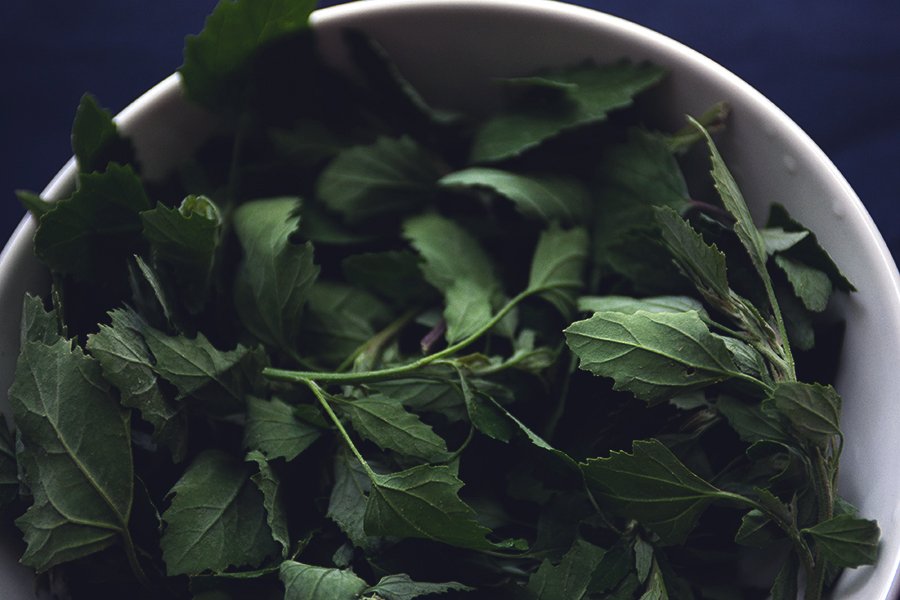
Lamb’s quarters is my introduction to the world of wild edibles… otherwise known as weeds. Hahaha. But seriously, I actually really love the idea of eating the stuff because I see them as just another form of heirlooms. Because they’re considered noxious, they’re underrated, local, not mass-farmed, not cultivated in any way… and the properties about them which make them unique are preserved. The purity of their taste, smell, feel, appearance is retained.
I intend to explore this plant realm more fully.

Lamb’s quarters actually grows like crazy. Apparently it’s all over Central Park, although it’s easily confused with epazote, which is toxic if eaten in large quantities. It’s incredibly healthy, full of beta carotene, calcium, potassium, iron. It even leaves behind that same chalky feeling on your teeth after you eat spinach. Coincidentally, it’s often referred to as wild spinach and is said to taste like it. I wouldn’t agree exactly; it’s definitely more of an acquired taste, especially when eaten raw.
But in a frittata, it’s excellent. Its lovely, fuzzy, silvery leaves turn a bright green when sauteed, and it shrinks dramatically, just like, yup, that’s right, spinach. But it’s hardier, with sturdier stems, so less can go a longer way than its domesticated cousin. Because we’re talking frittatas here, you can throw in just about anything to accompany the lamb’s quarters. I decided to throw in some bacon at the last minute, which sort of clashed with the romano cheese—perhaps cheddar might be a better complement. Whatever the case, treat the plant like spinach and you’ll be eating it like a pro!
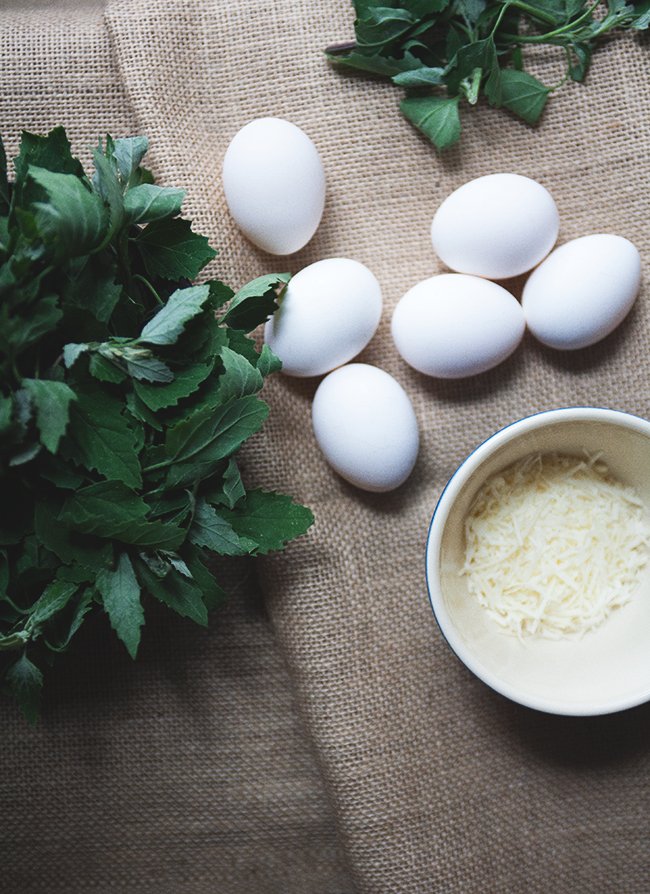
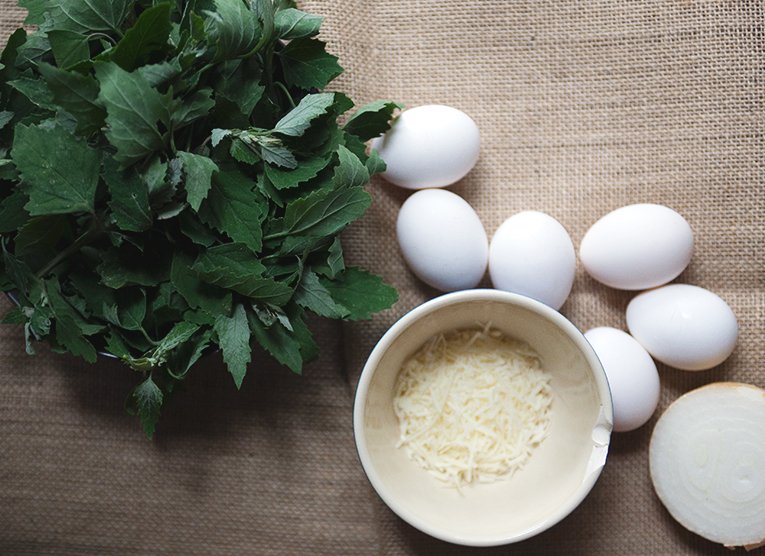


LAMB’S QUARTERS FRITTATA
Basic recipe adapted from Alton Brown’s frittata recipe
Serves 4
Ingredients:
- 6 large eggs
- 5 Tbsp grated cheese (I used romano)
- Salt and pepper to taste
- 1 Tbsp butter
- 1/2 onion
- 3 strips bacon, cooked and roughly chopped
- 1/4 lb. lamb’s quarters, with tough stems removed (you can substitute spinach, but you’ll need more, 1/2 lb. or so)
Directions:
Turn oven on to broil. Whisk together eggs, cheese, salt, and pepper in a medium bowl, then set aside.
In an oven-safe 12-inch skillet (I used my cast-iron), saute onions until translucent (2 to 3 minutes), then add bacon and saute another minute. Add the lamb’s quarters and cook until wilted, 2 minutes or so. Spread out the contents of the pan so it’s even across the pan. Pour the egg mixture in, and spread it across the pan with a spatula. Cook for a few minutes until the egg mixture has set on the bottom and is beginning to set on top.
Transfer the skillet into the oven and broil for 3 or 4 minutes until top is lightly browned.
Have a Great Day!
Related Posts






Subscribe for New Racipies
Get mental health tips, updates, and resources delivered to your inbox.
Fast Food Paneer Curry


Nope, there are no pomegranates in this recipe. In fact, if there are any stray arils lying around, they are going straight into my mouth, no recipe involved, because it is unimaginable for me to eat them any other way. That being said, this pomegranate did get the chance to do a little modeling—flashing its resplendent seedlings at the camera—before disappearing promptly. Into my mouth.
How exactly does one dress up curry anyway? It’s remarkably… drab. And lumpy, and unappealing-looking, much like those people in the world who don’t give any thought to how they appear. And then you talk to them and discover that they’re Fields medal-winning mathematicians (one of Chris’s professors in college dressed like a teenage gamer), and world-class cardiologists (my friend’s brother-in-law who received a huge makeover when he started dating his now-wife), and brilliant writers (I suspect our neighbor across the street is one of these. He’s always just returning from the liquor store, wearing a rumpled blazer, one hand in his pocket and the other giddily clutching his goods.)
Curries like these are the Louis CK’s of the world.
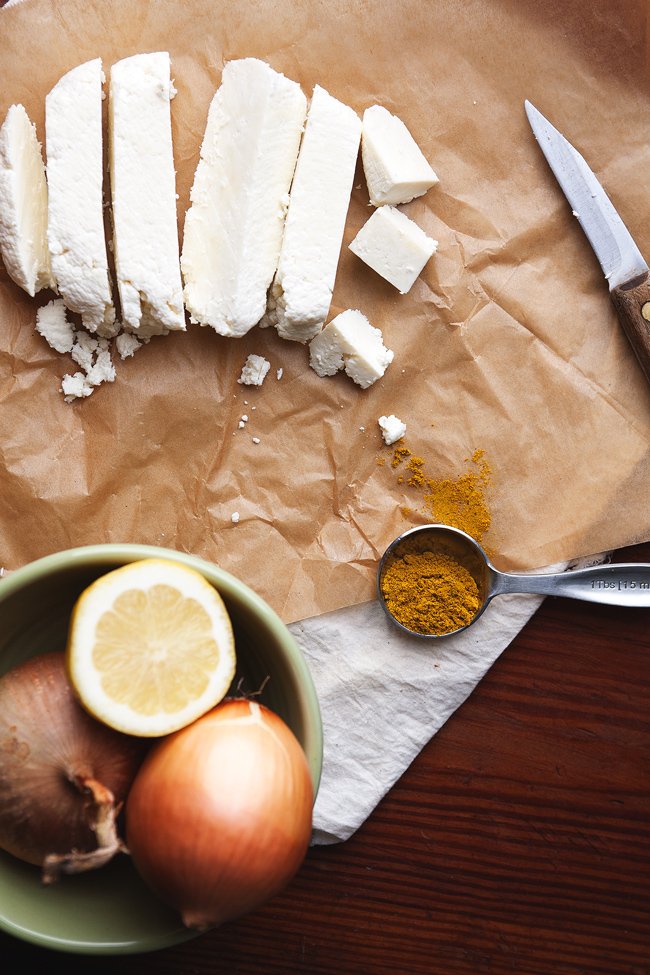
So elaborate analogies aside, what I’m trying to say is that this recipe is really really good. Don’t get me wrong, there’s nothing complex about it at all. It relies heavily on curry powder, an admission which I realize puts me squarely in the Blue Box Mac & Cheese camp. But I certainly have no compunctions about using it if it gets the job done. And it does! It does.

As for its name, this recipe comes from Nigel Slater’s Real Fast Food (although he calls it ‘Chicken with spices and cream,’ heh), a collection of recipes that are all supposed to come together in 30 minutes or less. Plus, it’s got a fast food quality to it, with its commercially-blended seasoning powder and all. I imagine that the Curry Up Now food truck uses a very similar recipe for its famous curry burrito that it serves to the masses in the streets of San Francisco’s Financial District.
Oh! And one last thing I should mention, I like my curry thick and hearty so I halved the amount of stock. But if you adhere to the amount the recipe calls for, you should end up with plenty of sauce.

FAST FOOD PANEER CURRY
Adapted from Nigel Slater’s Real Fast Food via The Wednesday Chef
Serves 4
Ingredients
1/2 lb. paneer
Salt & pepper
2 Tbsp vegetable oil
2 Tbsp butter
2 medium onions, roughly chopped
4 large cloves of garlic, minced
2 Tbsp curry powder
1/2 tsp ground cinnamon
1 14-ounce can of diced tomatoes
1 cup chicken stock (I only used 1/2 cup)
1/2 cup heavy cream
Juice of 1/2 lemon
Directions
Before prepping the onions and garlic, marinade the paneer in the oil and season with salt and pepper to taste.
When ready to begin, in a shallow, preferably non-stick pan, place the paneer in a single layer and turn on the stove to medium. In a minute or so, flip them over to let the other side brown. Remove the paneer from the pan and set aside.
In the same pan, cleaned of residue, melt the butter and add the onions and garlic, cooking over medium heat until soft, about 7 minutes. Stir every once in a while. Stir in the curry powder and cinnamon and cook for an additional few minutes, until the spices are cooked. You may want to add a couple tablespoons of water to the pan to keep the spices from burning. Add the tomatoes, chicken broth, and paneer, and cook until everything is hot, about 5 minutes. Stir in the heavy cream, season with salt to taste, and squeeze in the lemon juice. Simmer another minute or so, then turn off the stove and serve.
Naan (or pita in my case, haha) makes the best accompaniment in my opinion, but you probably already have your favorite way of eating curry.
Related Posts





Subscribe for New Racipies
Get mental health tips, updates, and resources delivered to your inbox.