Pumpkin Biscotti With Cranberries And Almonds
Medically reviewed by Christiana George Updated Date: June 8, 2023
Apparently I’m on a pumpkin spree.
Allow me to grin sheepishly and assure you that pumpkin puree season is almost over, a fact that makes me feel both sad and just a little relieved. For Chris, at least. His pumpkin fatiguée has never run so high. (Although one serving of pumpkin pie should cure him of that.)
And admittedly, even my tolerance is beginning to wane. I tend towards the obsessive in many aspects of my life, and pumpkin is one of these things. As well as listening to the same song/album on repeat, wearing the same shirt for weeks on end, wanting to eat at the same restaurant every time I go out, etc. etc. The inevitable result of such overload is almost criminally tragic: after such sensory gluttony, said objects/activities become warped, twisted. I can never view them the same way again.
That early magic is so transcendent, yet transient. Like the first time I heard the song “Weird Fishes by Radiohead.” God, I was moved. It haunted me. I still love it—and the entire album for that matter—but how I wish I could hear it again for the first time. (You can.)
So seasonality may not be such a bad thing after all. I mean, I wouldn’t mind having access to perfectly ripe peaches the entire year round. But I’d be losing the experience of the anticipation, and the unadulterated captivation of the first bite. Which means more to me than you can know.
With all that being said, it’s almost time to retire pumpkin. Almost. After all, there’s still pumpkin pie to be had.

Traditional Italian biscotti is not the buttery, cake-y creations we have today. They’re supposed to be biscuits after all, and biscuits do not connote dessert. It was made exclusively with flour, sugar, eggs, almonds (not roasted or skinned), and pine nuts. And meant to last a long time. Centuries, if stored carefully, according to Pliny the Elder.
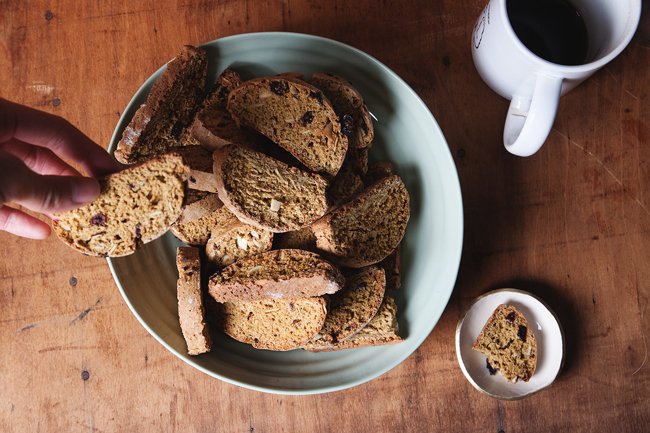
Purists would call the recipe below a bastardization then. At the same time, I didn’t want to make anything too extravagant, too rich, too filling. I didn’t want to dip my biscuits in chocolate, or adorn them knee-deep with toppings, or have them leave behind butter stains on my finger. Rather, I was craving a sensible, no-nonsense, pumpkin-flavored treat to eat alongside my mid-morning coffee.
And that’s how these biscotti came out.

Of course, my few modest additions helped ever so much with the flavor, if I do say so myself. Dried cranberries to make it feel more festive, slivered almonds because they were one of the original ingredients, cinnamon, ground ginger, and cardamom because why the hell not. I dusted the top with black sesame seeds, bird food really, and into the oven my fat little loaf went.
Twice.
Because that’s how you make biscotti. You bake it twice.

PUMPKIN BISCOTTI WITH CRANBERRIES AND ALMONDS
Adapted from The New Best Recipe
Makes about 50
Ingredients:
- 1-1/2 cups all-purpose flour
- 1 cup whole wheat flour
- 1 tsp baking powder
- 1/2 tsp baking soda
- 1/4 tsp salt
- 1 tsp cinnamon
- 1/2 tsp ground ginger
- 1/4 tsp cardamom
- 3/4 cup pumpkin puree
- 1 cup brown sugar
- 2 large eggs
- 1 tsp vanilla extract
- 1/2 cup slivered almonds
- 1/2 cup dried cranberries
- black sesame seeds for topping
Directions:
Preheat oven to 350 degrees F. Line a large baking sheet with parchment paper.
Whisk the flours, baking powder, baking soda, salt, and spices together in a medium bowl. Set aside. In a larger bowl, whisk the pumpkin puree, sugar, and eggs together until smooth. Stir in the vanilla extract, almonds, and cranberries. Pour the dry ingredients over the egg mixture and fold until just combined.
Halve the dough and turn each half onto the prepared baking sheet. Using floured hands, stretch each half into a long loaf about 12 inches. Shape and pat each one smooth. Sprinkle liberally with black sesame seeds.
Bake until the loaves begin to crackle on top, about 25 minutes. Rotate the pan halfway through baking. Remove from the oven and let the pan cool for about 10 minutes. Meanwhile, reduce the oven temperature to 325 degrees F.
Transfer the loaves onto a cutting board. Using a serrated knife, cut each loaf diagonally into thin slices, about 1/2-inch. Lay the slices back on the baking sheet and return them to oven. Bake until crisp and golden-brown on both sides, about 15 minutes. Halfway through baking, turn the cookies over and rotate the baking sheet.
Remove from oven, and let cool. Store in an airtight container.
Subscribe for New Racipies
Get mental health tips, updates, and resources delivered to your inbox.
Is Fennel Acidic? Fennel’s Role in Acid Reflux and Digestive Health

Fennel is a unique vegetable that has been used in cooking and medicine for centuries. Known for its slightly sweet and licorice-like flavor, fennel is loved for its versatility and numerous health benefits. But did you know that it also plays a significant role in managing digestive health, particularly for those suffering from acid reflux?
Understanding whether fennel is acidic or alkaline is essential for anyone looking to maintain a balanced diet. The pH of your food can impact digestion, inflammation, and even long-term health. Acid reflux sufferers, in particular, are often advised to focus on low-acid or alkaline foods to help control their symptoms.
In this article, we will explore whether fennel is acidic or alkaline and delve into how it can benefit your digestive system. We’ll also look at the best ways to incorporate fennel into a low-acid diet. Whether you’re dealing with acid reflux or just want to improve your digestion, fennel could be the answer you’re looking for.
What Is Fennel and Its Role in Digestion?
Fennel (Foeniculum vulgare) is a flowering plant in the carrot family. Its bulb, seeds, and fronds are all used in cooking and traditional medicine. Known for its slightly sweet, licorice-like flavor, fennel is packed with nutrients.
Nutritional Profile of Fennel
- Rich in Fiber: Fennel aids digestion and prevents constipation.
- Antioxidants: It contains vitamins A, C, and E, which combat oxidative stress.
- Essential Minerals: Fennel provides potassium, magnesium, and calcium for overall health.
Digestive Benefits of Fennel
Research proves that fennel has long been used to soothe the digestive system. It relaxes the stomach muscles, reducing bloating and gas. Its high fiber content promotes healthy bowel movements, while its essential oils stimulate the production of digestive enzymes.
Fennel is a go-to remedy for indigestion, stomach cramps, and flatulence. These properties make it particularly helpful for individuals with gastrointestinal discomfort.
Is Fennel Acidic or Alkaline?
Fennel is classified as an alkaline food. Its pH level is around 6.5-7.0, which is close to neutral. Unlike acidic foods, fennel does not aggravate acid reflux. Instead, it helps neutralize stomach acids and supports a balanced pH in the digestive system.
Why Is Alkalinity Important?
Alkaline foods like fennel counteract the effects of acidic foods. Consuming more alkaline foods can help reduce heartburn, acid reflux, and inflammation. Fennel’s alkalinity, combined with its anti-inflammatory properties, makes it a valuable addition to a low-acid diet.
Fennel pH Level and How It Affects Acid Reflux
Fennel’s pH level falls within the alkaline range, making it a soothing choice for acid reflux sufferers. Its natural compounds can reduce the production of stomach acid, alleviating symptoms like heartburn and regurgitation.
How Fennel Eases Acid Reflux Symptoms
- Neutralizes Acid: Fennel’s alkalinity neutralizes excess stomach acid.
- Relaxes the Esophagus: Its antispasmodic properties reduce the likelihood of acid reflux episodes.
- Aids Digestion: Improved digestion minimizes pressure on the lower esophageal sphincter, which can prevent acid reflux.
Regular consumption of fennel can provide long-term relief from acid reflux symptoms. It’s especially effective when combined with other low-acid foods.
Health Benefits of Fennel Beyond pH Levels
Fennel offers more than just pH balance. Its wide-ranging health benefits make it a powerhouse vegetable.
1. Supports Heart Health
Fennel is high in potassium, which helps regulate blood pressure. Its antioxidants reduce cholesterol levels, supporting cardiovascular health.
2. Boosts Immunity
With its high vitamin C content, fennel strengthens the immune system. It protects the body against infections and promotes faster recovery from illnesses.
3. Improves Hormonal Balance
Fennel contains phytoestrogens, plant compounds that mimic estrogen. This can help manage symptoms of menopause and improve menstrual health.
4. Promotes Weight Loss
Low in calories and high in fiber, fennel is ideal for weight management. It keeps you feeling full and supports healthy digestion.
5. Anti-Inflammatory Effects
Fennel’s compounds reduce inflammation throughout the body. This can benefit individuals with arthritis or other inflammatory conditions.
How to Incorporate Fennel into a Low-Acid Diet
Adding fennel to your diet is easy. Its versatility makes it suitable for various recipes. Here are some simple ways to enjoy fennel while managing acid reflux.
1. Fennel Tea
Fennel tea is a soothing remedy for acid reflux. Here’s how to make it:
- Ingredients: 1 teaspoon fennel seeds, 1 cup boiling water.
- Steps:
- Crush the fennel seeds.
- Steep them in boiling water for 10 minutes.
- Strain and enjoy warm.
2. Fennel Salad
Raw fennel adds a refreshing crunch to salads. Pair it with alkaline vegetables like spinach or cucumber for a reflux-friendly meal.
3. Roasted Fennel
Roasting fennel enhances its natural sweetness. Use olive oil and herbs for a flavorful side dish.
4. Fennel Soup
Include fennel in vegetable soups for a comforting, low-acid meal.
5. Fennel in Smoothies
Blend raw fennel with bananas and almond milk for an alkaline-friendly smoothie.
pH Levels of Fennel Compared to Other Vegetables
| Vegetable | pH Level | Classification |
| Fennel | 6.5-7.0 | Alkaline |
| Spinach | 7.0-7.5 | Alkaline |
| Broccoli | 6.5-7.0 | Alkaline |
| Tomatoes | 4.0-4.5 | Acidic |
| Potatoes | 5.5-6.0 | Slightly Acidic |
Acidic vs. Alkaline Food Chart
| Category | Acidic Foods | Alkaline Foods |
| Fruits | Citrus, Pineapple | Bananas, Melons |
| Vegetables | Tomatoes, Peppers | Fennel, Spinach |
| Grains | Wheat, Rice | Quinoa, Millet |
| Dairy | Cheese, Yogurt | Almond Milk |
Author Tip: 7 Kinds of Foods to Avoid with GERD
FAQs on Fennel and Acidity
1. Is fennel acidic or alkaline?
Fennel is classified as an alkaline food. Its pH level ranges between 6.5 and 7.0, making it a neutralizing choice for individuals managing acid reflux or looking to balance their dietary pH levels.
2. Does fennel help reduce acid reflux symptoms?
Yes, fennel is known to soothe the digestive tract. Its alkalinity helps neutralize stomach acids, while its antispasmodic properties relax the muscles of the gastrointestinal tract. This combination can effectively alleviate symptoms of acid reflux, such as heartburn and indigestion.
3. How often should you consume fennel for digestive health?
To reap fennel’s digestive benefits, it is recommended to consume it 2-3 times a week. Whether you include it as a raw snack, in a salad, or as a tea, fennel can promote a healthier digestive system and reduce symptoms like bloating or acid reflux.
4. Can fennel be consumed by individuals with severe acid reflux?
Fennel is generally well-tolerated by most individuals, including those with severe acid reflux. However, responses can vary. If symptoms persist after consuming fennel, consult a healthcare provider to rule out any underlying conditions or sensitivities.
5. Is fennel tea better than raw fennel for acid reflux?
Both fennel tea and raw fennel are effective for acid reflux. Fennel tea offers a more concentrated form of its soothing compounds and is easier to digest, making it ideal for those experiencing acute symptoms. Raw fennel, on the other hand, provides additional fiber, which can aid long-term digestive health.
6. Are there any side effects of consuming fennel?
Fennel is safe for most people, but excessive consumption may cause mild side effects like nausea or allergic reactions in sensitive individuals. As fennel contains phytoestrogens, individuals with hormone-sensitive conditions should consult their doctor before consuming it in large amounts.
7. Can fennel replace medications for acid reflux?
While fennel is a natural remedy that can reduce acid reflux symptoms, it should not replace prescribed medications for severe conditions. Always consult with a healthcare provider for personalized treatment recommendations.
Conclusion
Fennel is not only delicious but also a powerful tool for digestive health. Its alkaline nature makes it a great choice for those managing acid reflux, as it helps neutralize stomach acids and ease symptoms like heartburn. Beyond its pH, fennel offers a wealth of health benefits, from supporting heart health to improving hormonal balance and boosting immunity.
Including fennel in your meals is easy and versatile. You can enjoy it raw in salads, roasted as a side dish, or brewed into a soothing tea. For those looking to balance their diet and improve their digestion, fennel is an excellent choice.
Take control of your digestive health by making fennel a regular part of your diet. Its soothing properties, combined with its nutritional richness, make it a must-have for anyone striving for a healthy and balanced lifestyle.
Subscribe for New Racipies
Get mental health tips, updates, and resources delivered to your inbox.