
Chocolate Thumbprint Cookies

Medically reviewed by Christiana George Updated Date: June 8, 2023
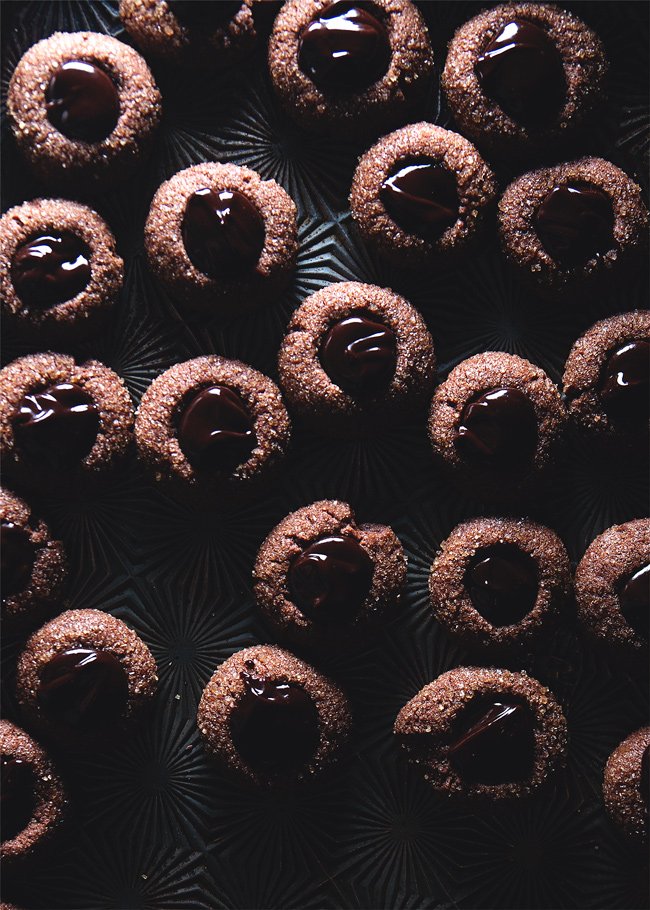
I’ve never made thumbprint cookies before. I realize this indicates a serious gap in my education, but I was raised in a cookie-less household? My mom made lots of delicious things to compensate, but cookies were missing from my life until I was a teenager.
I’ve certainly tried making up for it since then. I think my first love is for the chocolate chip cookie, such a classic. The ones in this recipe are my favorite, but my college roommate used to make ridiculously good chocolate chip oatmeal cookies, and my memories of them involve sitting around our dining table late at night in sweatpants getting really hyper off sugar.
I also have a weakness for ginger cookies, the chewy kind, like these. At my old job in San Francisco, we used to hold an annual cookie swap, and I’d always bring something ginger-y and doused in sugar. I’d push them pretty hard on my co-workers and would stand and watch as they took a bite. It was unnerving I’m sure, but I wanted all my cookies to be snatched up first.
I also love brownie-like cookies, and peanut butter cookies, and the list could go on. I’ll refrain. If you can’t tell, I have a one-track cookie mind, a serious thing for soft and chewy. It’s kind of limiting, especially when you consider the worlds of cookies I’m not making as a result. That’s why this Christmas, I decided to finally step outside of my cookie comfort zone. With thumbprints.

But baby steps first. I’m not fond of jam-filled pastries—this relates back to my dislike of fruit being cooked. So I decided to go the chocolate route instead. The chocolate ganache route, using honey as the sweetener. It also acts as a thickener, so that the ganache somewhat sets and solidifies and doesn’t get all over the place (case in point: I dropped a cookie on the rug and it left no smear whatsoever; but a lot of rug fuzz ended up on the cookie). It also lends its taste to the chocolate, which results in an unexpectedly good combination, especially when offset against the Maldon salt in the cookie.
The cookie itself, being somewhat of a shortbread in nature, is quite a departure for me. I have too many memories of family-sized tins of Danish butter cookies given to us by visitors from China. I’d eat one and remember that I hated them because they were buttery and plain, and eventually my mom would end up putting it away in the cupboard that stored all food gifts from visitors from China (mostly consisting of Danish butter cookies).
The cookies in this recipe are not plain. They are quite buttery however, and crumble in your mouth the way shortbread does. They’re also rich, so that their two-teaspoon size is more than enough for one serving, especially with the dollop of ganache on top. I like them. I’m still a fan of soft chewy cookies, but for my first-ever thumbprints, I’d say they’re quite good.


CHOCOLATE THUMBPRINT COOKIES
makes 75 (2-tsp size portions)
Adapted from Martha Stewart
Ingredients:
- 2 cups all-purpose flour
- 1 cup plus 1 Tbsp unsweetened cocoa powder
- 1-1/2 tsp coarse (I used Maldon) salt
- 8 ounces (2 sticks) unsalted butter, softened
- 1-1/3 cups sugar
- Turbinado sugar for rolling
- 2 large egg yolks
- 2 Tbsp heavy cream
- 2 tsp vanilla extract
- 1 cup Chocolate Ganache, recipe below
Directions:
Preheat oven to 350 degrees. Sift flour, cocoa powder, and salt into a small bowl. Cream butter and sugar with a mixer until pale and fluffy. Reduce speed to medium and add yolks, cream, and vanilla. Scrape down sides of bowl and beat in flour mixture until just combined.
Roll balls using 2 teaspoons of dough for each, and roll each in turbinado sugar. Place 1 inch apart on parchment-lined baking sheets. Using your index finger, make a deep indentation in the center of each. Bake, rotating sheets halfway through, until cookies are just set, about 10 minutes. The indentations will probably lose definition, so press centers again. Let cool completely.
Spoon warm ganache into center of each cookie. Let stand until firm, about 15 minutes. Cookies will keep, covered, for up to 3 days.
CHOCOLATE GANACHE
Makes about 1 cup
Adapted from Martha Stewart
Ingredients:
- 4 oz. bittersweet chocolate, finely chopped
- 1/3 cup honey
- 1/3 cup heavy cream
- 1 tsp vanilla extract,
- 2 Tbsp unsalted butter, cut into pieces and softened
Directions:
Place the chocolate in a medium bowl. Combine honey, cream, and vanilla in a medium saucepan over medium heat. Bring to a simmer, and cook, stirring until honey dissolves. Remove from heat, and pour over chocolate. Stir vigorously until it has mostly melted. Add butter and continue stirring until the chocolate and butter have fully melted and all the ingredients have been incorporated.
The ganache is most malleable when still warm, so make sure your cookies have cooled completely and fill away!
Related Posts


Subscribe for New Racipies
Get mental health tips, updates, and resources delivered to your inbox.
Meyer Lemon Budino

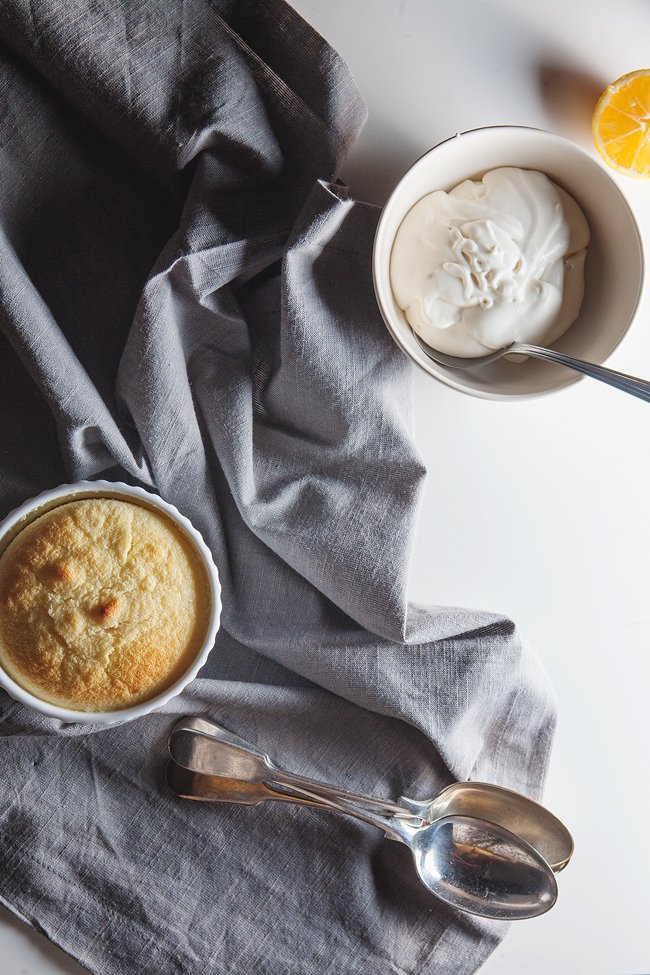
Budino is Italian for pudding, and I’m assuming this recipe is Italian in origin because it comes to us from Craig Stoll, owner of San Francisco’s Delfina. (Oh, SF, any mention of you sends prickles of homesickness down my spine.) What I can tell you is that it’s part souffle, part gooey lemon-y goodness. Especially if it’s countered with a mascarpone whipping cream, which rounds out its fruitiness.
I can also tell you that I love love love Meyer lemons, which I eat, raw, just like oranges, except I cut them in quarters and rip out their flesh with my teeth (kind of like how Chinese people eat oranges—or is this practice more international than I realize?).
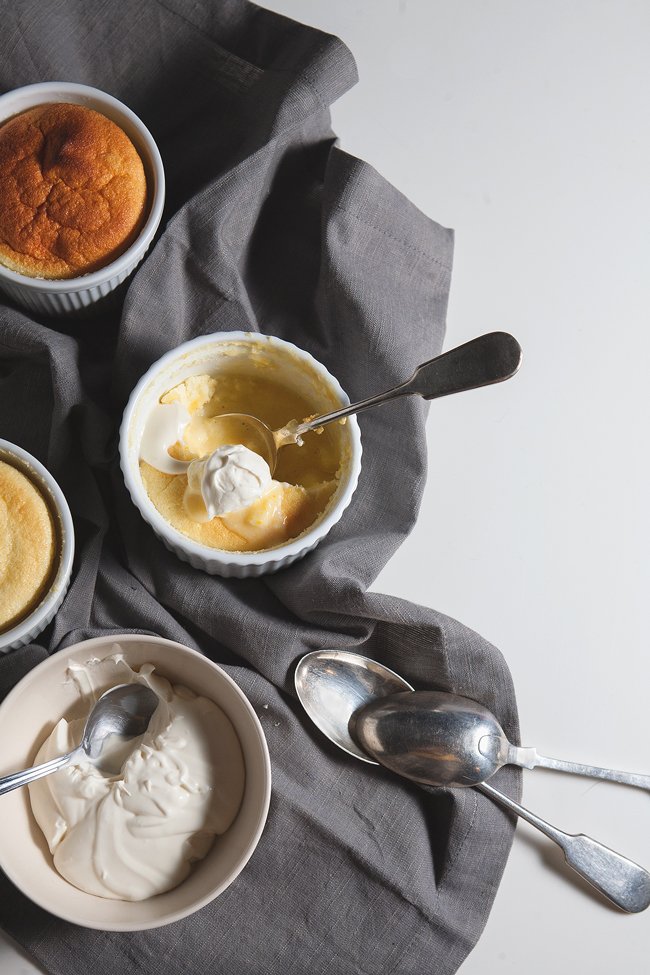
I kind of realized along the way (the ‘way’ being the entire circuitous route I’ve taken to learning to bake) that I don’t really care for baked lemon desserts. I’m talking about tarts and pies, and those bar things that people always seem to make a huge fuss over. It’s probably a cultural thing. Chinese people don’t generally cook fruit into desserts, instead, preferring to eat it on its own, so it feels incongruous to pair its freshness and natural-ness with butter, dough, and high temperatures.
But Meyer lemon desserts, they’re in a league of their own. Meyer lemons possess a whole other dimension of floral-ness, a fragrance that reminds me of Asian dessert flavors like green tea and red bean and black sesame. It’s quieter, sweeter, less in-your-face. In fact, I’m rethinking my stance on lemon-y desserts, as long as they’re made with Meyer lemons. I would probably like Meyer-lemon lemon bars, and Meyer-lemon lemon meringue pie, and Meyer-lemon lemon shortbread. I know I like it in this budino.
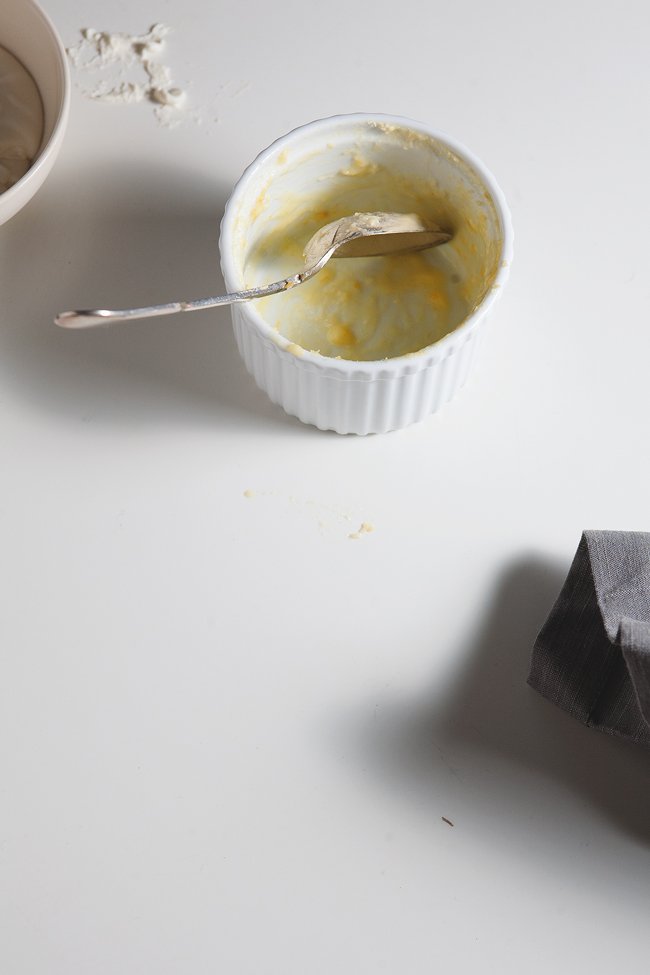
Hint: it’s wonderful warm and fresh out of the oven, BUT if you give it a chance to sit in the fridge overnight, it is even better the next day. By then, three distinct layers will have formed: the dreamy pudding on the bottom, the feathery sponge cake layer on top, and an incredibly lush cheesecake-like layer in between. It is excellent. Excellent!
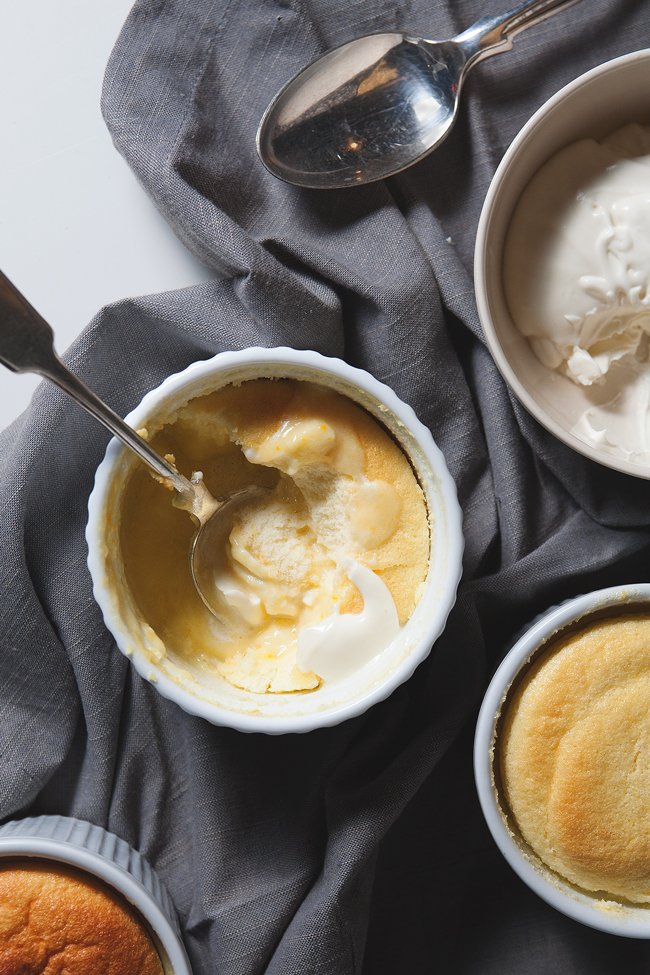
MEYER LEMON BUDINO
Adapted from Delfina, courtesy of Bon Appétit
Serves 4 to 6
Ingredients:
1/2 cup plus 2 Tbsp sugar
3 large eggs, separated
1/4 cup all purpose flour
1/4 cup + 2 Tbsp fresh Meyer lemon juice
2 Tbsp finely grated Meyer lemon peel
3/4 cup plus 2 tablespoons whole milk
1/4 teaspoon salt
For the mascarpone whipped cream:
1/2 cup chilled mascarpone cheese
1/2 cup chilled whipping cream
2 Tbsp sugar
1/2 tsp vanilla extract
Directions:
Preheat oven to 350 degrees F. Butter 4 to 6 ramekins. Combine 1/2 cup sugar, egg yolks, flour, lemon juice, and lemon peel in large bowl; whisk until well blended. Whisk in milk.
Using an electric mixer, beat egg whites and salt in medium bowl until frothy. Gradually add remaining 2 Tbsp sugar and beat until soft peaks form. Fold beaten egg whites into lemon mixture in 2 additions. Divide mixture among prepared custard cups. Place custard cups in roasting pan. Pour enough hot water into roasting pan to come halfway up sides of custard cups. Bake puddings until tops are golden and spring back when lightly touched, about 25 to 30 minutes (keep an eye on them—in some ovens, they’ll bake faster). Remove cups from water and let cool. Serve warm or cold with mascarpone whipped cream, recipe below.
For the mascarpone whipped cream:
Combine the mascarpone, whipping cream, sugar, and vanilla extract. Whisk until thick soft peaks form. Refrigerate for a few hours.
Related Posts
Subscribe for New Racipies
Get mental health tips, updates, and resources delivered to your inbox.