
Blue Raspberry Rice Krispie Treats

Medically reviewed by Christiana George Updated Date: December 19, 2022


I’m in a blue mood, but that’s a good thing. These Blue Raspberry Rice Krispie Treats were super easy and fun to make. The blue color is so pretty for Easter, but could work for other parties as well. I can’t believe Easter is almost here. This will be our first Easter without family around. We will probably get together with some friends to celebrate. My daughter is looking forward to the Easter Egg Hunt and her basket of treats.

I found these Blue Raspberry Campfire Mallow Bursts at Walmart and had to give them a try. Last year I had found Lemon Meringue ones and made Lemon Meringue Rice Krispie Treats with them. So why not Blue Raspberry Rice Krispie Treats. For added flavor I found Duncan Hines Frosting Creations Flavor Mixes in Blue Raspberry.
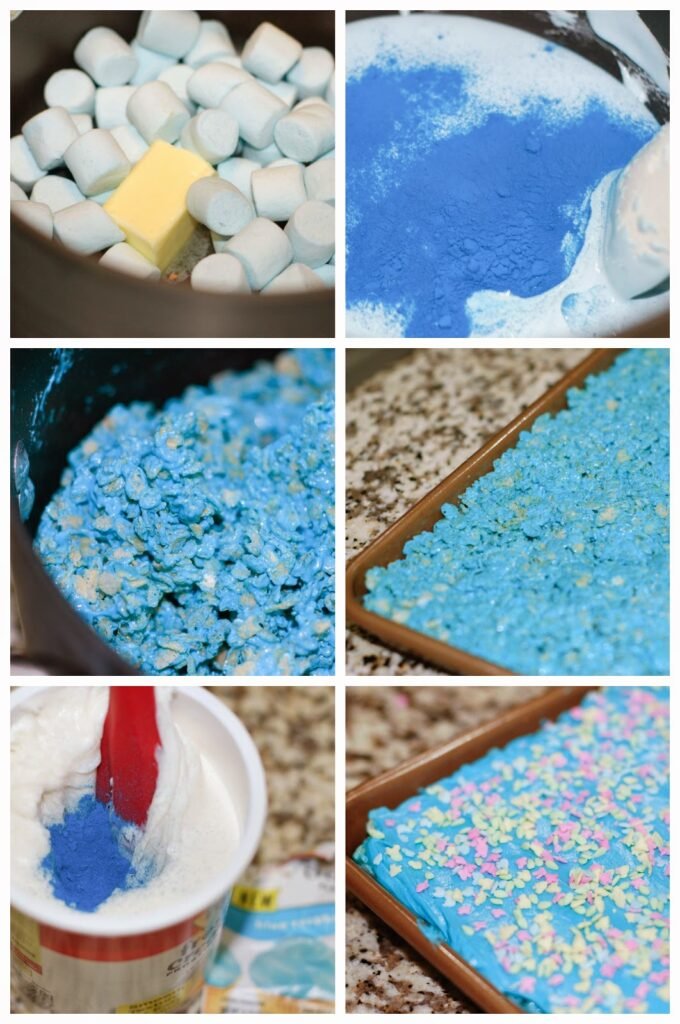
I used one packet of flavoring mix with the cereal mixture and one packet with the frosting starter. So it’s double the blue raspberry flavor. I added some sprinkles for decorations and cut them into squares.
Now if you are feeling a little more creative or looking for something to do with the kids, you can grab some cookie cutters and make different shapes.

I find it easier to cut out the shape first, then frost the treats. For the bunny face, I used mini marshmallows, Wilton candy eyes, and Wilton Cookie Icing in black to decorate. I cut a pink mini marshmallow in half to make the nose. Then I cut another mini marshmallow on the diagonal lengthwise to make the inside of the ears. You just cut, then smoosh and stretch it a little by hand to shape it. I know, so technical, huh? I used black icing to make the whiskers and mouth. I used my cake decorating brush to paint on the lines. You could probably use a toothpick also. Although if you can find black licorice strings, I am sure that would work out better.

What kid doesn’t like a fluffy blue bunny treat? Especially one that turns your tongue blue when you eat it. My son thought it was pretty funny that his tongue was blue.

Or you can just cut out and frost an Easter egg shape and add some sprinkles. Less work and just as cute. Whichever way you choose to decorate your treats, they will all taste the same.
Now I must say, these treats are pretty sweet. They taste like blue raspberry candy. Which is good, but I am not a big candy fan. I prefer some dark chocolate. My daughter loves candy and she couldn’t wait to eat one of these after I was done taking photos. I also gave some to the neighbor’s boys who loved them. These are definitely kid friendly.
Blue Raspberry Rice Krispie Treats
by The Sweet Chick
Prep Time: 15 minutes
Cook Time: 5 minutes
Keywords: no bake dessert snack rice krispies Blue Raspberry Mallow Bursts Duncan Hines Frosting Creations Easter rice krispie treats American spring
Ingredients (24 squares)
For the treats
- 3 tablespoons butter
- 1 bag (8 oz.) Campfire Blue Raspberry Mallow Bursts
- 1 packet Duncan Hines Frosting Creations Blue Raspberry Flavor Mix
- 5 cups crispy rice cereal
For the topping
- 1 container (16 oz.) Duncan Hines Frosting Creations Frosting Starter
- 1 packet Duncan Hines Frosting Creations Blue Raspberry Flavor Mix
Instructions
For the treats
In a large sauce pan, melt butter and marshmallows over low heat. Stir until completely melted.
Remove from heat and add 1 packet of flavor mix. Stir until completely mixed.
Then add the crispy rice cereal. Mix until all is well incorporated.
Then pour the mixture into a greased 9 x 13 pan or a cookie sheet and spread it evenly with a piece of waxed paper.
Place in fridge to cool and set.
For the frosting
Mix the remaining flavor mix packet with the frosting starter according to directions on the container.
Then spread the blue raspberry frosting over the cooled treats and add sprinkles if desired.
Place in fridge until frosting sets, then cut into squares and enjoy.
Related Posts






Subscribe for New Racipies
Get mental health tips, updates, and resources delivered to your inbox.
Is Brussels Sprout Acidic? Are Suitable for Acid Reflux?

Brussels sprouts, one of the most nutritious members of the cruciferous vegetable family, have earned a reputation for their impressive health benefits. However, if you’re among those who experience acid reflux or gastroesophageal reflux disease (GERD), you may wonder, “Is Brussels sprout acidic? Are they safe for acid reflux?” These questions are crucial for individuals managing their diet to prevent heartburn and other reflux-related symptoms. In this article, we’ll delve into the acidity levels of Brussels sprouts, their potential benefits and drawbacks for acid reflux sufferers, and the best ways to incorporate them into a reflux-friendly diet. By the end, you’ll have a clear understanding of whether Brussels sprouts should make it to your plate.
Is Brussels Sprout Acidic or Alkaline? Understanding Their pH Levels
To determine whether Brussels sprouts are acidic, we look at their pH level. The pH scale ranges from 0 (highly acidic) to 14 (highly alkaline), with 7 being neutral.
| Food | pH Level | Classification |
| Brussels Sprouts | 6.0–6.8 | Slightly alkaline |
Brussels sprouts are classified as slightly alkaline, meaning they are not acidic. This makes them a good choice for individuals looking to avoid highly acidic foods.
Author Tip: Are Brussels Sprouts Safe for Acid Reflux?
Nutritional Profile of Brussels Sprouts: Packed with Health-Boosting Nutrients
Brussels sprouts are packed with essential nutrients, which contribute to their health benefits:
- Vitamins: High in vitamin C and vitamin K, which support immune health and bone strength.
- Fiber: A rich source of dietary fiber that aids digestion and promotes gut health.
- Antioxidants: Contains glucosinolates and other powerful antioxidants that help reduce inflammation and oxidative stress.
- Minerals: Provides potassium, manganese, and folate for optimal bodily functions.
- Low in Calories: About 38 calories per cup (cooked), making them ideal for weight management.
Are Brussels Sprouts Safe for Acid Reflux? Exploring Their Effects on Reflux Symptoms
Acid reflux, characterized by symptoms such as heartburn and regurgitation, often requires careful dietary choices. Here’s how Brussels sprouts can affect acid reflux:
1. Alkaline Nature Helps Neutralize Stomach Acid
Their slightly alkaline pH can help neutralize excess stomach acid, making them a suitable option for individuals with acid reflux.
2. Rich in Fiber to Support Digestive Health
Dietary fiber in Brussels sprouts aids digestion and helps prevent constipation, which can reduce pressure on the lower esophageal sphincter (LES), a common cause of acid reflux.
3. Anti-inflammatory Properties Provide Digestive Relief
The antioxidants in Brussels sprouts, such as kaempferol and glucosinolates, have anti-inflammatory effects that may benefit the esophagus and reduce irritation caused by acid reflux.
4. Potential for Gas and Bloating in Sensitive Individuals
While Brussels sprouts are generally safe, they can cause gas and bloating in some people due to their fiber and raffinose content. These symptoms may exacerbate acid reflux in sensitive individuals.
Author Tip: 7 Kinds of Foods to Avoid with GERD
Tips for Including Brussels Sprouts in an Acid Reflux-Friendly Diet Plan
To enjoy Brussels sprouts without triggering acid reflux, consider these tips:
1. Cook Them Properly to Retain Nutrients and Reduce Discomfort
Avoid frying or cooking with heavy fats, as these methods can worsen reflux symptoms. Opt for steaming, roasting, or lightly sautéing with olive oil.
2. Pair with Alkaline Foods for Balanced Meals
Combine Brussels sprouts with other alkaline foods like quinoa, spinach, or sweet potatoes for a balanced and reflux-friendly meal.
3. Eat in Moderation to Avoid Overloading the Digestive System
Start with small portions to see how your body reacts. Gradually increase the quantity if no adverse symptoms occur.
4. Avoid Spicy or Acidic Seasonings That May Trigger Reflux
Season Brussels sprouts with mild herbs like thyme or rosemary instead of acidic dressings or spicy sauces.
Author Tip: 7-Day Meal Plan For Gastritis
Health Benefits of Brussels Sprouts Beyond Managing Acid Reflux Symptoms
Brussels sprouts offer a wide range of health benefits that make them a valuable addition to your diet:
1. Supports Immune Health with High Vitamin C Content
The high vitamin C content boosts immunity and helps the body fight infections effectively.
2. Promotes Heart Health by Reducing Oxidative Stress
Antioxidants in Brussels sprouts reduce oxidative stress, which is linked to heart disease. Their fiber content also helps manage cholesterol levels.
3. Aids in Detoxification and Supports Liver Health
Glucosinolates in Brussels sprouts support liver detoxification processes, enhancing overall health and wellbeing.
4. Improves Bone Health Through Essential Nutrients
Rich in vitamin K, Brussels sprouts play a crucial role in bone mineralization and reducing the risk of fractures.
Scientific Insights on Brussels Sprouts and Acid Reflux Management
Studies have highlighted the role of vegetables, including Brussels sprouts, in managing acid reflux:
- Fiber and Digestion Support: A study published in the World Journal of Gastroenterology emphasized the importance of high-fiber foods in improving gut motility and reducing reflux symptoms.
- Alkaline Benefits for Neutralizing Acid: Research in the Journal of Clinical Gastroenterology suggested that alkaline foods can help neutralize stomach acid and reduce irritation in the esophagus.
- Anti-inflammatory Properties for Digestive Health: A review in Nutrients highlighted the anti-inflammatory benefits of cruciferous vegetables like Brussels sprouts in supporting digestive health.
Potential Downsides of Brussels Sprouts for Acid Reflux Sufferers
While generally safe, Brussels sprouts may not suit everyone:
1. Gas and Bloating Can Cause Digestive Discomfort
Their fiber and raffinose content can cause discomfort in some people, potentially worsening reflux symptoms in sensitive individuals.
2. Individual Sensitivities May Affect Digestive Reactions
Some individuals with sensitive digestive systems may experience mild discomfort after consuming Brussels sprouts.
How to Incorporate Brussels Sprouts into Your Acid Reflux-Friendly Diet Successfully?
Here are some acid reflux-friendly ways to enjoy Brussels sprouts:
1. Roasted Brussels Sprouts with Light Seasoning
Roast them with olive oil, garlic, and a pinch of sea salt for a delicious and healthy side dish that’s easy on the stomach.
2. Brussels Sprout Salad with Reflux-Friendly Ingredients
Shred raw Brussels sprouts and toss them with avocado, almonds, and a light vinaigrette for a crunchy and nutritious salad.
3. Creamy Brussels Sprouts Soup for Soothing Relief
Blend cooked Brussels sprouts with low-sodium vegetable broth, carrots, and herbs for a soothing and reflux-friendly soup.
4. Vegetable Stir-Fry Featuring Brussels Sprouts
Lightly sauté Brussels sprouts with tofu, ginger, and low-sodium soy sauce for a flavorful and balanced dish.
Brussels Sprouts Recipes: Brussels Sprouts, Momofuku-style
Brussels Sprouts With Bacon And Juniper Berries
Conclusion: Is Brussels Sprout a Good Choice for Acid Reflux?
Brussels sprouts are slightly alkaline and rich in nutrients, making them a good choice for most individuals, including those with acid reflux. Their fiber, antioxidants, and anti-inflammatory properties contribute to overall digestive health and may help manage acid reflux symptoms. However, it’s essential to monitor your body’s response and prepare them in reflux-friendly ways to avoid discomfort.
By incorporating Brussels sprouts into your diet wisely, you can enjoy their numerous health benefits without triggering acid reflux. Whether roasted, in salads, or as part of a balanced meal, Brussels sprouts can be a valuable addition to a healthy, reflux-friendly diet.
Related Posts



Subscribe for New Racipies
Get mental health tips, updates, and resources delivered to your inbox.