
Pumpkin Brioche (with A Cinnamon Swirl)

Medically reviewed by Christiana George Updated Date: June 8, 2023
I got my teeth whitened earlier this week. It was free, so I should’ve known better.
Besides the fact that I first had to endure the dental hygienist from hell (she gave me the most painful cleaning ever—and I usually never ever ever complain), I was put on the White Diet after the whitening. Your teeth are extremely susceptible to discoloration the 48 hours after, so you have to be very careful about what you eat.
If no one’s patented the White Diet yet, I swear I will. Here’s what Day One looked like: a white bread sandwich with mozzarella cheese and egg whites for lunch, a white bread sandwich with feta cheese and egg whites for dinner, and white bread toast topped with condensed milk (which isn’t actually white you see—it’s more a beige, which technically is still a no-no) for breakfast. I suppose none of those things are particularly healthy, but I was so afraid of eating anything not on the list that I didn’t really eat much at all. The worst part: no coffee! I walk away from this experience now knowing that I am extremely hooked on coffee and shouldn’t be allowed to operate machinery without it. In other words, it was really really hard to give it up, even for just a day. I wasted an entire morning being drowsy and sluggish, sitting in front of my computer unable to do any work.
The next day is easier since you get to drink really milky coffee with a straw, and your circle of food expands to beige and cream-colored foods. Thank god. I reverted to my usual fallback: cereal.
So that’s how I survived my white diet. I really shouldn’t be complaining though should I? I mean, I got my teeth whitened for free. My pearly whites are whiter! My smile more dazzling! My mouth looks 10 years younger!! Truthfully, the difference is negligible.
When I think about the things we do for beauty, like abstain from foods we love, I wonder where to draw the line. I mean, the whitening experience was a relative breeze compared to some of the crap people put themselves through. There was a time in my life where food was something of an enemy. Adolescence, you know.
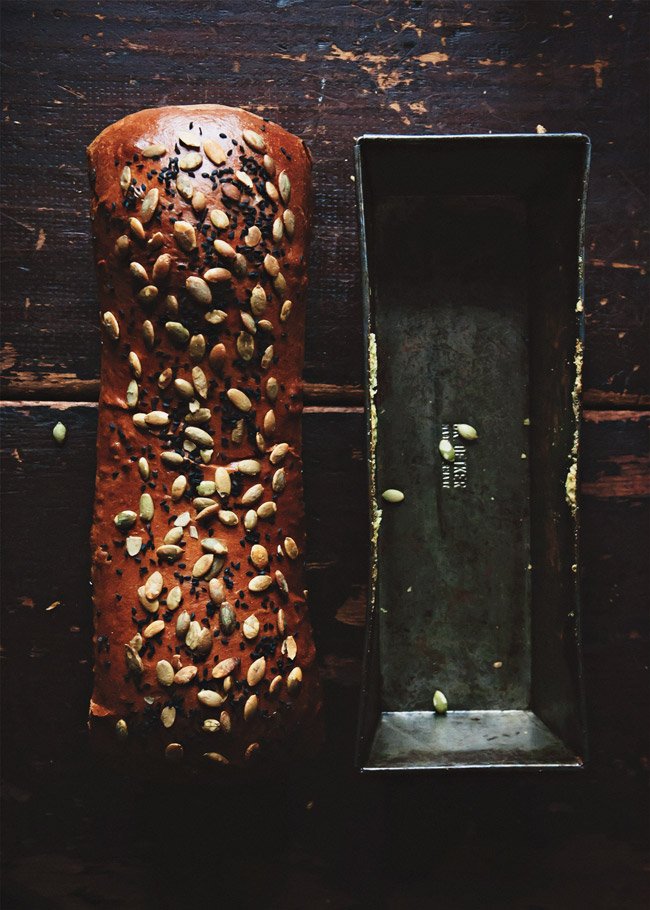
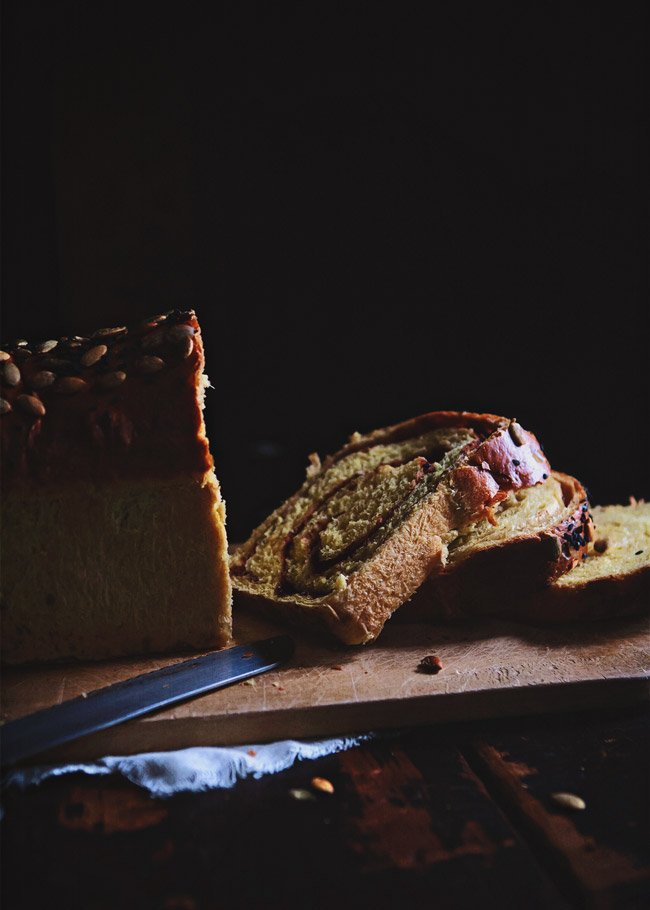
Anyway, as you can imagine, this pumpkin brioche loaf would’ve been absolutely not allowed. Especially since the pumpkin turned its innards a light mustard-y yellow. It’s really really pretty, especially with the swirl (which I’m downplaying because it came out kind of squirrely-looking—but I’m including it in the instructions anyway because it really is delicious).
I had a bit of trouble with the dough. You know when you doubt a recipe and start tampering with it? Probably not the greatest idea when you’re dealing with something as delicate as brioche, which is this whole complicated ecosystem of ingredients. But I managed to salvage it, and it came out smelling richly of pumpkin and all its accompanying spices. It captures the taste too, but subtly. Don’t expect pumpkin pie. Instead, imagine soft and glorious air pockets, a thin, toasty crust, and a murmur of spicy pumpkin flavor. It’ll make a hell of a French toast this weekend. And I won’t have to worry about my teeth turning yellow.
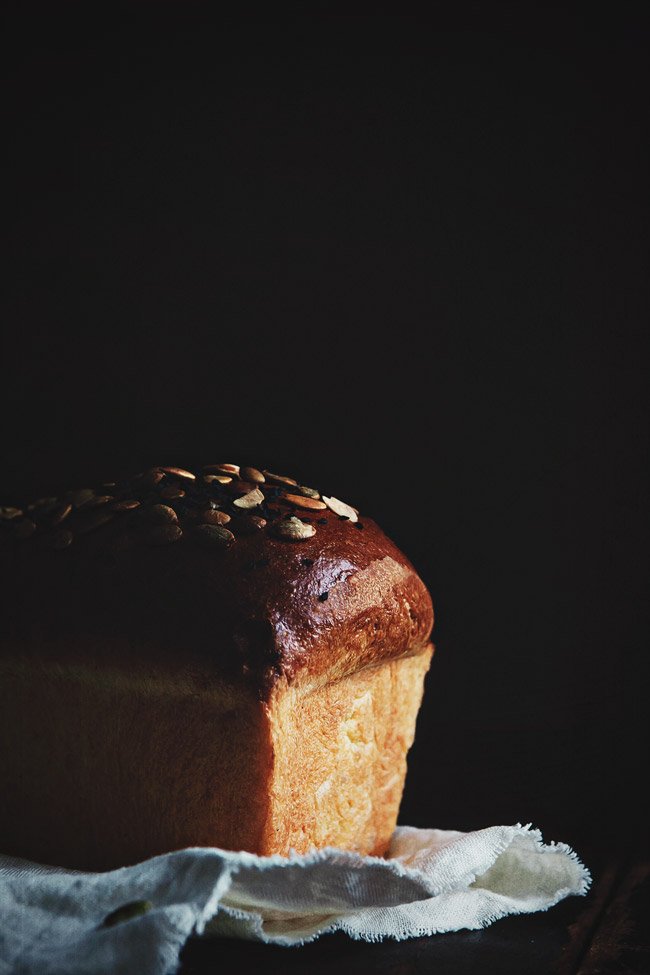
Cinnamon Swirl Pumpkin Brioche
Adapted from Vermont Creamery
Makes 2 regular-sized (about 9″) loaves
For the sponge:
1/2 cup whole milk, room temperature
2 Tbsp maple syrup
2.25 tsp (1 packet) active dry yeast
1 cup AP flour
For the dough:
1/4 cup brown sugar, packed
2 tsp salt
1/2 cup pumpkin puree
4 eggs
3-3/4 cups AP flour
1/2 tsp cinnamon
1/4 tsp ginger
pinch nutmeg
pinch allspice
4 oz. (1 stick or 8 Tbsp) butter, softened
egg wash (1 egg whisked with a little water)
any combination of seeds
For the swirl:
4 Tbsp butter, softened
1/2 cup brown sugar
4 tsp cinnamon
Directions:
For the sponge:
In the bowl of a stand mixer fitted with the paddle attachment, mix the milk, maple syrup, and yeast. Let stand for about 10 minutes until bubbly, then add the flour. Mix until smooth. Cover and let rise until the sponge has doubled, about an hour.
For the dough:
To the sponge, add the brown sugar, salt, pumpkin, and eggs, and mix until incorporated. Switch out the paddle attachment for the hook attachment and add the flour and spices and mix until just combined. On low speed, add the butter, a Tbsp at a time, allowing each piece to be fully incorporated into the dough. Increase the speed to medium-high and continue mixing until the dough is shiny and starts pulling away from the sides of the bowl. It’ll make a slapping sound. If it’s not coming together, add flour, a Tbsp at a time, until it does. The dough’s going to be very sticky, so don’t add too much flour, only enough so it holds together.
Transfer the dough to a well-oiled, large bowl and cover it with plastic wrap. Once it’s doubled in size, an hour to two, deflate the dough, fold it in half (tucking the seam at the bottom), and let it rise again, this time in the fridge overnight.
The next day, let the dough come to room temperature, about an hour, then, on a lightly floured surface, cut it in half. It’s going to be sticky, but resist the urge to add too much flour. With each half, roll it out to the approximate width of your loaf pan (about 9″) and about double that in length.
For the swirl, use half the ingredients for each loaf. Combine the brown sugar and cinnamon. Spread the butter evenly across the surface of the dough, and sprinkle the brown sugar mix on top.
Starting on the short side, roll the dough into a tightly-packed cylinder. Pinch the ends and fold them under and into the bottom seam. With the bottom seam facing down, gently transfer the loaves into buttered loaf pans. Cover and let rise until doubled in size.
Preheat your oven to 400 degrees. Once the loaves are ready, brush them with the egg wash and sprinkle any seeds you’re using on top. Place them in the oven and bake for 10 minutes. Then reduce the heat to 350 degrees and bake for another 15 minutes, or until the tops of the loaves are golden brown and glossy.
Note: I actually baked my dough into one monster loaf and four large rolls, but the dough should be enough for two loaves.
Related Posts




Subscribe for New Racipies
Get mental health tips, updates, and resources delivered to your inbox.
Are Baby Carrots Acidic? Baby Carrots and Acid Reflux

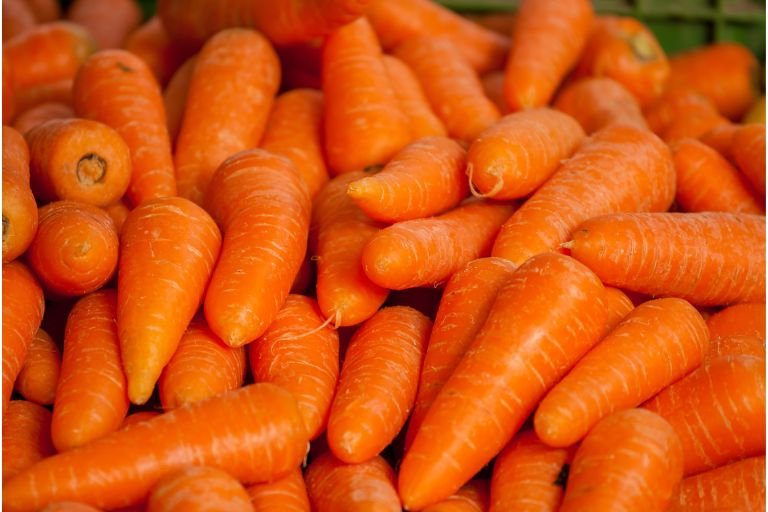
When managing acid reflux, choosing the right foods is critical to avoiding uncomfortable symptoms like heartburn and regurgitation. If you enjoy snacking on baby carrots, you may wonder: Are baby carrots acidic, and can they fit into an acid reflux-friendly diet?
Baby carrots are a great choice for managing acid reflux because they are low in acid, low in calories, and high in fiber. Additionally, they are a healthy snack that is easy to prepare and eat.
This article dives into the acidity of baby carrots, their nutritional profile, and their potential role in managing acid reflux.
Understanding Baby Carrots
Baby carrots are small, tender carrots that are either naturally grown to be small or cut and shaped from larger carrots. They are prized for their convenience, sweetness, and crunch. Like regular carrots, they are packed with essential nutrients that make them a healthy choice for most diets.
Baby carrots are also low in calories and high in fiber, making them a great snack for those looking to watch their weight. They are also relatively inexpensive and easy to find in most grocery stores.
Author Tip: Are Carrots Good for You?
Are Baby Carrots Acidic?
To answer whether baby carrots are acidic, we need to consider their pH level:
- pH Level of Baby Carrots: Baby carrots have a pH level of around 5 to 6, placing them in the mildly acidic to neutral range. This makes them less acidic compared to many fruits and vegetables, such as tomatoes or citrus fruits.
- Alkaline-Forming in the Body: Despite their mild acidity, carrots are often considered alkaline-forming after digestion. This means they can help balance your body’s pH levels and potentially soothe acid reflux symptoms.
Related to Read: Are Carrot Sticks Acidic?
Nutritional Benefits of Baby Carrots
Baby carrots are a nutrient powerhouse and can provide numerous health benefits, including support for acid reflux management:
1. Rich in Fiber
Fiber aids digestion by promoting regular bowel movements and preventing constipation, which can worsen acid reflux by increasing abdominal pressure. Baby carrots are an excellent source of dietary fiber. Research suggest that fiber is very beneficial for stomach health.
2. High in Vitamin A
Carrots are rich in beta-carotene, which the body converts to vitamin A. This nutrient supports healthy mucous membranes, including the lining of the esophagus, which can be irritated by acid reflux.
3. Low Calorie and Low Fat
Baby carrots are naturally low in calories and fat, making them a light snack that doesn’t put additional strain on the digestive system or trigger reflux symptoms.
4. Hydrating Properties
Baby carrots have a high water content, which can help dilute stomach acid and reduce the likelihood of acid reflux episodes.
Can Baby Carrots Trigger Acid Reflux?
Although baby carrots are generally considered safe and beneficial for those with acid reflux, individual reactions can vary. Here are some factors to keep in mind:
- Portion Size: Eating a large quantity of baby carrots in one sitting may cause bloating or stomach discomfort, which could worsen acid reflux.
- Raw vs. Cooked: Raw baby carrots are crunchy and fibrous, which may be harder to digest for some individuals. Steaming or boiling them can make them gentler on the stomach.
- Acidity Tolerance: While mildly acidic, baby carrots are unlikely to trigger reflux in most people. However, those with severe acid reflux should monitor their symptoms after consumption.
How to Incorporate Baby Carrots into an Acid Reflux-Friendly Diet
Baby carrots can be a versatile addition to your meals or snacks. Here are some tips to enjoy them while minimizing the risk of acid reflux:
1. Snack on Raw or Steamed Carrots
Enjoy baby carrots as a snack on their own or with a reflux-friendly dip like hummus. Steamed carrots are an even gentler option for those with sensitive stomachs.
2. Add to Soups and Stews
Incorporate baby carrots into soups, stews, or broths for added nutrition and flavor. Cooking them softens their texture and makes them easier to digest.
3. Blend into Smoothies
For a nutrient-packed smoothie, blend baby carrots with alkaline fruits like bananas or melons. This can create a refreshing and reflux-friendly drink.
4. Include in Salads
Shred or chop baby carrots into salads made with leafy greens and a light, non-acidic dressing.
Other Reflux-Friendly Vegetables to Pair with Baby Carrots
Pairing baby carrots with other low-acid vegetables can further enhance your diet. Consider adding:
Foods to Avoid When Eating Baby Carrots
To prevent acid reflux, avoid combining baby carrots with common trigger foods such as:
- Spicy dips or sauces
- Acidic dressings, like vinegar-based options
- High-fat dips, such as creamy cheese-based spreads
- Carbonated beverages
Author Tip: 7 Kinds of Foods to Avoid with GERD
Lifestyle Tips for Managing Acid Reflux
In addition to choosing the right foods, consider these tips to manage acid reflux effectively:
- Eat Smaller Meals: Large meals can increase pressure on the lower esophageal sphincter (LES).
- Chew Thoroughly: Take your time to chew baby carrots and other foods well to aid digestion.
- Stay Upright After Eating: Avoid lying down for at least 2-3 hours after meals.
- Elevate Your Head During Sleep: Use a wedge pillow to prevent acid from rising during the night.
- Maintain a Healthy Weight: Excess weight can put pressure on the LES, worsening acid reflux.
Frequently Asked Questions
1. Can baby carrots cure acid reflux?
Baby carrots cannot cure acid reflux but can be part of a balanced diet that helps manage symptoms. Their fiber and low acidity make them a supportive food choice.
2. Are baby carrots better than regular carrots for acid reflux?
Nutritionally, baby carrots and regular carrots are very similar. Both can be included in an acid reflux-friendly diet, and the choice depends on personal preference.
3. How many baby carrots can I eat if I have acid reflux?
Moderation is key. Start with a small serving, such as 5-10 baby carrots, and observe how your body reacts. Gradually increase the portion if tolerated well.
Conclusion: Are Baby Carrots Acidic?
Baby carrots are mildly acidic but generally considered safe and beneficial for individuals with acid reflux. Their low acidity, high fiber content, and nutrient-rich profile make them an excellent choice for snacking or incorporating into meals. By preparing baby carrots in reflux-friendly ways and being mindful of portion sizes, you can enjoy their health benefits without triggering symptoms.
As with any dietary change, monitor your body’s response and consult a healthcare provider for personalized advice if needed. Baby carrots can be a tasty and nutritious ally in your journey to manage acid reflux effectively.
Related Posts



Subscribe for New Racipies
Get mental health tips, updates, and resources delivered to your inbox.