Aunt Sassy Cake, Or Pistachio Layer Cake With Honey Buttercream

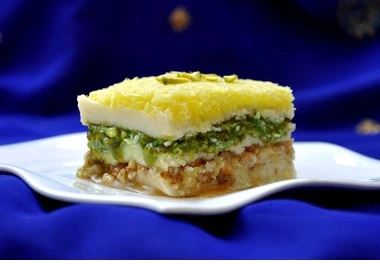
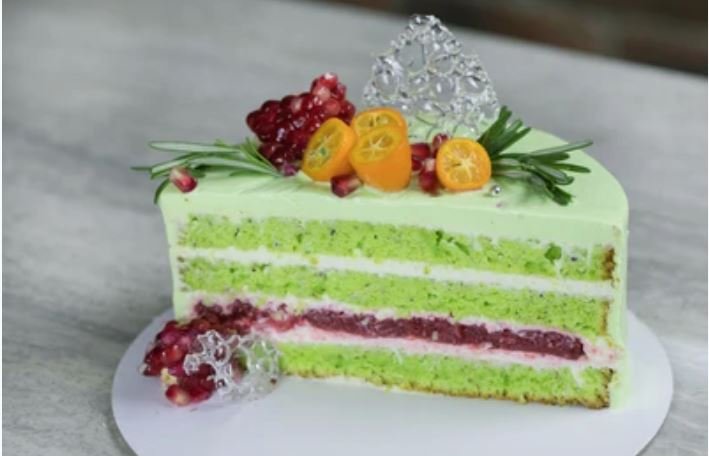
The search for the perfect wedding cake continues. Today I introduce to you, Aunt Sassy, the pluckiest pistachio cake you’ll ever meet, flavored with real pistachios (as opposed to pistachio extract, which a recipe my sister found called for) that impart the barest of green to four dreamy layers of cake. She’s wearing her Sunday’s finest, a lush buttercream laced with glossy honey (that I sort of butchered because I lack cake decorating skills. Sorry Aunt Sassy.)

In truth, the cake is not as forwardly pistachio-tasting as you might think. What it really reminds me of is a nut bread, dense yet moist, and textured in that whole-grainy way. This may, in part, be due to the fact that I hand-ground, using a mortar and pestle, the pistachios, an imprecise process that yielded not the fine grain that the recipe called for, but something a little coarser, more similar to sand. But no matter. I liked it, a lot. Chris did too, and I gave him all the cake tops to take to work so I wouldn’t end up snacking on them throughout the day.
But the true gem was the honey buttercream. It was superb, absolutely superb! It was wistfully velvety with the slight aftertaste of honey (meaning, not too sweet) and a lightness kind of sort of like whipped cream. I found ample excuses to conduct multiple taste tests: while scraping down the bowl, while filling the cake, while frosting the crumb layer (which I liberally applied for that very purpose), while cleaning out the bowl that I used to hold the crumb-filled frosting. And all the while, my brain kept saying ‘no, no, no, put down the spatula, Linda!’ because, being the sensible organ that it is, you can’t get past it the fact that the frosting is made almost completely of butter(!).
Other thoughts. It reminded me of a Swiss meringue buttercream, but did not turn stale-buttery or yellow over time. This is valuable information. Also, it’s egg-less. Actually, this is where I wish I could talk food history, because the method of making this frosting seems quite unusual. At its base, it’s a mixture of sugar, milk/cream, and flour that’s cooked over a low heat until it thickens. Is flour a common frosting ingredient? What is its history? Is it an old-fashioned Southern technique? That would excite me greatly.
Finally, regarding the cake as a whole, I’m thinking a three-layer cake, two of pistachio, one of chocolate, with this very buttercream frosting might be just the ticket.
PISTACHIO LAYER CAKE WITH HONEY BUTTERCREAM
Adapted from Baked Explorations, via Oprah
Makes 1 six-inch 4-layer cake
Note: The original recipe called for vegetable shortening, which I decided not to use, because anything with the word ‘shortening’ in it sounds highly suspect to me. If you do decide to use it, replace half of the butter (1/2 cup) with 1/2 cup of vegetable shortening.
Ingredients:
For the pistachio cake:
1 cup shelled pistachios
2-1/2 cups cake flour
3/4 cup all-purpose flour
1 Tbsp baking powder
1 tsp baking soda
3/4 tsp salt
1 cup butter, softened
1-3/4 cups sugar, divided
1 Tbsp pure vanilla extract
2 large eggs
1-1/2 cups ice water
3 large egg whites, at room temperature
1/4 tsp cream of tartar
For the frosting:
1-1/2 cups sugar
1/3 cup all-purpose flour
1-1/2 cups whole milk
1/3 cup heavy cream
3 sticks unsalted butter, softened, and cut into small pieces
1 tsp pure vanilla extract
3 Tbsp good honey
Directions:
For the cake:
Preheat the oven to 325 degrees F. Butter four 6″ cake pans (or however many you have, but you’ll have to work in batches). Line the bottoms with circles of parchment paper, dust the pans with flour and knock out the excess.
In a food processor, pulse the pistachios into a coarse grind, remove 2 Tbsp, and set them aside in a medium bowl. Process remaining pistachios just until finely ground to a powder. Sift cake flour, all-purpose flour, baking powder, salt, and baking soda into the same bowl with the 2 Tbsp chopped pistachios. Stir in pistachio powder.
In a stand mixer using the paddle attachment, beat butter on medium speed until creamy, about 1 minute. Add 1-1/2 cups sugar and vanilla and beat until fluffy, 4 minutes. Scrape down the bowl, and with mixer on low speed, beat in eggs one at a time until well blended. Beat in the flour mixture in 3 additions, alternating with the cold water, beginning and ending with flour mixture. Beat until blended, scraping bowl; then beat batter 15 more seconds. Scrape into a large bowl.
With a clean bowl and using the whisk attachment, beat egg whites and cream of tartar on medium speed until foamy. With mixer on medium-high speed, add remaining 1/4 cup sugar and beat just until soft peaks form, taking care not to over beat. (For some reason, I did this by hand. It took some serious arm power, and I’m not sure I attained the foaminess that the recipe called for. Use your mixer if you can.). Gently fold whites into batter just until no white streaks remain.
Divide batter between prepared pans (or about an inch into each pan) and spread evenly. Bake 35 to 40 minutes, or until a toothpick inserted in center of cakes comes out clean. Transfer pans to wire racks and let cool 20 minutes. Turn cakes out onto racks, remove parchment paper, flip them over, and let cool completely.
Cake rounds can now be covered in plastic wrap and stored in the fridge overnight.
For the frosting:
In a heavy, medium saucepan, whisk sugar and flour until well blended. Add milk and cream and cook over medium heat until mixture thickens and comes to a boil, about 10 minutes. (This is where the quality of your pan comes through. Using a sub-standard saucepan like I did? Keep the heat on low and stir constantly.) Reduce heat to low and cook, stirring, for 2 more minutes.
Transfer the mixture to the bowl of a stand mixer. With the paddle attachment, beat the mixture on high speed until it cools completely, about 10 minutes. On medium speed, beat in the butter. It’ll gradually start incorporating into the mix and look more and more like frosting; it takes about 5 minutes. Increase the speed to medium-high until the frosting is fluffy and smooth, about 1 minute. Beat in honey and vanilla until incorporated. Taste for the honey and add more if necessary.
The frosting can now be refrigerated, covered, but before you use it, let it come to room temperature and mix it until it regains its fluffiness.
Assembling the cake:
I found that there was just enough frosting to frost the entire cake. Use about 1/2 to 3/4 cup of frosting in between layers.
Subscribe for New Racipies
Get mental health tips, updates, and resources delivered to your inbox.
Are Pickles Healthy? Nutrition, Benefits, Risks, and Preparation

We eat pickles occasionally with a burger and many other items. Sometimes we buy them from the grocery market or even make them at home. But sometimes you might wonder, are pickles healthy?
Pickles are rich in essential vitamins and minerals. As for the benefits, it helps digestion, lowers the risk of heart disease, fights diseases, reduces the risk of diabetes, controls blood sugar, and so on. We can make them at home and serve them with different items.
That was just an overview. Stay with us to learn more about pickles and their nutrition.
Nutritional Value of Pickles
Pickles are a popular snack food that is made from cucumbers that have been fermented in a brine solution. Pickles are typically high in sodium and vinegar, but they also contain some nutrients, including vitamins A and K, as well as potassium and magnesium.
As we already know, pickles mostly contain water. But as for the nutrition facts, that varies depending on what type of pickles we are talking about.
Whatever the type or taste of pickles are, they are full of nutrition. For example, the nutritional value of a dill pickle or cucumber (35 grams);
| Nutrient | Amount per 35 grams (1 dill pickle) | Percent Daily Value (%DV) |
| Calories | 4 kcal | 0.20% |
| Vitamin K | 20% of DV | |
| Vitamin C | 4% of DV | |
| Vitamin A | 1% of DV | |
| Calcium | 6% of DV | |
| Potassium | 6%of DV | |
| Carbohydrate | .8 g | 0.30% |
| Fiber | .3 g | 1.20% |
| Sodium | 283 mg | 12% |
| Protein | 0.2 g | 0.40% |
| Sugar | .4 g | 0.20% |
| Total fat | 0.5 g | 1% |
Vitamins A, C, and K help your body to improve the immune system and vision, protect your body cells, and help keep your bones strong.
Besides, calcium and potassium are suitable for your nerves, bones, and teeth. But sometimes, there is an issue with your high blood pressure or sensitivity to sodium. Then you might check how much you’re consuming.
Related Article: Are Pickled Onions Good for You? [Heart and Gut Health]
Health Benefits of Pickles

Pickles are a great source of many vitamins and minerals that we usually consume. Not just that, those vitamins and other nutrients also have many benefits.
Let’s go through them one by one.
Helps Digestion
Pickles are suitable for your gut health. Pickles come with good bacteria called probiotics. Those bacteria help your body.
- To digest food.
- Prevent harmful bacteria from getting into your body system.
- Properly help your medications work.
Lower Risk of Heart Disease
Pickles are full of beta-carotene. Beta carotene is not just good for your immune system, but also helps you to fight heart disease.
Besides, it improves your skin, lowers the risk of heart diseases, and keeps your overall heart health in check.
Fights Diseases
Pickles contain carotenoids, which turn into vitamin A in your body. These help lower the chance of various diseases and maintain your health. Pickles, especially those made through fermentation, may contain antioxidants such as vitamin C, which can help combat oxidative stress and reduce the risk of chronic diseases.
May Ease Muscle Cramps and Restore Electrolyte Balance
Well, athletes and other physically active persons lose a lot of electrolytes during exercise. To recover those electrolytes, some experts suggest taking pickle juice.
Muscle cramps are very normal after exercise. And consuming pickle juice instead of water might help ease the cramps.
Reduce the Risk of Diabetes and Control Blood Sugar
Pickles have a low glycemic index, which means that they do not cause a sudden spike in blood sugar levels after eating. This makes them a good choice for people with diabetes or prediabetes.
Balancing sugar levels results in keeping your sugar levels in check and thus reducing the risk of diabetes.
Reduce Cell Damage
Pickles are flooded with antioxidants. Antioxidants offer numerous health benefits. Improving cognition for elderly people is one of the main benefits.
Besides, antioxidants help keep out the free radicals. Free radicals are harmful, and when your body breaks down food, free radicals are produced. But these antioxidants help your body against these and reduce cell damage.
Aid Weight Loss
In 35 grams of pickles, you will find only 4 kcal, considered a very low-calorie food. And as pickles are mostly water and vinegar. This can help curb hunger and potentially support your efforts in managing your weight.
And for that reason, you will feel less hungry, making you feel full and keeping your energy level stable.
Improve Eye Health
We already know pickles contain vitamin A, which is good for your eye health. It can improve your eye vision and protect your eyes from possible eye-related diseases.
Besides, vitamin A helps keep your eye health in check.
Related Article: Are Pickles Acidic? Pickles for Acid Reflux [Good or Bad]
Homemade Pickle Recipes
Why buy from the grocery store when you can make them yourself? Making pickles at home allows you to control the ingredients, ensuring a healthier and more flavorful snack. We’ll provide a basic recipe and some variations to suit different tastes.
There are two common ways to quickly pickle at home.
You can brine the cucumber, carrots, beets, cabbage, and more in vinegar. Another way is fermenting those. To complete the process, you need to do the following;
- Buy or collect day-fresh, damage-less cucumbers, or any other veg.
- Take some pickling salt.
- Add a few spices such as mustard, dill seed, garlic, horseradish, etc.
- Seal the jar carefully so nothing can get inside.
- Let it be for a few weeks, and then you can eat them.
Classic Dill Pickles Recipe
Ingredients:
- 4 cups of cucumbers, sliced into spears or chips
- 2 cups of water
- 2 cups of white vinegar
- 3 tablespoons of salt
- 2 cloves of garlic, peeled
- 2 sprigs of fresh dill (or 2 teaspoons of dill seeds)
- 1 teaspoon of black peppercorns
- 1/2 teaspoon of red pepper flakes (optional, for heat)
- 1/2 teaspoon of sugar (optional)
Instructions:
- In a saucepan, combine water, vinegar, salt, and sugar. Bring to a boil and stir until the salt (and sugar) dissolves. Remove from the heat and let it cool.
- In a clean glass jar or container, place garlic, dill, black peppercorns, and red pepper flakes (if desired).
- Pack the cucumber slices tightly into the jar.
- Pour the cooled brine over the cucumbers, ensuring they are fully submerged. You can use a clean, small plate or a weight to keep them below the liquid.
- Seal the jar and let it sit at room temperature for about 24 hours. Then, refrigerate for at least a week before enjoying.

Pickles on a Diet
Do you think pickles are used only in burgers, or is it just a general recipe? No! There are more ways you can add pickles to your diet.
Besides the regular options, you can add pickles to
- Chilled protein salads.
- Hummus.
- Potato salad.
- On pizza.
- Grilled cheese and peanut butter sandwiches.
Besides, there are many more options with pickles.
Side Effects of Pickles
Even though pickles come with many benefits, there are also some side effects. If you’re not careful while consuming pickles, it might affect your body long-term.
High Blood Pressure
While bringing the pickles, sodium is one of the essential elements in the process. But as a result, there is too much salt, which can be a problem for some people.
It will be problematic for people with blood pressure problems. Because it can be a reason for high blood pressure, so be careful!
Liver and Kidney Stress
As we know, pickles are hard to digest. As a result, consuming too many pickles at once makes it difficult for your liver and kidneys because those organs must put more work into digesting them.
Besides, sodium also makes the digestive process more stressful. And it could be a reason behind the liver and other kidney-related issues.
Higher Risk of Gastric Cancer
Too much sodium consumption is always a bad idea. Consuming too much sodium increases the chances of gastric cancer.
Besides, these result in infection and other problems in the ulcers. Also, it directly affects your stomach.
How to Buy the Right Pickles?
The main thing you should notice while buying pickles from groceries is to see if there is a “Natural” label on them or not. If there isn’t any label like that, it was made with yeast or artificial chemicals.
And if you’re planning to make them at home, try finding the damage-free, fresh cucumbers from the garden.
FAQs
Are Fermented Pickles Healthy?
Many fermented food items, such as kimchi or miso, benefit your health. Sadly, you won’t find fermented pickles in your regular store.
The best way to get fermented pickles is if you make them yourself. Otherwise, try finding fermented pickles labeled “Naturally” in the healthy food store. This means those pickles are handmade traditionally and not with artificial yeast or bacteria.
Are pickles good for you in losing weight?
Yes, pickles are good for you to lose weight. Pickles take time to digest in your stomach as it is high in carbs and fat—this results in feeling full for a long time.
How many pickles can I eat a day?
Eating pickles with different items occasionally can be beneficial for your health. But eating them regularly or too many at once can be a problem. There is no exact amount, but balance it with your regular diet plan.
Is it OK to drink pickle juice?
Yes, it is ok to drink pickle juice. It can help your body to lose weight, fight diseases, ease muscle cramps, improve eye health, etc. Besides, it is also beneficial for reducing the risk of diabetes and cell damage, and lowering the risk of many heart diseases.
Conclusion
We hope you got your answer to “are pickles healthy” or not. Pickles come full of nutrients. And as for the benefits, it helps digestion, lowers the risk of heart disease, fights diseases, reduces the risk of diabetes, controls blood sugar, and many more.
It also comes with some risks. And you should be careful about not overeating pickles all at once.
Subscribe for New Racipies
Get mental health tips, updates, and resources delivered to your inbox.