
Homemade Farfalle
I retreated to the Wedding Cave last week. I’ve decided that this is an apt name for these all-consuming panic-driven periods in which I spend basically every free moment sitting at my desk frantically planning some aspect of the big day. (It totally doesn’t help that I’m both neurotic AND disorganized.) In last week’s case, I sat at my desk with a big blank sheet of watercolor paper before me realizing that if we don’t send out invitations soon, my nightmares will come true.
You see, I’ve been having stress dreams about the wedding. It’s kind of laughable actually, because I always thought I’d have a knack for wedding planning. I think I’ve even entertained thoughts of becoming a wedding planner. HA. It turns out, I would be terrible at that job.
In my latest dream, which is what triggered last week’s fever pitch, I thought that there were only three weeks left until the wedding. And I hadn’t yet sent out invitations. Mini heart attack! Other realizations ensued, causing me to fall into a deeper and deeper panic: my dress still needed to be altered, I hadn’t picked out bridesmaid dresses, I hadn’t contacted a florist (that much at least is taken care of), etc. etc. I woke up heart POUNDING, and it took awhile to grasp that it had all been a dream.
While I hate being out of touch with everything I hold dear, this blog for example, and all the other blogs I love to read, last week did see some progress and minor achievements. We have a DJ now, for example. And a day-of coordinator! I’m so relieved. Also, our invitations are halfway to being done and I’m gathering quotes from printers. We can get our invitations printed as soon as next Tuesday, people! Yahoo! The week also wrapped up with the completion of our Catholic counseling, a cumulative nine hours of what essentially boiled down to premarital discussions. Just to be clear, I am not Catholic and Chris isn’t a practicing Catholic. We decided to undergo these sessions because of our choice of officiant, a close friend of Chris’s parents who is also a Franciscan monk. What’s funny is that we were signed up for a special session called Inter-faith, with my religion being denoted as ‘Chinese’.
To top it all off, I also started our registry, which, it turns out, I can easily get lost in and obsessive about. There are suddenly so many things we NEED, or so I believed, until I took a step back and realized I was maybe getting a little carried away with adding to our appliance collection. I immediately removed a number of items from the list and forced myself to get off Amazon, with its million and one reviews on just about anything a person could want. I’m trying to stay grounded, if you can’t tell.
Actually, before I close the subject, I was hoping to get your opinion on the Le Creuset dutch oven I’ve been considering. I’m debating between the 5.5 qt. and 7.5 qt round sizes, or rather, I think the smaller size will work fine, but there are very compelling reasons for choosing the larger. What do you guys think? Does anyone have experience with either? And is the larger too big for two people? Three people? Four?


On to today’s post. Do you know how transcendental homemade pasta is? If not, you really ought to try making your own soon. Some of you might be aware that I made homemade pasta for the first time ever a couple weeks ago. It was amazing! I tossed the tagliatelle with homemade pesto, roasted asparagus, and white beans, and couldn’t stop crowing over how delicious it was.
But besides the finished product being incredibly fresh and tasty, the process of making the pasta is also really rewarding. Especially when you consider that its ingredients are only flour and some kind of binder. The rest of the magic comes from sheer hard labor, the interplay between the dough and your hands. You’ll knead and knead, pounding and folding, take a break, and then knead some more. Later, you’ll roll and roll, pressing your body into the dough, trying to get it as thin as possible, and you still won’t be satisfied with how thin it is. Don’t worry. Homemade pasta doesn’t have to be perfect.
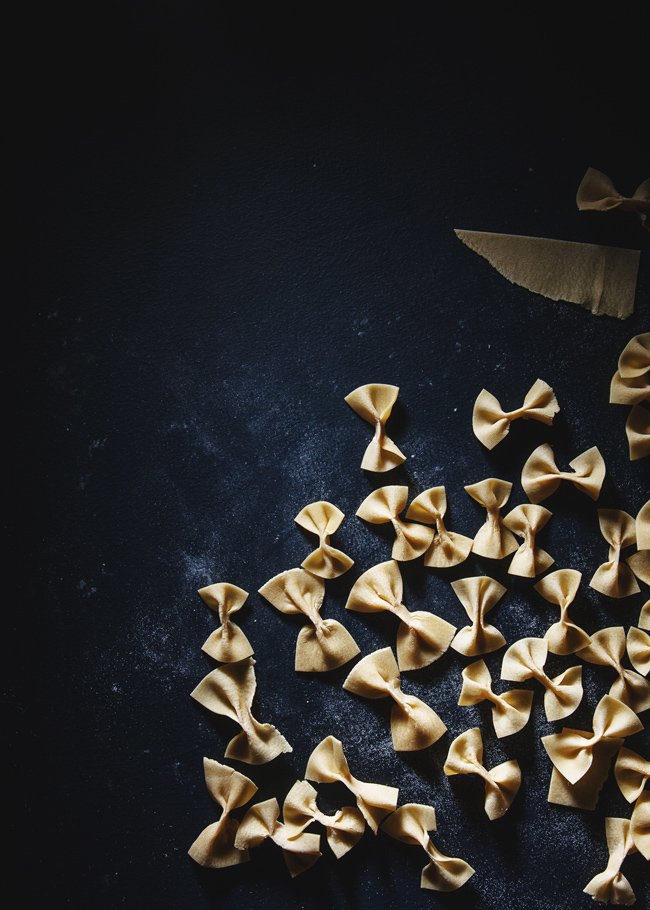
I decided to branch out to other shapes. My first experiment: farfalle, which means ‘butterfly’ in Italian. This shape needs no introduction of course, as I’m sure we’ve all eaten it many times before. What I love about making this pasta is how you make each piece individually, pleating it in the middle just so, pinching and squeezing, then laying it aside. The transformation is quite stunning: from unimpressive rectangles of pasta into a neat pile of bowties.
I’m now debating whether or not to add the Kitchenaid pasta roller attachment to our registry. Don’t give me that look!

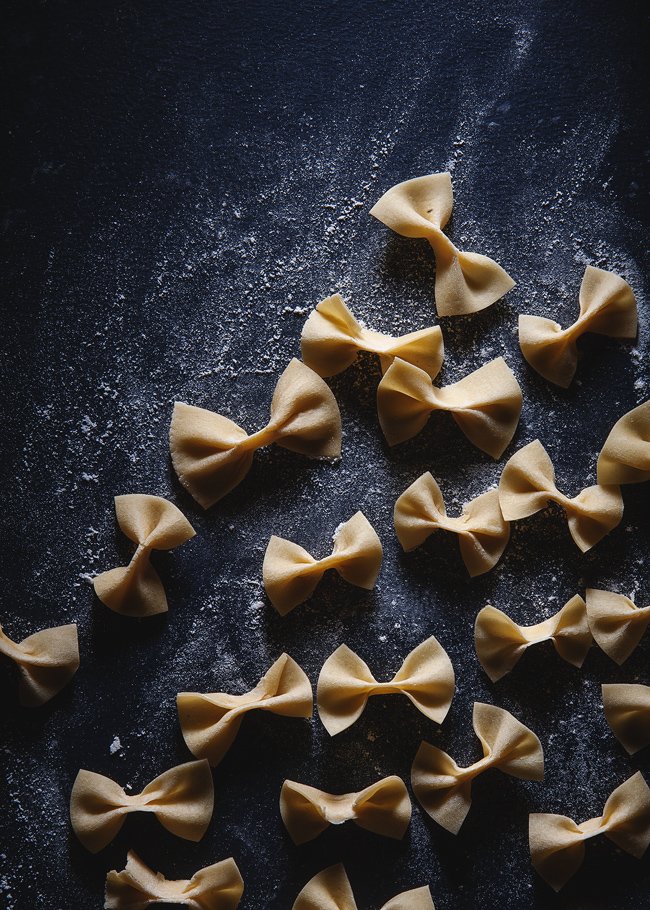
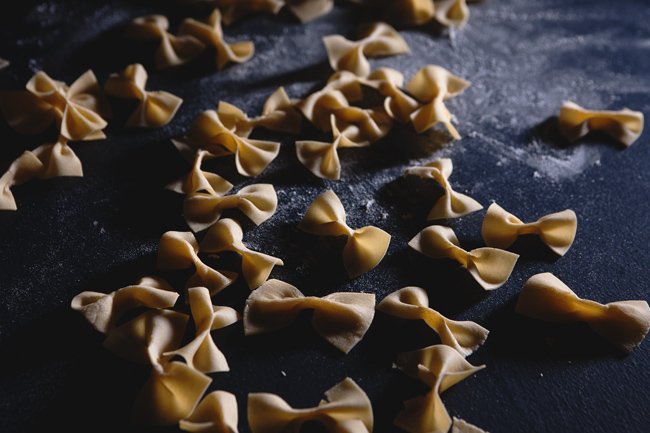
HOMEMADE FARFALLE (WITHOUT A MACHINE)
Adapted from The Kitchn
Serves 4 to 6
Note: Egg to flour proportions can range pretty dramatically. For an easier to work dough (that will be eggier), I’d go with a 1 egg to 1/2 cup ratio.
Ingredients:
1-1/2 cups all-purpose flour
2 eggs
Pinch of salt
Directions:
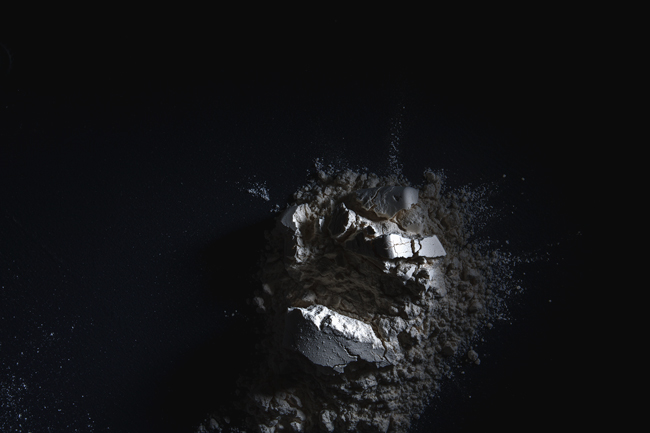
Make a volcano-like mound of flour on the work surface (meaning a hollow in the center). Crack the eggs into the hollow, sprinkle with salt, then, using a fork, gently start stirring the eggs, slowly incorporating the flour from the walls of the volcano.
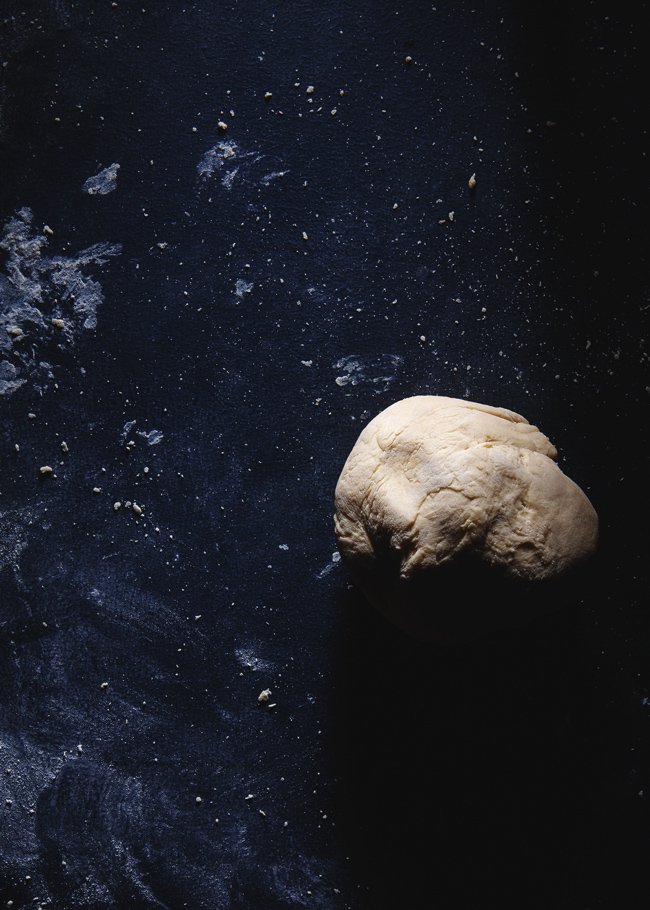
Once the dough has become workable by hand—a fair amount of flour will have been worked in—use your hands to incorporate the rest of the loose flour. Once the dough has come together smoothly, knead the ball for about 10 minutes. If it’s a little dry, add a splash of water, but continue kneading until it’s smooth and sort of feels like clay. Cover the ball of dough with plastic wrap so it doesn’t dry out, and let it rest for about half an hour. The dough should relax and become easier to work with after this period.
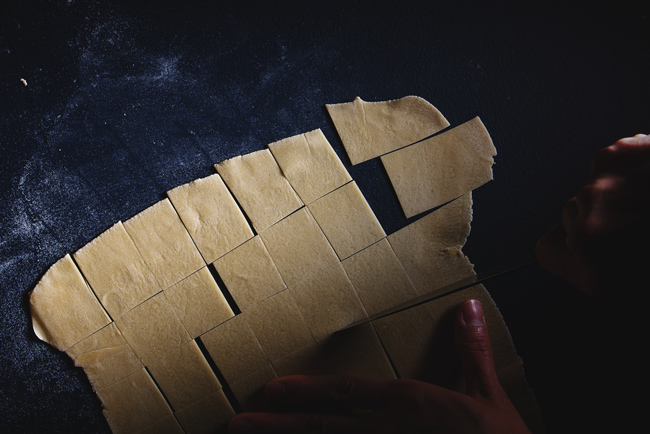
Cut the ball in halves or fourths, and begin rolling a piece out with a rolling pin, trying to keep its shape roughly rectangular. You want it to end up very thin, almost transparent. Using a sharp knife, slice the pasta into pieces that are about 1.5″ by 1″. Pinch each rectangle along the longer side really hard.
Roll out the rest of the dough in the same fashion. You’ll now have tiny little butterfly-shaped pasta. Enjoy! You can also dry them by simply leaving them out covered with a dishcloth.
Related Posts


Subscribe for New Racipies
Get mental health tips, updates, and resources delivered to your inbox.
Are Mangoes Acidic? [Mango And Acid Reflux Good Or Bad]

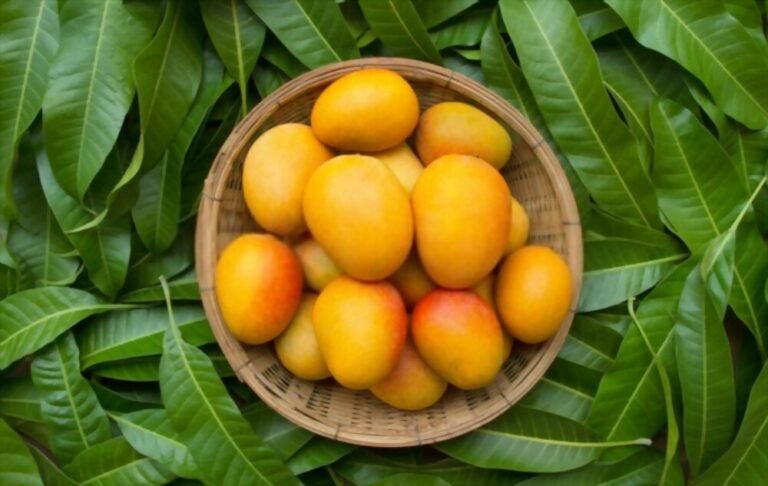
Is the mango originally from South America or south of North America?
The debate is still going on among the experts, but they are not getting into that bitterness. It’s probably because of the sweetness of the fruit.
But let’s not forget the tangy sour taste of mango. Why does the fruit have a wide variety of flavors? Are mangoes acidic?
Mangoes are slightly acidic, with a pH range between 3.40 to 6.00. The pH scale for green mangos is between 3.40 to 4.80. High malic acid in green mangoes makes them taste acidic and sour. Ripe mangos have pH values between 5.80 to 6.00 and are less acidic than green mangos.
Mangos are not all about taste. They are packed with nutritional values and greatness. Let me guide you to explore them.
Mangoes – Acidic, Alkaline, or Neutral?
Let’s recall Chemistry 101 from college.
We use a pH scale while measuring acidity. The scale ranges from 0 to 14, and the values tell us about the acidity.
| pH value | Acidic or basic status |
| 0 – 6.99 | Acidic |
| 7 | Neutral (like water) |
| 7.1 – 14 | Alkaline/Basic |
So, what do you think about mango when you know its pH value ranges from 3.40 to 6.00? Is mango alkaline or acidic?
Of course, it’s acidic as the values are less than 7.
pH of Mangoes and Mango Juice
You already know the pH level of mango. But what about the pH value of mango juice? Are they the same or different? The answer will surprise you for sure.
pH of mango
Mango may not be among the non acidic fruits. But their acidic values are lesser than other acidic fruits like lemon, cherries, or cranberries.
| Mango Varieties | pH level of mango |
| Green Mango | 3.40 – 4.80 |
| Ripe Mango | 5.80 – 6.00 |
| Ataulfo | 4.00 – 4.20 |
| Keit | 3.80 – 4.10 |
| Haden | 4.50 – 4.80 |
| Kent | 4.30 – 4.50 |
| Tommy Atkins | 3.70 – 3.90 |
| Francis | 4.00 – 4.10 |
Green mangos are less acidic than ripe mangos. But you must be surprised why you get the sour taste in green, not in the ripe mango. It’s the oxidation of malic acid that makes the difference in taste.
pH of mango juice
Is mango juice acidic? Let me explain the context of this question first.
Most fruit acidity charts talk about the pH range of mango fruit but not the juice. You will also find some articles saying fruit and juice are almost the same and have the same pH.

But it’s not right. Mango juices are slightly less acidic than fruits due to malic and gallic acid oxidation. In fact, mango juices are almost neutral, with a pH value between 6.86 to 6.96.
Also Read:
Are Apples Acidic? Apples for Acid Reflux [Good or Bad]
Is Mango Good for Acid Reflux and Heartburn?
What do you do when you have acid reflux or GERD? You simply take medication that contains alkaline substances. These alkalis neutralize the acid in your stomach and stop heartburn.
If you had chemistry in college, you already know we are talking about neutralization. But where does mango come from? How are mangos and acid reflux related?
If you take ripe mango while having heartburn, the almost alkaline pH of the fruit will partially neutralize the stomach acid. It may not be as effective as an antacid, but you will feel much better.
In fact, mangoes are among those few antacid fruits that even the doctors recommend for soothing GERD symptoms. The fruits include:
- Mango
- Apple
- Banana
- Melons
- Pears
So, what do you think? Is mango good for gastric problems? Of course, it is good.
As long as you keep the consumption under control, they are great for keeping acid reflux on the bay.
Is Mango Bad For Acid Reflux?
As mango is good for acid reflux, it’s obvious mango is not bad for acid reflux. However, there is a catch.
If you consume too much mango, the malic and gallic acid, as well as the ascorbic acid, will trigger acid reflux. The situation can become grave in the case of green mango.
Green mangos are tangy and sour due to the higher concentration of natural acids. If you are a big fan of that sour taste or Indian tangy dishes with mango, bothered with GERD will be obvious.
Is mango juice acidic?
The oxidation process reduces the acid strength when you make mango juice from the pulp. You will see a gradual change in mango juice’s pH values ranging from 6.86 to 6.96.
The value is almost neutral. So, no matter how sweet or sour the juice tastes, you won’t find that acidic flavor.
You can conclude that the mango acidity level is 15 to 20% higher than the mango juice.
Are ripe mangoes acidic?
Yes, ripe mangos are acidic but almost 30% less acidic than their green counterparts. Ripe mango’s pH level varies from 5.80 – 6.00. The value is pretty close to neutral.
That’s why you typically taste only sweetness while eating a ripe mango. If you go for green mango, you will find them more acidic and tangy than the ripe ones.
Are dried mangoes acidic?
Dried mangos are equally acidic as the fruit. Dried mangos are not an option if you are looking for acidic fruits to avoid. Their acidity ranges from pH 3.40 to 6.00.
The drying up process only reduces the moisture content. So, it will make the taste more intense but won’t impact the acidity level.
Does raw mango cause acidity?
Raw or green mango can cause acidity if you already have gut issues like GERD or ulcers. The tartaric acid and trace of citric acid in green mangoes are responsible for any acid reflux.
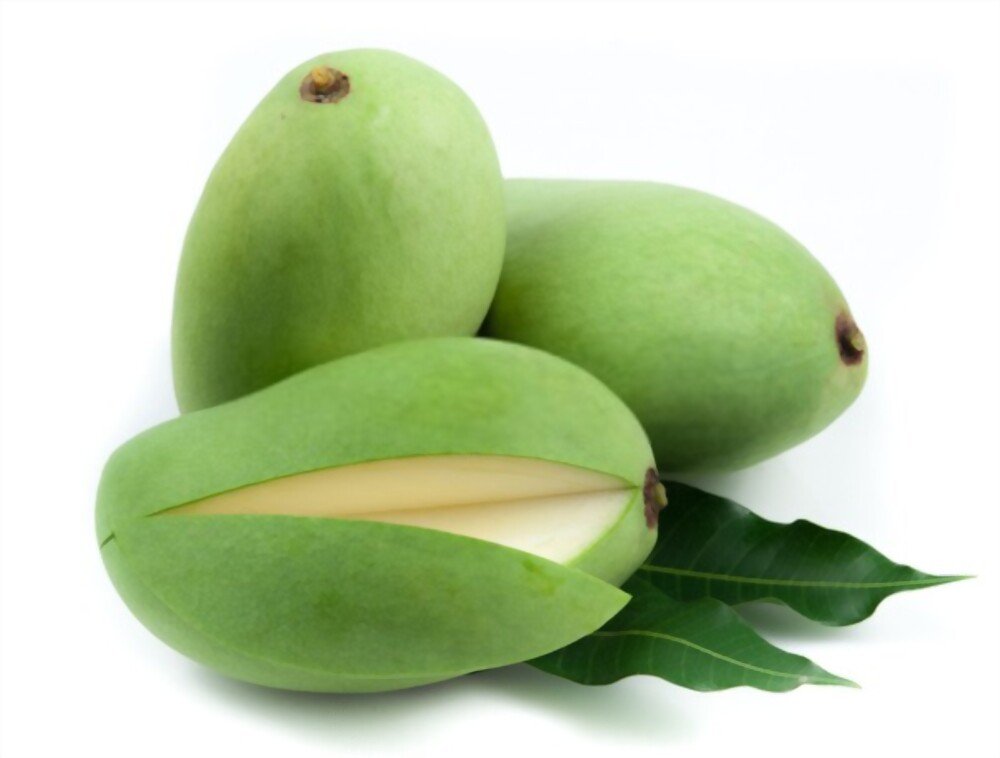
You can minimize the impact of green mango on acid reflux by limiting the consumption to one at a time. And drinking water after eating green mango can also make things less acidic.
Also Read:
Are Strawberries Acidic? Do They Cause Acid Reflux?
Health benefits of Mangoes
No matter the taste, mango comes with a pact full of benefits. From being rich in nutrition to soothing eye problems, mango’s health benefits are diverse and compelling.
High in Nutrition
Nutritional values of one cup mango
- Calories: 99
- Fiber: 2.6 grams
- Carbs: 24.7 grams
- Sugar: 22.5 grams
- Protein: 1.4 grams
- Fat: 0.6 grams
- Vitamin A: 10% of the DV
- Vitamin B6: 12% of the DV
- Vitamin C: 67% of the Daily Value (DV)
- Vitamin E: 10% of the DV
- Vitamin K: 6% of the DV
- Potassium: 6% of the DV
- Magnesium: 4% of the DV
- Copper: 20% of the DV
- Folate: 18% of the DV
- Niacin: 7% of the DV
- Riboflavin: 5% of the DV
- Thiamine: 4% of the DV
Keep Blood Sugar Low
The low-calorie fruits help in keeping your blood sugar low. The sugar content is comfortable to digest for diabetic patients. Moreover, the fruit contains carotenoids and Vitamin C, which help to prevent diabetics.
Immune Booster
Mangos offer 10% of the daily value of immune-boosting Vitamin A, copper, Vitamin B6, folate, and Vitamin E. All of these put your immune system on the go and keep your skin healthy.
Good for Heart
You will find an adequate amount of mangiferin, a super antioxidant for a healthy heart, in mango. Besides, potassium and magnesium keep blood flow smooth and blood pressure under control.
Great for Eyesight
Antioxidants like lutein and zeaxanthin act as natural sunblock for the retina to safeguard it from high sunlight. Mangos are full of lutein, zeaxanthin, and Vitamin A that keep your eyes happy. Mango acidity level also activates these antioxidants faster.
FAQs
Are mangoes acidic or alkaline?
Mangoes are acidic as their pH level ranges from 3.40 to 6.00. Green mangoes are more acidic than ripe mangoes. Mango juices are very close to being neutral on the acidity scale. Dried mangoes do not differ in pH value from raw fruit.
Can I eat mango with acid reflux?
You can eat mango with acid reflux. However, keep an eye on the consumption and the type of mango you are eating. Green mangoes may trigger acid reflux if you take them in excess amounts.
Is there any acid in mango?
Yes, there are three major types of acid in mango. They are malic acid, tartaric acid, and traces of citric acid in mango. The concentration of acids may vary based on the species and ripening status.
Is mango good in acid reflux?
Mangoes are good for acid reflux if you keep the consumption under control. However, if you are worried about whether mangoes are acidic for babies, my answer will be it depends on the age. The acid concentration is too high for infants. However, they are suitable for toddlers.
Bottom Line
I am sure you already have the answer to “are mangoes acidic fruit.” Well, they are acidic, but different mangoes have different pH levels.
Green mango is more acidic than ripe mango. And you have to be extra cautious while consuming the green one with any gastric issues. Otherwise, both the variations are significant for your overall health.
So, next time someone asks you, “are mangoes acidic” you can simply answer it depending on your taste and preferences.
Related Posts

Subscribe for New Racipies
Get mental health tips, updates, and resources delivered to your inbox.