Blueberry Sour Cream Ice Cream
Medically reviewed by Christiana George Updated Date: June 8, 2023
In the last week, my outlook on life has improved, oh, about 1000%, and here’s why: we finally got an air conditioner! It’s such an important event that I feel our time here will forever be divided between the time before and after its arrival.
While it’s transformed just about every aspect of daily life—from being able to sleep through the night to actually feeling clean after a shower to feeling motivated once again to do things other than sit in front of the fan (not conducive to blogging, believe me), most importantly of all, I can now, once again, envision food being made. The cereal diet has been lifted and I will never again underestimate the value of HVAC.
This ice cream is one of the few things I could muster into being during the time B.A.C. (before A/C) and the reason is because it involved absolutely no stove time whatsoever. That’s right. Which makes it my first custard-less ice cream ever. And it’s delicious.
I’d originally been inspired by this awesome-looking strawberry sour cream ice cream that Katie had made awhile back. Except I balked at the number of egg yolks the recipe called for (Nine. Really? Are they really necessary? Does anyone know what the relation is between number of yolks and consistency/taste?). So after a quick web search, I found another recipe for sour cream ice cream that involved zero yolks, and little much of anything else. It was the simplest recipe ever: mix the ingredients, refrigerate, churn. Easy. Clean up consisted of one bowl and one immersion blender (as well as the usual assortment of measuring implements, but they don’t count).
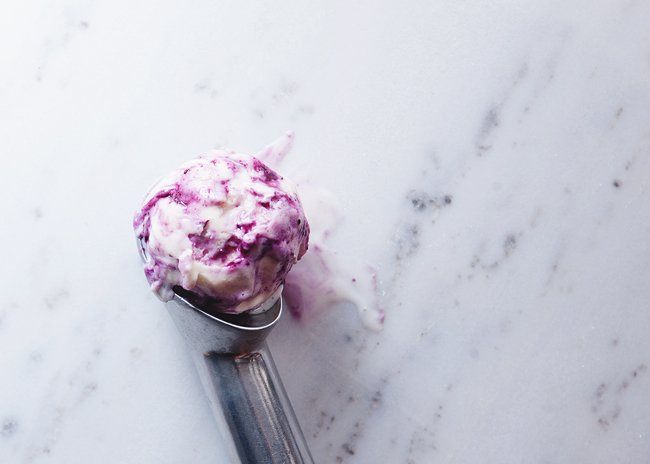
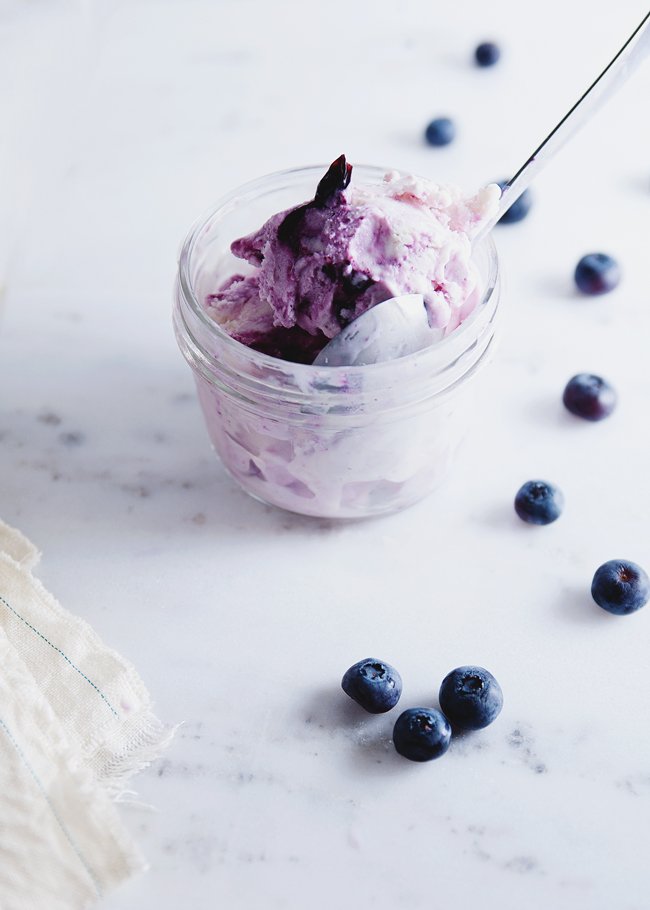
The ice cream came out with just the right amount of tang, sort of similar to the plain-flavored fro-yo that’s so popular these days, but much creamier and smoother, like Cheesecake Lite. I also love how the blueberry sauce came out, streaks and pockets and bursts of lovely violet that taste delicately sweet against the sharpness of the sour cream.
I am a huge fan. And though I’m back in action in the kitchen, this is one easy recipe that I’ll be coming back to again and again.
One year ago: Apricot raspberry galette
BLUEBERRY SOUR CREAM ICE CREAM
Adapted from Gourmet
Makes about a quart
Ingredients:
For the blueberry sauce:
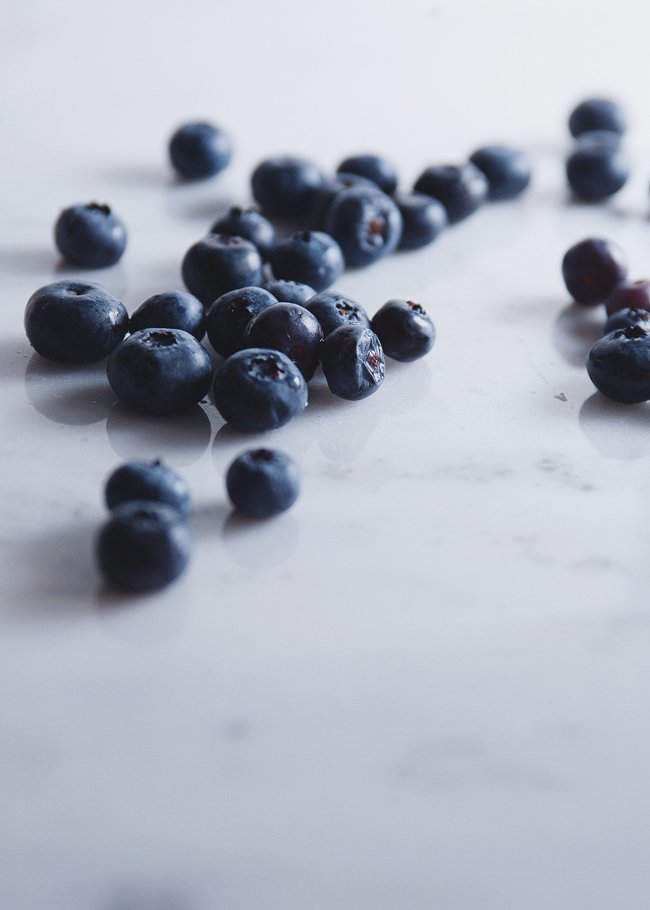
1-1/2 cups blueberries
3/4 cup sugar
For the ice cream:
1 16-ounce container chilled sour cream
1 cup chilled whole milk
3/4 cup sugar
1/2 cup chilled heavy cream
2 teaspoons fresh lime juice
1/2 teaspoon pure vanilla extract
pinch salt
Directions:
For the blueberry sauce:
Put the blueberries and sugar in a small saucepan, stir to mix, and bring to a boil over medium heat. Reduce heat and simmer, stirring occasionally, until the berries are very tender and the sauce is slightly thickened, about 8 minutes. Remove from the heat, and let cool. Refrigerate until cold before using.
For the ice cream:
Blend all the ingredients until mixture is smooth and sugar has dissolved. Chill until very cold, overnight if possible. Freeze mixture in ice cream maker. Transfer to an airtight container, drizzling in the blueberry sauce intermittently. Place in freezer until firm.
Subscribe for New Racipies
Get mental health tips, updates, and resources delivered to your inbox.
Is Bell Pepper Juice Acidic? Its Role in Managing Acid Reflux

Bell peppers, often celebrated for their vibrant colors and rich nutrient profile, have become a popular ingredient in juices. But if you’re someone who struggles with acid reflux, you may wonder: Is bell pepper juice acidic, and can it fit into an acid reflux-friendly diet? In this article, we’ll explore the acidity of bell pepper juice, its nutritional benefits, and whether it’s a good choice for managing acid reflux.
Is Bell Pepper Juice Acidic?
To determine whether bell pepper juice is acidic, we need to understand its pH level. The pH scale ranges from 0 (highly acidic) to 14 (highly alkaline), with 7 being neutral.
- Bell peppers, especially red and yellow varieties, are naturally low in acidity, with a pH range of approximately 5 to 6. This places them on the less acidic side compared to other vegetables and fruits.
- When juiced, bell peppers retain their relatively low acidity, making bell pepper juice a gentler option for individuals with acid reflux compared to citrus juices or tomato-based beverages.
Nutritional Benefits of Bell Pepper Juice
Bell pepper juice is not only low in acidity but also packed with essential nutrients that can support overall health and digestion. Here are the key nutrients:
1. Vitamin C
Bell peppers are an excellent source of vitamin C, which supports immune function and helps repair tissues. Unlike citrus fruits, their vitamin C content is less likely to irritate the stomach lining.
2. Antioxidants
Bell peppers contain antioxidants like beta-carotene and flavonoids that help reduce inflammation in the body. Chronic inflammation can exacerbate acid reflux, so consuming anti-inflammatory foods may provide relief.
3. Low-Calorie Option
If you’re managing your weight to reduce acid reflux symptoms, bell pepper juice is a low-calorie beverage that can be included in your diet without adding excess calories.
4. Fiber Content
While juicing removes some fiber, bell pepper juice still retains trace amounts that can promote better digestion and gut health.
Bell Pepper Juice and Acid Reflux: Is It Safe?
For individuals with acid reflux, diet plays a pivotal role in symptom management. Here’s why bell pepper juice might be a good addition to your diet:
1. Low Acidity
As mentioned earlier, the low acidity of bell pepper juice makes it less likely to trigger reflux symptoms compared to highly acidic beverages.
2. Anti-Inflammatory Properties
The antioxidants in bell peppers can help combat inflammation, potentially soothing the esophagus and reducing discomfort caused by acid reflux.
3. Gentle on the Stomach
Bell pepper juice lacks the irritants found in spicy or overly acidic foods, making it a gentler choice for those with sensitive stomachs.
How to Prepare Bell Pepper Juice for Acid Reflux Relief
To maximize the benefits of bell pepper juice while minimizing potential triggers, follow these tips:
Ingredients:
- 1-2 fresh bell peppers (red, yellow, or orange)
- 1 cucumber (optional, for added hydration)
- A small piece of ginger (optional, for its digestive benefits)
- Water (as needed)
Preparation Steps:
- Wash the bell peppers thoroughly and remove the seeds and stems.
- Chop the bell peppers into smaller pieces for easier blending.
- Add the bell peppers, cucumber, and ginger to a blender.
- Blend until smooth, adding water if needed to adjust the consistency.
- Strain the juice if you prefer a smoother texture, or leave it as is for more fiber.
- Serve immediately for maximum freshness and nutrient retention.
Tips for Enjoying Bell Pepper Juice Safely
- Avoid Adding Acidic Ingredients: Refrain from adding lemon juice or vinegar, as these can increase the acidity and potentially worsen reflux symptoms.
- Drink in Moderation: While bell pepper juice is gentle, consuming it in large quantities may still lead to discomfort for some individuals.
- Pair with Reflux-Friendly Foods: Combine bell pepper juice with alkaline snacks like oatmeal, bananas, or whole-grain crackers to create a balanced meal.
- Monitor Your Symptoms: Everyone’s tolerance is different. If you experience any discomfort after consuming bell pepper juice, consider reducing the portion size or consulting a healthcare professional.
Other Acid Reflux-Friendly Juices
If you’re looking to diversify your options, here are some other juices that are generally safe for acid reflux sufferers:
- Aloe Vera Juice: Known for its soothing properties.
- Carrot Juice: Mild and rich in nutrients.
- Cucumber Juice: Hydrating and alkaline.
- Melon Juice: Low in acidity and refreshing.
Foods to Avoid with Bell Pepper Juice
To maintain an acid reflux-friendly diet, avoid pairing bell pepper juice with the following:
- Spicy foods
- Fried or greasy snacks
- Acidic fruits like oranges or grapefruits
- Carbonated beverages
Frequently Asked Questions
1. Is bell pepper juice suitable for everyone?
Bell pepper juice is generally safe for most individuals. However, those with specific allergies or sensitivities to bell peppers should avoid it.
2. Can bell pepper juice replace meals?
While bell pepper juice is nutritious, it should complement a balanced diet rather than replace meals. Pair it with other healthy foods for optimal benefits.
3. Which color bell pepper is best for juicing?
Red, yellow, and orange bell peppers are sweeter and less acidic than green ones, making them better choices for juicing, especially for those with acid reflux.
Conclusion: Is Bell Pepper Juice Acidic?
Bell pepper juice is mildly acidic, with a pH that makes it a gentle option for most individuals, including those with acid reflux. Its rich nutrient profile, anti-inflammatory properties, and low acidity make it a valuable addition to an acid reflux-friendly diet.
By preparing bell pepper juice thoughtfully and monitoring your body’s response, you can enjoy this vibrant beverage while keeping acid reflux symptoms at bay. As always, consult a healthcare provider for personalized dietary advice tailored to your specific needs.
Subscribe for New Racipies
Get mental health tips, updates, and resources delivered to your inbox.