
Is Coconut Milk Acidic? Coconut Milk and Acid Reflux

Medically reviewed by Aneeza Pervez Updated Date: May 13, 2026
Introduction: The Rise of Coconut Milk in Modern Diets
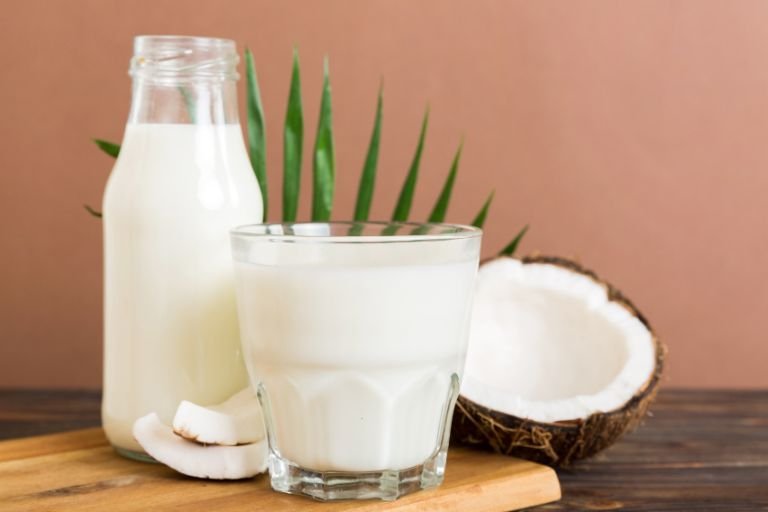
Coconut milk has become a popular alternative to dairy, loved for its creamy texture, versatility, and unique flavor. Whether used in curries, smoothies, or coffee, it’s a staple for people seeking plant-based options.
But if you suffer from acid reflux, you might be wondering: Is coconut milk acidic, and is it safe for those prone to heartburn? Can it soothe or worsen symptoms of acid reflux?
This article explores the acidity of coconut milk, its potential effects on acid reflux, and how to incorporate it into a reflux-friendly diet. By the end, you’ll have the answers to whether this tropical delight fits into your lifestyle without triggering unwanted symptoms.
What Is Acid Reflux and Why Does It Matter?
Understanding Acid Reflux
Acid reflux, or GERD (gastroesophageal reflux disease), occurs when stomach acid flows back into the esophagus, causing irritation. A weakened or relaxed lower esophageal sphincter (LES) is often the culprit.
Common symptoms include:
- Heartburn: A burning sensation in the chest or throat.
- Regurgitation: Sour or bitter-tasting acid backing into the mouth.
- Bloating and Nausea: Especially after meals.
Diet and Acid Reflux
Diet plays a crucial role in managing acid reflux. Certain foods can relax the LES or increase stomach acid production, worsening symptoms. Common reflux triggers include:
- High-fat and fried foods
- Spicy dishes
- Caffeine and alcohol
- Acidic foods like tomatoes and citrus fruits
Understanding where coconut milk fits into this picture is essential for those dealing with acid reflux.
Related to Read:
Is Coconut Milk Acidic or Alkaline?
The pH of Coconut Milk
Coconut milk is considered neutral to mildly alkaline, with a pH ranging between 6.0 and 7.4. This makes it less likely to irritate the esophagus or exacerbate acid reflux symptoms, unlike more acidic beverages such as dairy milk or citrus juices.
Why pH Levels Matter for Acid Reflux
Foods with a higher (alkaline) pH can help neutralize stomach acid and soothe the digestive tract, while acidic foods can aggravate reflux. The mild alkalinity of coconut milk makes it a potentially safe choice for those looking to manage their reflux symptoms.
Nutritional Profile of Coconut Milk
What’s Inside Coconut Milk?
Coconut milk is made by blending the white flesh of coconuts with water. It is rich in nutrients and provides:
- Calories: Approximately 100–150 per ½ cup (depending on brand and fat content)
- Healthy Fats: Mostly medium-chain triglycerides (MCTs), which are easily digested and may provide quick energy.
- Vitamins: C, E, and several B vitamins.
- Minerals: Magnesium, potassium, and manganese.
The calorie and fat content can vary between full-fat and light coconut milk. Full-fat versions are richer but may pose challenges for acid reflux sufferers due to their fat content.
Health Benefits of Coconut Milk
Coconut milk is packed with potential health benefits, such as:
- Supporting Heart Health: The MCTs in coconut milk may help raise good cholesterol (HDL).
- Boosting Energy: MCTs are quickly metabolized by the body.
- Aiding Digestion: Its anti-inflammatory properties can help soothe the digestive tract.
However, these benefits need to be balanced with individual tolerance, especially for those managing acid reflux.
How Coconut Milk May Impact Acid Reflux
Benefits of Coconut Milk for Acid Reflux
Coconut milk may help individuals with acid reflux in the following ways:
- Mild Alkalinity: Its near-neutral pH can help balance stomach acidity.
- Lactose-Free Option: For those with lactose intolerance, coconut milk is a great alternative to cow’s milk, which can sometimes exacerbate reflux.
- Anti-Inflammatory Properties: Coconut milk contains antioxidants and nutrients that may reduce inflammation in the digestive tract.
Potential Drawbacks of Coconut Milk for Acid Reflux
Despite its benefits, coconut milk may not be suitable for everyone:
- High-Fat Content: Full-fat coconut milk contains a significant amount of fat, which can relax the LES and trigger reflux symptoms in some individuals.
- Portion Size: Drinking large quantities can increase stomach pressure, leading to acid backflow.
- Added Ingredients: Many store-bought coconut milk products contain additives, sweeteners, or thickeners, which may worsen reflux symptoms.
How to Incorporate Coconut Milk into a Reflux-Friendly Diet
Choose the Right Type
- Light Coconut Milk: Opt for light or reduced-fat versions to minimize fat intake.
- Unsweetened Options: Avoid coconut milk with added sugars, as sugar can worsen reflux for some individuals.
- Fresh or Homemade Coconut Milk: Making coconut milk at home ensures it’s free of additives or preservatives.
Preparation Tips for Acid Reflux Sufferers
- Portion Control: Start with small amounts, such as ¼ to ½ cup, to see how your body reacts.
- Combine with Alkaline Foods: Pair coconut milk with alkaline or neutral ingredients like bananas, oats, or spinach to balance acidity.
- Avoid Acidic Additives: Skip recipes that mix coconut milk with citrus juices, tomatoes, or spicy ingredients.
Reflux-Friendly Recipe Ideas
- Coconut Milk Smoothie: Blend unsweetened coconut milk with frozen bananas and spinach for a creamy, reflux-safe drink.
- Coconut Milk Porridge: Use coconut milk as a base for oatmeal or rice porridge, seasoned with cinnamon and honey.
- Mild Coconut Curry: Make a reflux-friendly curry by combining coconut milk with gentle spices like turmeric and ginger.
More Coconut Recipe: Lime Coconut Rice Krispie Treats with Tequila
Strawberry Coconut Banana Muffins
Alternative Dairy-Free Options for Acid Reflux Sufferers
Other Plant-Based Milks
If coconut milk doesn’t suit your needs, consider these reflux-friendly alternatives:
- Almond Milk: Naturally alkaline and low in fat.
- Oat Milk: Gentle on the stomach and rich in fiber.
- Rice Milk: A light, neutral option that’s easy to digest.
Non-Milk Alternatives
For those looking to avoid all types of milk, try:
- Herbal Teas: Chamomile or ginger tea can soothe acid reflux symptoms.
- Coconut Water: A low-fat, hydrating alternative to coconut milk.
Lifestyle Tips for Managing Acid Reflux Alongside Diet
Adopt Better Eating Habits
- Smaller Meals: Eating smaller, more frequent meals prevents overloading the stomach.
- Timing Matters: Avoid eating large meals before bedtime.
- Stay Upright: Sit up for at least 2–3 hours after eating to reduce reflux episodes.
Avoid Known Triggers
In addition to choosing reflux-friendly foods like coconut milk, avoid common triggers such as fried foods, alcohol, and caffeine.
Conclusion: Is Coconut Milk Acidic and Safe for Acid Reflux?
Coconut milk is neutral to mildly alkaline, making it a generally safe option for individuals with acid reflux. Its lactose-free, anti-inflammatory properties and rich nutrient profile make it a versatile alternative to dairy.
However, portion size, fat content, and added ingredients play a crucial role in determining whether coconut milk triggers or soothes reflux symptoms. Opt for light, unsweetened, and minimally processed varieties, and pair them with reflux-friendly ingredients for the best results.
By incorporating coconut milk mindfully into your diet and adopting reflux-friendly habits, you can enjoy this creamy plant-based milk without compromising your digestive health.
FAQs: Coconut Milk and Acid Reflux
Q1: Is coconut milk acidic or alkaline?
Coconut milk is neutral to mildly alkaline, making it a reflux-friendly beverage.
Q2: Does coconut milk worsen acid reflux?
Full-fat coconut milk may worsen reflux for some individuals due to its high-fat content. Opting for light versions and consuming it in moderation can help.
Q3: Can I drink coconut milk if I have GERD?
Yes, but choose unsweetened, light coconut milk and monitor your symptoms to ensure tolerance.
Q4: Are there alternatives to coconut milk for acid reflux sufferers?
Yes, almond milk, oat milk, and rice milk are great plant-based options for those with acid reflux.
Q5: Can coconut milk be used in reflux-friendly recipes?
Absolutely! Use coconut milk in recipes like smoothies, porridges, or mild curries, avoiding acidic or spicy additives.
Related Posts






Subscribe for New Racipies
Get mental health tips, updates, and resources delivered to your inbox.
Are Burgers Healthy? 6 Tips to Turn Burgers Healthier


Everyone, more or less, loves to binge on burgers. The blast of amazing flavors and juicy meat make it a favorite snack choice.
But the real question is: Are burgers healthy?
No, burgers are not healthy. Especially when we are having it from fast food restaurants. They are usually loaded with extra cheese and sauce. Not to forget the huge bun. Definitely not a balanced, nutritious meal. However, you can make your own healthy burgers by simply bringing some modifications.
Still unsure? Well, do not sweat! Because here I am gonna clear all the queries and confusion you might have. Plus, I will be providing how to make a healthy burger on your own.
Read on!
The Problems With Burgers
Let’s be clear about one thing: burgers aren’t usually healthy.
Burgers are stuffed with extra cheese and special sauce and served on a huge bun. These aren’t exactly the ideal example of a balanced, nutrient-dense meal.

Especially when they are served by a fast-food restaurant.
The typical patty contains roughly 25 grams of fat. And 10 of which are saturated, from the cuts of beef, used.
A Big Mac burger has 494 calories, of which its fat content is responsible for half.
Additionally, one serving of sauce on a burger contains about 10 grams of sugar. Which is higher than the typical chocolate chip cookie.
The majority of burger toppings, like tomato sauce and barbeque, contain at least 25 percent sugar.
The buns come next. Refined white flour, which has minimal nutritional value and immediately raises blood sugar levels.
A burger is almost as unhealthy as eating a large piece of cake when it comes to high-fat meat and high-sugar sauce.
Related Post: Is Mac and Cheese Healthy? Calories, Nutrition, and a Awesome Recipe
What Happens When You Eat Burgers?
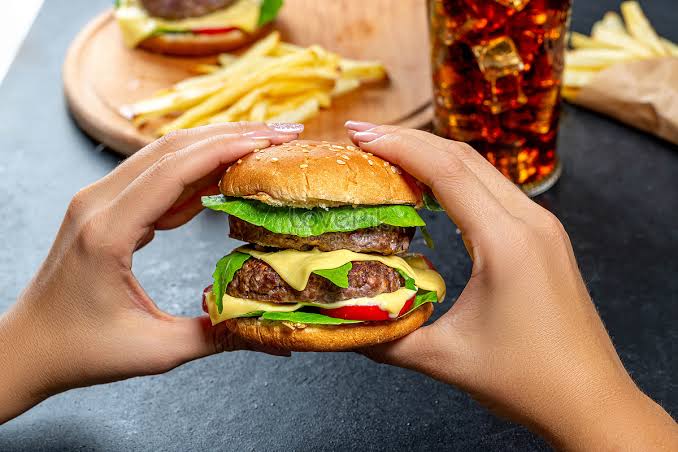
According to science, eating junk food even occasionally can be harmful to your health. Because it is bombed in fat, calories, as well as sodium.
One single hamburger, for instance, contains 500 Cal. Along with the fat of 25 grams and 40 grams of carbs.
Also, it contains 10 grams of sugar and 1,000 milligrams of sodium. All of these might be damaging to your health.
After taking your first bite of a burger, you will see a significant spike in glucose after 15 minutes.
As an outcome, insulin is discharged. And it provokes you to become hungry again shortly after.
The chance of developing diabetes can rise if this practice is continued. According to science, eating too many calories at once causes oxidative stress in the cells.
Consuming a meal high in saturated fat might be detrimental to your health.
It was shown that a group of healthy men’s arteries was severely damaged. And also didn’t dilate after they depleted foods high in saturated fat.
Later in adulthood, heart illness may result from this blood flow limitation.
The blood vessel may suffer because of the excessive sodium content.
Hence, the next time you’re dying to have a burger, you gotta resist the impulse!
Related Post: Are Crackers Healthy? Should you avoid or eat crackers
How to Prepare a Healthy Burger
This is for when you are gonna attempt to eat healthily. Burgers do not necessarily have to be totally off-limits.
In fact, research demonstrates that red meat may be a fantastic source of high-quality protein. Plus, vital elements such as iron, zinc, and vitamin B12 are there. But only when incorporated into a wholesome, varied diet.
Besides, poultry, for example, chicken as well as turkey, maybe one outstanding addition to nutrition.
Then where is it going wrong, exactly?
The answer would be the big bun, fatty toppings, as well as the size of your patties.
Burgers happen to be generally a fast food that is reserved for your cheat days.
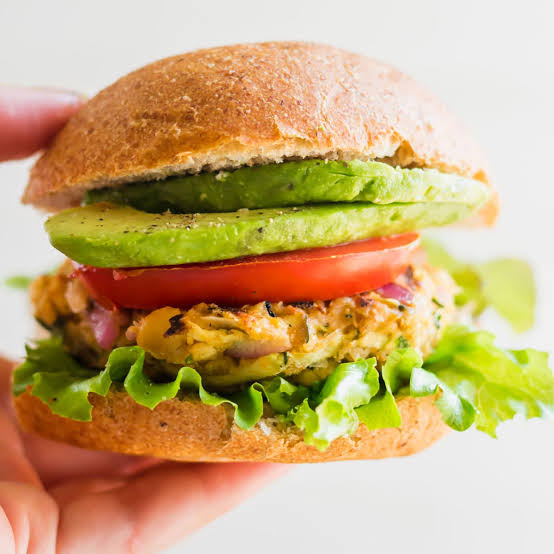
However, handmade ones are actually flavorsome and nutritious.
Related Post: Are Fish Sticks Healthy – 10 Healthy And Unhealthy Facts
Keep It Juicy And Trim the Fat Off
Reduce the saturated fat content in burgers by selecting lean meat. Such as ground beef, turkey, or chicken.
Lean food, as per USDA, is illustrated as containing lower than 11 grams of fat. Plus, the saturated fat content is about 4.5 grams.
Less than about 2 g of saturated fat per 100 grams is deemed extra lean.
In order to quickly narrow down your choices when meat shopping, aim for cuts that are between 90 and 95 percent lean.
Just remember that while leaner alternatives reduce fat and calories, they can also make your burger dreadfully dry.
Also, When you are gonna shape those patties, handle the meat as little as you can. This will make the thing as juicy as possible.
Avoid pushing the burgers with a spatula after they are on the grill or in the skillet as this can cause them to release more juice.
Trim the Meat
Even while lean meat isn’t bad in moderation, handmade burgers are a terrific way to sneak in lots of vegetables. Even if the burger isn’t vegetarian.
In addition to adding delicious flavors, chopped mushrooms, green onions, and carrots. Plus, the shredded sweet potatoes, carrots, and zucchini give the burger some extra fluids.
Try black beans, lentils, quinoa, or rice. Grains, beans, and pulses can also appear.
Before making your patties, put in these components into that raw meat mix. Cook the patties as usual afterward.
Add a Healthy Binding Agent
The most widely used ingredient for binding ground meat is bread crumbs. But I suggest that you can use oats instead because they are high in fiber.
For every pound (lb) of ground beef, use 14 cups of oats.
You can use chia seeds as a binder instead. As they work really nicely as a binder. And also contribute important fiber and omega-3 fatty acids.
To make chia seeds into a binder, combine them with water.
Mix about 2 tbsp of water with 1 tbsp of chia seeds. After that, you can utilize your chia seeds. Also, it is integral to let the seeds soak in the water.
At least for about ten minutes. Soak it in the water, they take a little while to gelatinize.
I recommend flax “egg” as a third choice, which also has fiber and omega-3 fatty acids.
Use 3 tbsp of lukewarm water with 1 tbsp of powdered flaxseed.
The flax egg should stay for a few minutes. It is gonna gelatinize this way. Then it can be utilized as your binder.
Spice Your Burger Up
In addition to adding a ton of flavor to burgers, spices, and herbs. Also include antioxidant substances like polyphenols.
Some of the highest quantities are found in oregano, thyme, sage, rosemary, and saffron. Particularly, when they’re dried.
Before you fry those patties, you need to stir a few of those dried spices. Incorporate them into that meat or vegetable mix.
Add fresh or chopped herbs to the top of your burger just before serving it to give it a little more flavor.
Size It Properly
Have you ever had a burger that was almost as big as your face at a restaurant?
It could seem like a fun challenge to finish it all, but if you do, you’ll probably end up in a major food coma.
You can regulate the patty size to something more acceptable and nutritious while creating burgers at home.
A 4-ounce protein patty, about the size of a deck of cards, constitutes one serving; during cooking, the burger should reduce to about three ounces.
Make judicious topping selections.
The simplest way to ruin a healthy burger is to cover it with a heavy coating of fattening, sugary, and salty toppings.
Salsa is a way more nutritious substitute for sweet ketchup. Or you could consider preparing your own.
And instead of mayo, choose guacamole for a little richness. Put as much fresh or grilled vegetables as you can on top of the burger. That can include tomatoes, peppers, onions, greens, and mushrooms.
You won’t miss that enigmatic unique sauce mixture with all the flavor and texture this offers.
Related Post: Is Potato Salad Healthy? [ 3 Best Potatoes for Potato Salad]
Think Alternatives to the Bun
While avoiding the bun altogether (going bare) is always an option. There are other healthy options that offer a more genuine burger-eating experience.
Consider low-carb alternatives like cloud bread. Two slices only have 94 calories and 9 grams of protein, plus it’s simple to cook.
Alternatively, you may place your burger between two large portobello mushroom caps, rounds of sweet potato or eggplant, or lettuce leaves.
So, there you go! That is how you can make a healthy burger all by yourself!
FAQs
Are hamburgers really unhealthy?
Yes, consuming junk food even sometimes is gonna be harmful to health. The reason is the increased sodium, calories, and fat. One hamburger, for instance, retains 500 cal, g of fat. Plus 40 gms of carbs, 10 grams of sugar, and mg of sodium. All of these might be harmful to health.
Do burgers increase weight?
Yes, Burgers can be heavy in calories. And in case you consume more calories than you burn, you are gonna gain weight. A hamburger and mayonnaise contain about 942 calories. If you order it along with a regular soft drink, your meal may be even higher in calories.
How much fast food can I eat?
Eating fast food very frequently is tied to an elevated risk of obesity. As per the various studies done on junk food intake. If you consume it more often than 2 times a week, you are at a higher risk of metabolic syndrome. Also, you might suffer from type 2 diabetes, as well as coronary heart disease.
Wrapping Up
Hope I have cleared your question about are burgers healthy?
Now you know the answer. So, if you want to eat healthily, I suggest cutting down on burgers a little. Particularly the ones from local fast food eateries. And consider making a healthier burger following the instructions I provided.
That is it for today. Remain healthy!
Related Posts
Subscribe for New Racipies
Get mental health tips, updates, and resources delivered to your inbox.