
Roasted Asparagus With Miso Butter And A Poached Egg

Medically reviewed by Christiana George Updated Date: January 6, 2026
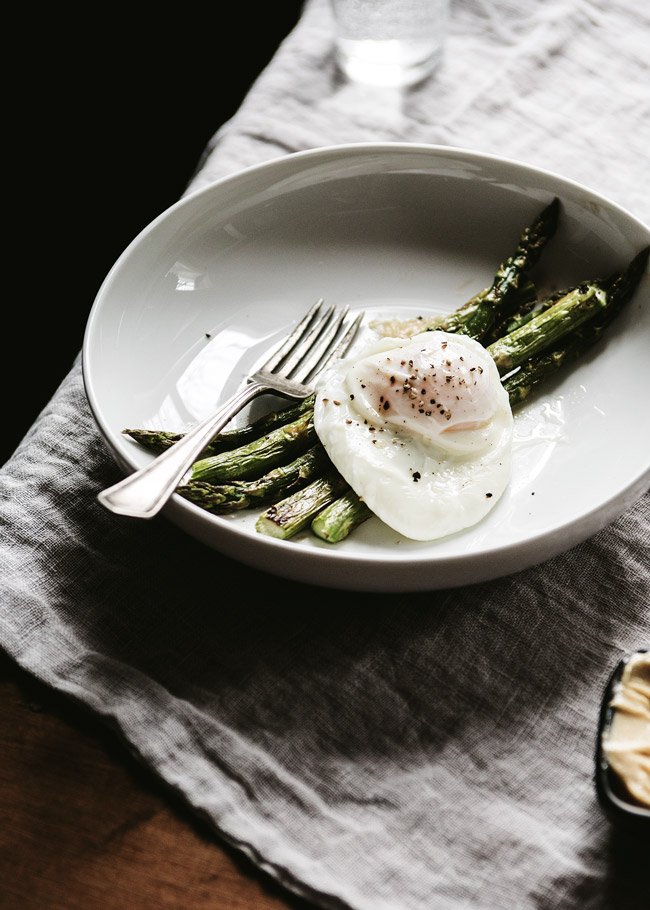
1. This is what happens when an unseasonably warm day comes along, the first in what has felt like a very long winter, the first where you could leave the house with nothing but a light jacket on, the first where a cold beer actually sounded like a good idea: you jump the gun just a bit while also taking some liberties with your convictions. A twofer, and I’ll let myself have it.
I usually stick to eating what’s in season, or at least I try to stick to eating what’s in season, but the asparagus on sale at the market called out my name. “Lindaaaaaa, buy uuuuuus,” they squeaked. Or are asparagus not squeakers? Whatever the case, I’m gonna be honest here: I’m not the perfect locavore. I buy tomatoes in the winter, okay? I eat watermelon pretty much all year round. And if strawberries are on sale tomorrow, I’ll snatch them up, dangit! (But I know they won’t be good, let’s just be clear about that.)

2. An exemplary egg is a sight to behold. If this isn’t the most ravishing yolk you’ve ever seen and the highest-shouldered whites (it’s an egg term), then you must point me in the direction of an egg purveyor easy reachable by the New York subway system. (These eggs are from the Northshire Farm stand at the Union Square Greenmarket, by the way. Highly recommended.).
I made it to the farmer’s market for the first time this year last Saturday. Do you ever do that thing where, if you can’t find what you needed to buy, you find something to buy anyway? It’s how I’ve ended up with some of the more random ingredients in my pantry: juniper berries, chocolate sprinkles, rock sugar, chickpea flour, and bags of frozen bird’s eye chilis, all of which have (mostly) gone untouched.
This isn’t to say that eggs are unusual, but $5 for a dozen goes outside my normal comfort zone. (I have spent $6 for half a dozen, but how can anyone refuse such beauties?)
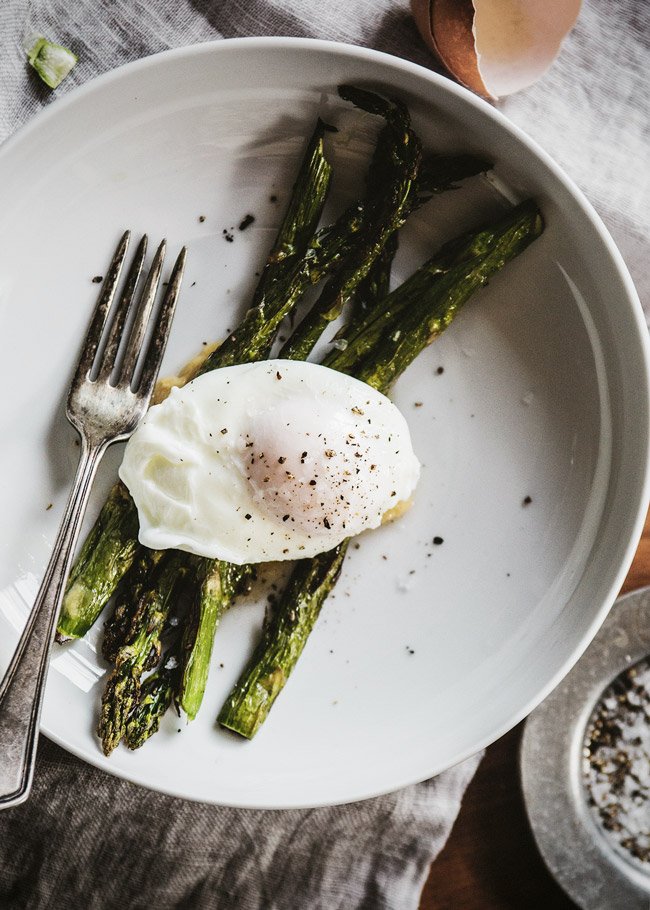
3. Miso butter. Misobuttermisobuttermisobuttermisobutter. MISO BUTTER! It’s a word to scream out from rooftops, songs should be written about it (sung by squeaky asparagus[es?]), trees and forearms should get it tattooed into their flesh, except I don’t like the thought of cutting into a tree with a sharp object.
Okay, fine, you want concreteness, I get it. In short: if any vegetarian ever complains about missing bacon, point them in the direction of this genius pairing. Miso butter is meaty and rich and lip-smackingly salty. It almost reminds me of MSG-laden Asian snack foods, which I realize isn’t exactly a positive description to most of you, but that’s because you only found out about it after it had gone on the blacklist. I grew up eating MSG like it was no big thing, just a magic seasoning that perked up most meals and made them more flavorful and delicious. Get it? Got it? Good.
For more miso butter ideas, check out Kristy’s ideas. I can’t wait for fresh corn season!

So there you have it: how I arrived at this dead-simple recipe, in three disjointed parts. Just to let you know, this last week so far has been kicking my butt. I’m going to blame it on the switch to Daylight Saving time, which I wouldn’t have even known about if the cashier ringing me up while I was buying the asparagus hadn’t mentioned it. (Instead, I would’ve entertained some indulgent fantasy about how I was under the weather, and spent half a morning hiding under the covers while drinking boatloads of coffee—someone pull me out from under my rock please?)
But things are looking up and up—like the mercury! Happy early spring!
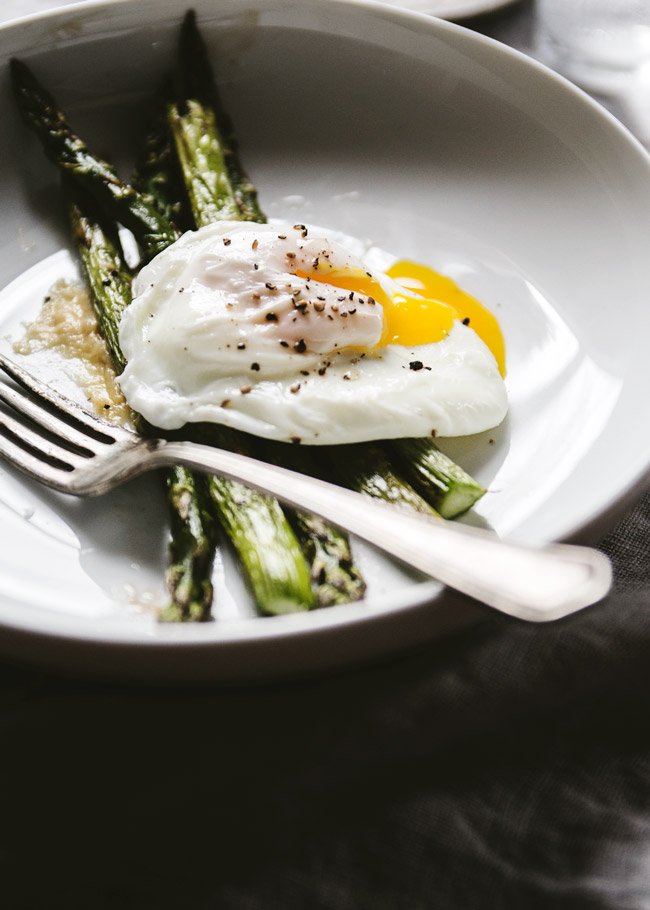
ROASTED ASPARAGUS WITH MISO BUTTER AND A POACHED EGG
Adapted from Momofuku by David Chang
I wouldn’t call this recipe a recipe so much as a jumping off point. The miso butter’s the real novelty here, and I’d hate to give an exact quantity that you have to make as you can totally make a batch, store it in the fridge, and use it up gradually with anything and everything. I started off with half a cup (8 Tbsp) of butter and 1/4 cup (4 Tbsp) of miso paste.
Also, miso paste varies in saltiness but is usually quite salty, so a little miso butter goes a long way. Make sure to use unsalted butter!
Ingredients:
- 2 parts unsalted butter, room temperature
- 1 part white miso paste
- Asparagus
- Eggs, poached
Directions:
Whisk the butter and miso paste together until well combined.
For a plate of roasted asparagus with miso butter and a poached egg:
Roast a handful of asparagus per person (6 to 10 spears maybe?) at 475 degrees F for around 10 minutes (don’t forget the light coat of olive oil, salt and pepper).Meanwhile, toast some bread.
I know most of you have your poaching technique down, but if not, I’ve found that really fresh room temperature eggs poach the best. Also, I don’t ever add salt or vinegar to the water. Rather, I a) crack the egg into an espresso cup, b) after the water comes to a boil, I decrease the temperature to a simmer and use a chopstick to make a small vortex in the middle of the pot, c) quickly tip the egg out of the cup and into the middle of the pot. The spinning water molds the egg whites so they don’t go all over the place once they’ve hit the water. Keep the water at a simmer and remove the egg with a slotted spoon once the whites have set sort of firmly. I don’t think this ever takes longer than 2 to 3 minutes.
Finally, plating: set a pat of miso butter in the middle of a plate. Lay however many spears of asparagus you want to eat on top. Finally, lay the poached egg over the asparagus, sprinkle a little salt and pepper on it, and serve with the toasted bread. Enjoy!
Related Posts





Subscribe for New Racipies
Get mental health tips, updates, and resources delivered to your inbox.
Caponata, And the Rainstorm of Rainstorms


Remember how I said that I’d rekindled my love for eggplant? Well, part of that was helped along by some amazing caponata—an Italian eggplant appetizer—I had one tempestuous evening at a little Italian restaurant close to Lincoln Center.
There’s something so glamorous about dining al fresco during a storm. While many restaurant patrons made for drier parts, namely indoors, our table staunchly remained, seated at the threshold of getting absolutely drenched. Lightning streaked spectacularly across the sky, sideways(!), followed by the low rumbling of thunder. And the light of passing cars, refracted by the rain, shimmered like mirages, except their honking sounded all too real. I will never tire of these dramatic shows.
But back to that caponata. There we were, seated outside during a thrilling thunderstorm, sheets of rain spraying at us at oblique angles, and I was downing eggplant like there was no tomorrow. It was so flavorful, so moist! I forgot my manners. I was the only un-glamorous element of the whole setup. At least everyone was distracted by the lightning around us and a leak above one of our heads.
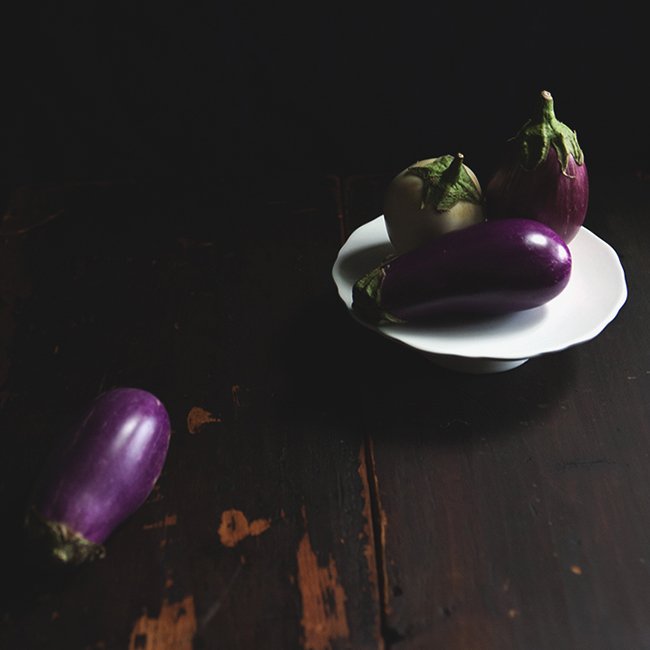
Back at home, I tried to replicate the dish, starting with choice eggplant from the Union Square Greenmarket. I will never tire of the Greenmarket. (But I can’t wait for the damn F train to get fixed so I’m not trudging 12 blocks back to the subway with quickly-wilting plant matter.)

It turns out, there’s no one recipe for caponata. At its base, it’s eggplant cooked until it’s really soft, in a tomato-y sauce. But beyond that, well, just as there are thousands of regional cuisines in Italy, there are endless variations of this classic antipasto.
I stuck with good old pantry staples.

I realize it doesn’t appear wholly appetizing, but please try not to judge it harshly. It does its best. Eggplant just sort of, well, does that wilting thing, where it turns grayish-brown and flaccid, but that doesn’t make it any less lovable. Not to me at least.
And its taste? Well, it’s not the same as what I remember. This caponata didn’t turn out as flavorful or as moist. It’s kind of a different food altogether. Less tang, more… something. I wasn’t sure what to think. But then my friend came over the other night, and we shoveled most of it down. As if there was no tomorrow. I forgot my manners. And I must’ve looked so un-glamorous. But I looked up and saw that she wasn’t noticing, because she was doing the same.

CAPONATA
Serves 6 to 8
From Bon Appetit
Ingredients:
5 Tbsp olive oil
1-1/2 pound eggplant, unpeeled, cut into 1/2 inch cubes
1 medium onion, cubed
4 large garlic cloves, chopped
1 14-1/2 ounce can diced tomatoes with Italian seasonings in juice
3 Tbsp red wine vinegar
2 Tbsp drained capers
1/3 cup chopped fresh basil
Toasted pine nuts
Directions:
Heat oil in heavy large pot over medium heat. Add eggplant, onion, and garlic cloves. Saute until eggplant is soft and brown, about 15 minutes. Add diced tomatoes with juice, then red wine vinegar and capers. Cover and simmer until eggplant and onion are very tender, stirring occasionally, about 12 minutes. Season caponata to taste with salt and pepper. Mix in fresh basil. Transfer caponata to serving bowl. Sprinkle with toasted pine nuts.
Related Posts



Subscribe for New Racipies
Get mental health tips, updates, and resources delivered to your inbox.