
Are Lychees Acidic? pH of the Sweet Asian Fruit

Medically reviewed by Jaclyn Weiner, RD, RDN, MEd, MS Updated Date: October 14, 2026
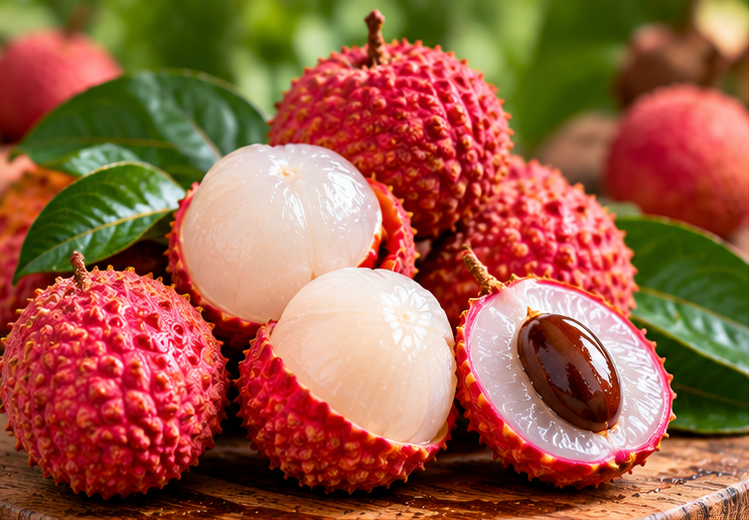
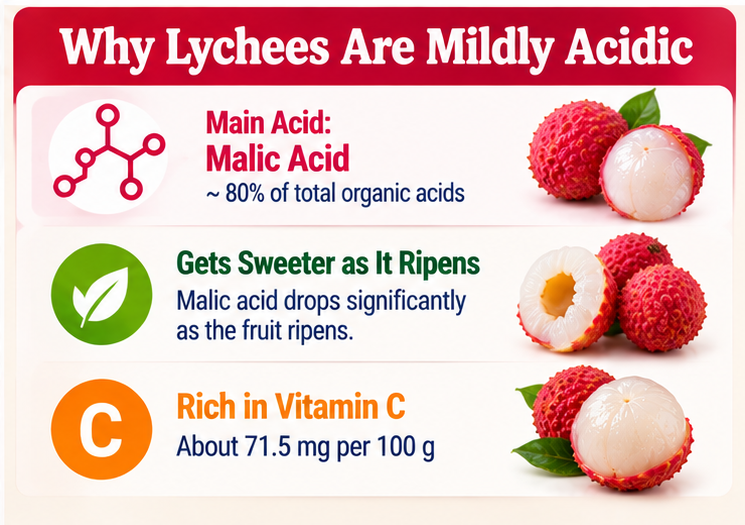
Lychees are only mildly acidic, and they’re one of the gentlest fruits you can eat. The FDA lists lychee at a pH of about 4.70 to 5.01 (FDA). That’s less acidic than apples, pineapple, mangoes, and most berries, and close to bananas. The small amount of acid lychees do have is mostly malic acid, and it drops sharply as the fruit ripens. That’s why ripe lychees taste so sweet and floral rather than tangy.
Lychees do come with one important safety note that has nothing to do with acidity: unripe lychees eaten on an empty stomach have been linked to dangerous low blood sugar in undernourished children. This guide covers lychee pH, how lychees compare with other fruits, what they mean for acid reflux, and how to enjoy them safely.
Key Takeaways
- Lychees are mildly acidic, with an FDA pH range of 4.70 to 5.01, in the same low-acid group as bananas.
- Malic acid is the main acid, making up roughly 80% of lychee’s organic acids, and it falls sharply as the fruit ripens.
- They’re one of the better fruits for acid reflux, though their high sugar content means portions still matter.
- They’re rich in vitamin C, with about 71.5 mg per 100 g.
- Eat ripe lychees with a meal, not on an empty stomach. A 2014 outbreak in India linked lychee eating and skipped meals to severe low blood sugar and brain illness in children
Are Lychees Acidic? The Short Answer
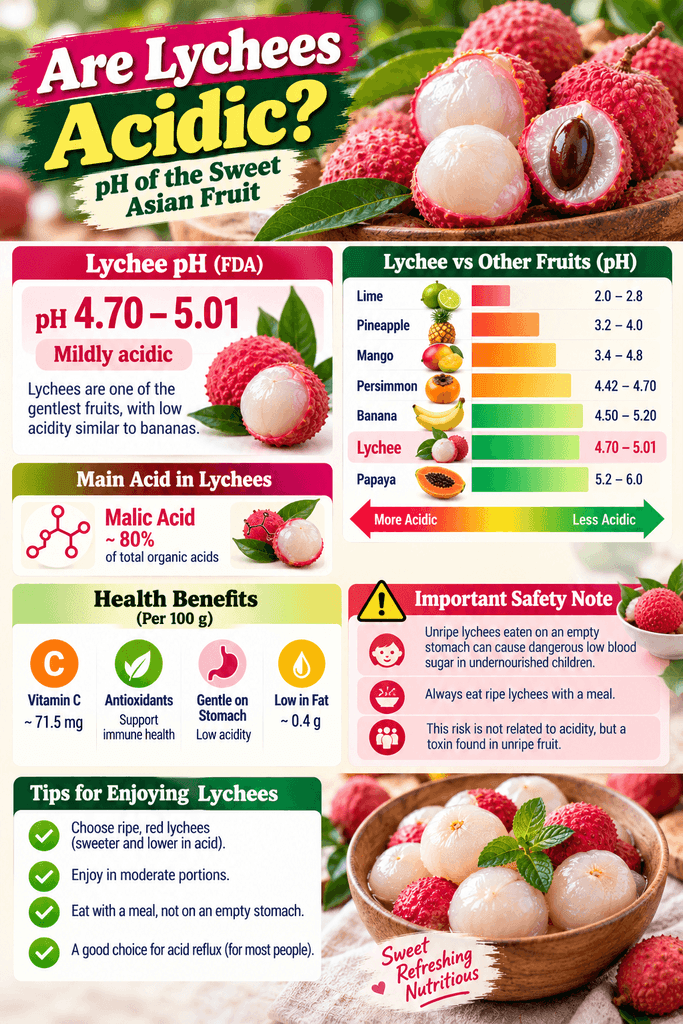
Technically, yes. Anything below pH 7 is acidic, and lychees sit just under pH 5. But compared with most fruits, they’re on the mild end. Here’s how the FDA lists lychee next to other popular fruits (FDA):
| Fruit | Approximate pH (FDA) |
| Lime | 2.00–2.80 |
| Grapes, seedless | 2.90–3.82 |
| Pineapple | 3.20–4.00 |
| Apples, eating | 3.30–4.00 |
| Mangoes, ripe | 3.40–4.80 |
| Persimmons | 4.42–4.70 |
| Bananas | 4.50–5.20 |
| Lychee | 4.70–5.01 |
| Jackfruit | 4.80–6.80 |
| Papaya | 5.20–6.00 |
| Cantaloupe | 6.13–6.58 |
| Avocados | 6.27–6.58 |
Source: FDA, Approximate pH of Foods and Food Products.
Lychee’s pH of 4.70 to 5.01 means it’s roughly 100 times less acidic than a lime at pH 2.8, since each step on the pH scale is a tenfold change. Among popular tropical and Asian fruits, only papaya, melons, coconut, and avocados are milder.
What Makes Lychees Taste So Sweet?
Lychees have a famously sweet, floral taste with just a hint of tang. Their chemistry explains why.
Malic acid leads, and it fades with ripening
A 2023 study of litchi fruit acidity reports that “the dominant acidity-related organic acid in litchi pulps is malate, followed in low levels by citrate and tartrate,” with malic acid making up about 80% of total organic acids (Jiang et al., 2023).
The same study found that malic acid drops dramatically as lychees ripen. In one cultivar it fell by about 91%, and in another by about 72%, between early development and the red ripe stage (Jiang et al., 2023). A separate study of the Indian cultivar ‘Rose Scented’ also found that titratable acidity decreased and pulp pH rose as the fruit matured (Singh et al., 2013).
Malic acid is the same main acid found in apples, including tart Granny Smith apples. In lychees, though, there’s far less of it by the time the fruit is ripe.
Lots of natural sugar
Lychees are also high in sugar. USDA lists 15.2 g of sugar per 100 g of raw lychees (USDA FDC 169086). In the ‘Rose Scented’ study, soluble solids reached about 18.7 °Brix at harvest, with a sugar-to-acid ratio above 23 (Singh et al., 2013).
University of Florida describes ripe lychee pulp as having an “excellent subacid flavor,” meaning only lightly acidic, and notes that “fruit picked while immature are not sweet and have poor flavor” (Crane et al., UF/IFAS HS6).
Are Lychees Good for Acid Reflux?
For most people, lychees are one of the friendlier fruit choices for reflux. They aren’t on the National Institute of Diabetes and Digestive and Kidney Diseases (NIDDK) list of foods that may make reflux worse, which includes citrus fruits, tomatoes, alcohol, chocolate, coffee and caffeine, high-fat foods, mint, and spicy foods (NIDDK). Their low acidity and almost-zero fat also work in their favor.
Reflux triggers do vary, though. The American College of Gastroenterology’s 2022 guideline recommends that people with GERD identify their own triggers and avoid eating within 2 to 3 hours of bedtime (Katz et al., 2022).
What to watch out for
- Large portions: Lychees are easy to eat by the handful. A cup (190 g) contains about 29 g of sugar (USDA FDC 169086). Big servings of any food can leave you feeling overly full.
- Lychee drinks and cocktails: Lychee martinis, sodas, and bubble teas may add alcohol, carbonation, caffeine, or citric acid. Check what else is in the glass.
- Canned lychees in syrup: These add extra sugar. Drain them or choose fruit packed in juice.
Tips for eating lychees with reflux
- Choose ripe, fresh lychees. Ripe fruit has the least acid.
- Start with a small handful and see how you feel.
- Pair them with low-acid foods, like oatmeal, Greek yogurt, coconut yogurt, or cottage cheese.
- Swap lychees in for sharper fruits like pineapple or citrus in fruit salads and smoothies.
- Eat them earlier in the day. NIDDK suggests eating meals at least 3 hours before lying down if you have nighttime symptoms (NIDDK).
For a broader list, see our guide to foods to avoid with GERD. If you have heartburn more than twice a week, trouble swallowing, or symptoms that don’t improve, talk with your doctor.
Safety Note: Don’t Eat Lychees on an Empty Stomach
This is the most important lychee safety fact, and it isn’t about acidity.
Lychees naturally contain two compounds, hypoglycin A and methylenecyclopropylglycine (MCPG), that researchers have linked to dangerously low blood sugar. In 2014, investigators studied an outbreak of acute brain illness among children in Muzaffarpur, India, the country’s largest lychee-growing region (Shrivastava et al., 2017):
- 390 children met the case definition, and 122 (31%) died.
- Eating lychees in the 24 hours before illness was strongly linked to getting sick.
- Skipping the evening meal was also linked to illness and made the lychee association stronger.
- 62% of children tested on admission had low blood sugar (70 mg/dL or less).
- Metabolites of hypoglycin A or MCPG were found in 66% of case urine samples and none of the controls. The lychee fruit itself contained both toxins.
The researchers recommended “minimising litchi consumption, ensuring receipt of an evening meal and implementing rapid glucose correction” for suspected cases (Shrivastava et al., 2017).
What this means for you
This outbreak happened in a major lychee-growing region, and skipping the evening meal made the risk greater. For most well-nourished people eating ripe lychees as a snack or dessert, the risk is very low. Still, these simple habits make sense:
- Eat lychees with or after a meal, not as a replacement for one.
- Choose ripe fruit. Avoid green or unripe lychees [VERIFY: unripe-fruit risk is widely reported; the Lancet study abstract tested litchi arils but did not compare ripe vs unripe].
- Keep portions reasonable, especially for children.
- Don’t let children fill up on lychees and skip dinner.
- Seek care immediately if anyone develops vomiting, confusion, drowsiness, or seizures after eating lychees, particularly a child who hasn’t eaten a proper meal.
Lychees, Teeth, and Gastritis
Teeth: Lychees are low in acid but high in sugar. The American Dental Association recommends eating acidic foods as part of a meal, rinsing with water or having milk or cheese afterward, and waiting about an hour before brushing (American Dental Association). The same habits help with sugary fruit snacks. Our article on whether apples are good for your teeth covers similar questions.
Gastritis: Mild, low-acid fruits like ripe lychees are often easier to tolerate than citrus or berries. Start with a few, eaten with food. Our 7-day meal plan for gastritis has more gentle meal ideas.
Lychee Nutrition
Per 100 grams, raw lychees provide (USDA FDC 169086; UF/IFAS HS6):
| Nutrient | Per 100 g | Per cup (190 g) |
| Water | 81.8 g | — |
| Calories | 66 | About 125 |
| Carbohydrates | 16.5 g | About 31 g |
| Fiber | 1.3 g | About 2 g |
| Sugars | 15.2 g | About 29 g |
| Vitamin C | 71.5 mg | About 136 mg |
| Potassium | 171 mg | About 325 mg |
A few highlights:
- Vitamin C: One cup provides about 136 mg, well above the adult Recommended Dietary Allowance of 75 to 90 mg per day (NIH Office of Dietary Supplements).
- Low fat, low calorie per piece: UF/IFAS describes lychees as “low in calories and a good source of potassium” (UF/IFAS HS6).
- High in sugar, low in fiber: With about 15 g of sugar and only 1.3 g of fiber per 100 g, lychees can add up quickly. If you’re managing blood sugar, keep portions small. Our guide on whether apples are good for diabetics covers how to think about fruit and blood sugar.
How Lychees Compare to Other Asian and Tropical Fruits
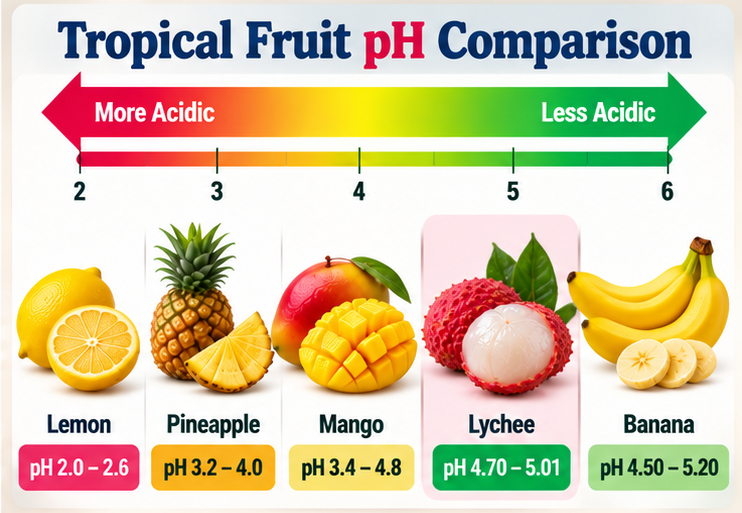
Here’s how lychee stacks up against the other tropical fruits we’ve covered:
| Fruit | Approximate pH | Acid level | Special note |
| Passion fruit | About 2.4–3.2 (studies) | Very high | Close to citrus |
| Pineapple | 3.20–4.00 (FDA) | High | Common reflux complaint |
| Guava | About 3.7–4.2 (studies) | Moderate | Very high vitamin C |
| Starfruit | About 3.9–4.6 (studies) | Moderate | Avoid with kidney disease |
| Mango | 3.40–4.80 (FDA) | Moderate | Varies with ripeness |
| Dragon fruit | About 4.3–5.5 (studies) | Low | Very mild flavor |
| Lychee | 4.70–5.01 (FDA) | Low | Eat ripe, with a meal |
| Banana | 4.50–5.20 (FDA) | Low | Classic gentle fruit |
| Papaya | 5.20–6.00 (FDA) | Very low | One of the mildest |
pH values from the FDA or from the studies cited in our individual fruit guides.
So among tropical fruits, lychees belong with dragon fruit, bananas, and papaya in the low-acid group. For the full picture, see our complete guide to acidic foods.
Acid-Smart Ways to Enjoy Lychees
Lychees are delicious on their own: just peel the thin shell, eat the translucent fruit, and discard the large brown seed. If you’d like to get creative, try these ideas:
- Smoothies: Blend peeled, seeded lychees into our fruit yogurt shake with banana for a floral, low-acid drink.
- Breakfast bowls: Top Greek yogurt or oatmeal with halved lychees and our pumpkin pie spice granola.
- Creamy desserts: Serve lychees with our whipped ricotta with mixed berries or alongside a scoop of ginger ice cream.
- Summer rolls: Add halved lychees to our avocado summer rolls for a sweet surprise.
- Treats: Chopped lychees make a fun addition to our tropical dream rice krispie treats.
The lychee swaps haven’t been tested in our kitchen, so adjust to taste.

Kitchen tip: Always remove the seed before serving lychees to young children, and cut the fruit into small pieces. Whole lychees are round and slippery, which can make them a choking risk for little ones [VERIFY: choking-hazard guidance is general pediatric advice; add a CDC or AAP citation if available].
Frequently Asked Questions
Are lychees acidic or alkaline?
Lychees are mildly acidic. The FDA lists lychee at pH 4.70 to 5.01, which makes it one of the least acidic common fruits, close to bananas.
Are lychees good for acid reflux?
For most people, yes. Lychees are low in acid and fat and aren’t on NIDDK’s list of common reflux triggers. Eat ripe fruit in moderate portions, ideally with a meal.
What acid is in lychee?
Malic acid is the main one, making up roughly 80% of lychee’s organic acids, with smaller amounts of citric and tartaric acid. Malic acid levels drop sharply as lychees ripen.
Are lychees more acidic than bananas?
They’re about the same. The FDA lists bananas at pH 4.50 to 5.20 and lychee at 4.70 to 5.01, so both are in the low-acid group.
Is it safe to eat lychees on an empty stomach?
It’s best not to. A 2014 outbreak in Muzaffarpur, India, linked eating lychees and skipping the evening meal to severe low blood sugar and brain illness in children. Eat ripe lychees with or after a meal.
Are canned lychees acidic?
The FDA table doesn’t list canned lychees separately. Canned lychees are usually packed in sugar syrup, which adds sugar. Check the label for added citric acid, and drain the syrup if you want less sugar.
Are lychees healthy?
Yes, in reasonable amounts. They’re rich in vitamin C, low in fat, and hydrating. But they’re high in natural sugar and low in fiber, so it’s easy to overeat them.
The Bottom Line
Lychees are only mildly acidic, with an FDA pH of 4.70 to 5.01. Their small amount of acid is mostly malic acid, which drops sharply as the fruit ripens, leaving that famously sweet, floral flavor. That puts lychees in the same gentle, low-acid group as bananas, dragon fruit, and papaya.
For most people with reflux or a sensitive stomach, ripe lychees are a good fruit choice. Just remember two things: lychees are high in sugar, so watch portions, and always eat them with or after a meal, never as a substitute for one, especially for children.
Keep exploring with Are Dragon Fruits Acidic?, Are Starfruits Acidic?, Are Persimmons Acidic?, or our complete guide to acidic foods.
Medical disclaimer: This article is for general information only and isn’t a substitute for professional medical advice. If you have frequent heartburn, GERD, diabetes, or any symptoms after eating lychees, talk with your doctor or a registered dietitian.
References
- U.S. FDA. Approximate pH of Foods and Food Products.
- Jiang Y, et al. (2023). Combined metabolome and transcriptome analyses unveil the molecular mechanisms of fruit acidity variation in litchi. Int J Mol Sci 24(3):1871. MDPI
- Singh A, Mishra DS, Kumar R, Kumar P (2013). Physico-chemical changes in litchi cv. Rose Scented during fruit development and maturation. Indian J. Hortic. 70(3):328–332. PDF
- Crane JH, Balerdi CF, Maguire I. Lychee Growing in the Florida Home Landscape (HS6/MG051). UF/IFAS.
- Shrivastava A, et al. (2017). Association of acute toxic encephalopathy with litchi consumption in an outbreak in Muzaffarpur, India, 2014: a case-control study. Lancet Glob Health 5(4):e458–e466. DOAJ
- USDA FoodData Central. Litchis, raw (FDC 169086).
- NIH Office of Dietary Supplements. Vitamin C Fact Sheet.
- NIDDK. Eating, Diet & Nutrition for GER & GERD.
- Katz PO, et al. (2022). ACG Clinical Guideline for GERD. doi:10.14309/ajg.0000000000001538
- American Dental Association. Dietary Acids and Your Teeth.
Related Posts




Subscribe for New Racipies
Get mental health tips, updates, and resources delivered to your inbox.
Are Red Apples Acidic? Exploring Red Apples and Acid Reflux


Apples are a beloved fruit worldwide, celebrated for their crisp texture, natural sweetness, and numerous health benefits. However, when it comes to their acidity and potential effects on digestive health, especially for individuals prone to acid reflux, questions often arise. Are red apples acidic? Can they help or worsen acid reflux symptoms? Let’s dive deep into the acidity of red apples, their nutritional benefits, and their impact on acid reflux management.
Understanding the Acidity of Red Apples
What Makes Red Apples Acidic? The Role of Malic Acid
Red apples, like all apple varieties, are mildly acidic. Their acidity stems primarily from malic acid, a natural compound responsible for the fruit’s tangy flavor. Malic acid, along with smaller amounts of ascorbic acid (Vitamin C), contributes to apples’ overall pH, which typically ranges between 3.3 and 3.9. This places them on the acidic side of the pH scale, which spans from 0 (highly acidic) to 14 (alkaline).
Interestingly, malic acid has a dual role. While it makes apples acidic, it also provides health benefits, including improved energy production and reduced fatigue. Furthermore, the acid content decreases as apples ripen, making fully ripened red apples slightly less acidic compared to greener varieties.
Comparing Red Apples and Green Apples in Acidity
According to the research published in the International Journal of Pharmaceutical Science and Research, when considering acidity, not all apples are created equal. Green apples, such as Granny Smith, are notably more acidic, with a pH closer to 3.2, compared to red apples like Red Delicious or Fuji. This difference in acidity makes red apples a more stomach-friendly choice, particularly for individuals managing conditions like gastroesophageal reflux disease (GERD)
For those with sensitive stomachs or acid reflux, opting for sweeter apple varieties is often advised. Sweet apples generally have lower acidity and higher sugar content, which can help mask their tartness and reduce the perception of sourness.
Author Tip: Are Apples Acidic?
Can Red Apples Trigger Acid Reflux Symptoms?
How Red Apples Affect People with Acid Reflux
Acid reflux, commonly known as heartburn, occurs when stomach acid flows back into the esophagus, causing discomfort. While red apples are acidic, their effect on acid reflux is not straightforward. For most individuals, red apples are considered a reflux-friendly food due to their natural fiber content and relatively low acid levels compared to other fruits like oranges or lemons.
Some studies suggest that the fiber in apples helps regulate digestion and prevent acid reflux episodes by promoting proper stomach emptying.
However, the mild acidity of apples may irritate those with heightened sensitivity to acidic foods, so moderation and variety in diet are key.
Red Apples vs. Processed Apple Products (Juice, Sauce, etc.)
It’s worth noting that while fresh red apples are generally well-tolerated, processed apple products like juice or applesauce can be less friendly for individuals with acid reflux. Apple juice, for instance, often has a pH of 3.35 to 4.00, making it similarly acidic but lacking the beneficial fiber found in whole apples. Additionally, commercial juices may contain added sugars, which can exacerbate reflux symptoms.
Applesauce, though softer on the digestive system, is often less effective in managing reflux due to its lower fiber content. When incorporating apples into your diet for reflux relief, it’s best to consume them in their whole, unprocessed form.
Are Red Apples Right for You?
Red apples, with their mild acidity and abundant nutritional benefits, are an excellent dietary choice for most people, including those managing acid reflux. Their high fiber content, coupled with natural sweetness, makes them both a satisfying and gut-friendly option. However, individual tolerance varies, so it’s important to monitor how your body responds to apples and adjust your consumption accordingly.
By incorporating red apples into a balanced, low-acid diet and avoiding trigger foods, you can enjoy their numerous health benefits while keeping acid reflux symptoms at bay. Whether enjoyed fresh, baked, or blended into smoothies, red apples can be a delicious and healthful addition to your daily routine.
Benefits of Red Apples for Digestive Health
Why Sweet Apples Are Better for Acid Reflux?
Sweet red apple varieties, such as Gala, Fuji, and Red Delicious, are preferred for their milder acidity and higher natural sugar content. These characteristics make them less likely to trigger acid reflux symptoms compared to tart apples like Granny Smith. Sweet apples also stimulate saliva production, which helps neutralize stomach acid and reduce the likelihood of heartburn
How Apples Support Gut Health?
Beyond their effects on acid reflux, red apples are a powerhouse of nutrients that support overall digestive health. They are rich in dietary fiber, primarily in the form of pectin, which promotes regular bowel movements and maintains a healthy gut microbiome. Fiber also helps stabilize blood sugar levels, making apples an excellent snack choice for sustained energy.
Moreover, red apples are packed with antioxidants such as flavonoids and polyphenols, which reduce inflammation and may protect against chronic diseases, including those affecting the digestive tract.
Tips for Consuming Apples Safely with Acid Reflux
Best Times to Eat Apples for Reflux Prevention
Timing plays a crucial role in managing acid reflux symptoms. Consuming apples between meals rather than immediately after can minimize the risk of heartburn. Eating an apple on an empty stomach may also be beneficial, as it can help neutralize stomach acid before it becomes problematic. Conversely, pairing apples with heavy or acidic meals may increase the likelihood of reflux symptoms.
Portion Sizes and Preparation Tips
For those with acid reflux, portion control is essential. Eating a medium-sized apple (about one cup of chopped fruit) is typically sufficient to enjoy its benefits without overwhelming the digestive system. To further reduce acidity, peeling the apple can be helpful, as the skin contains a higher concentration of certain acids. However, this also removes some of the fiber, so it’s important to weigh the benefits based on individual tolerance.
Common Misconceptions About Apples and Acid Reflux
Are Apples Alkalizing Foods?
Despite their acidity, apples are sometimes classified as alkaline-forming foods. This confusion arises because, after digestion, apples leave behind alkaline residues in the body, which may help balance overall pH levels. However, this does not mean that apples neutralize stomach acid directly.
Do Apples Neutralize Stomach Acid?
While anecdotal evidence suggests that eating an apple can alleviate heartburn, scientific research is limited. Apples’ natural sugars and fibers may provide temporary relief by soothing the stomach lining and promoting proper digestion. However, their effectiveness as a standalone remedy varies from person to person.
Red Apples in a Balanced Diet for GERD Management
Pairing Apples with Other Low-Acid Foods
For individuals managing GERD (gastroesophageal reflux disease), incorporating red apples into meals can provide a gentle, fiber-rich option. However, pairing apples with other low-acid foods enhances their digestive benefits. Foods like bananas, oatmeal, and yogurt (low-fat or plant-based options) complement apples well, offering a soothing effect on the stomach lining while reducing the risk of triggering reflux.
For example, an apple-banana smoothie made with almond milk is an excellent reflux-friendly breakfast or snack. Adding a tablespoon of flaxseeds or chia seeds increases fiber and omega-3 fatty acids, further supporting gut health.
Foods to Avoid When Eating Apples
While apples are generally safe for most people with reflux, combining them with certain foods can negate their benefits. Acidic or fatty foods such as citrus fruits, fried items, or tomato-based sauces should be avoided alongside apples, as they may exacerbate symptoms. Similarly, high-sugar apple desserts, like pies or caramel apples, can trigger acid reflux due to their added sugars and fats.
If you enjoy baked apples, opt for a recipe that minimizes sugar and fat. Baking apples with a sprinkle of cinnamon and a drizzle of honey is a healthier alternative that preserves the fruit’s natural goodness.
Author Tip: 7 Kinds of Foods to Avoid with GERD
What Are Some Creative Ways to Eat Apples for Acid Reflux?
There are numerous ways to incorporate red apples into a reflux-friendly diet. Some ideas include:
- Slicing apples and pairing them with almond butter for a nutrient-rich snack.
- Adding chopped apples to oatmeal or yogurt for a satisfying breakfast.
- Baking apples with a sprinkle of cinnamon for a healthy dessert.
- Including thin apple slices in a turkey or chicken sandwich for added crunch and sweetness.
Frequently Asked Questions
Are All Red Apples Equally Acidic?
No, not all red apples have the same acidity level. Varieties such as Red Delicious and Fuji are sweeter and less acidic compared to more tart options like Pink Lady or Braeburn. These sweeter apples are better suited for individuals with sensitive stomachs or acid reflux issues.
How Do Apples Compare to Other Fruits for Acid Reflux?
Red apples are often considered one of the most reflux-friendly fruits due to their moderate acidity and high fiber content. In comparison, citrus fruits like oranges and grapefruits are highly acidic and may aggravate symptoms. Bananas and melons, being less acidic, are also excellent choices for those managing acid reflux.
Can Eating Apples Prevent GERD Symptoms?
While apples cannot cure GERD, they can play a role in symptom management. Their fiber content helps regulate digestion, and their low-fat nature prevents excessive pressure on the stomach. Including apples as part of a balanced diet with other GERD-friendly foods may help reduce the frequency and severity of symptoms.
Is Apple Juice Good for Acid Reflux?
Fresh apple juice, while nutritious, is not as effective as whole apples for managing acid reflux. Juice lacks fiber and is often more concentrated in sugars, which can worsen symptoms. For those who prefer juice, diluting it with water can reduce its acidity.
Do Cooked Apples Have the Same Benefits as Fresh Ones?
Cooked apples retain many of their nutritional benefits, including fiber, but they may lose some vitamin C during the cooking process. Baking or steaming apples without adding excessive sugar or fat can make them easier to digest and equally beneficial for acid reflux management.
Final Thoughts
Incorporating red apples into your diet is not just about managing acid reflux; it’s about embracing a wholesome food that supports overall well-being. As you experiment with different varieties and preparations, focus on balance, moderation, and pairing apples with complementary foods. With thoughtful choices, you can enjoy the best of what red apples have to offer.
Related Posts
Subscribe for New Racipies
Get mental health tips, updates, and resources delivered to your inbox.