
Asparagus Tempura

Medically reviewed by Christiana George Updated Date: January 2, 2026
I hated asparagus as a kid. My mom would often force unfair amounts on my sister and me that we would then have to choke down. Despair, that was the theme of those meals. (Not that we ever complained. My mom made sure there were no picky eaters in her house.) I also hated—and excuse me for saying this but I feel like it’s the white elephant in the room—how it made my urine smell.
The odor was so freakish, like did it really come out of my body? (I really hope this phenomenon isn’t unique to me, because it would be really embarrassing for me to admit this fact only to learn that no one experiences the same… issue.)
Someone once asked me in fifth grade what vegetable I would choose to be if I had to be a vegetable, and without even hesitating, I said asparagus. “Because it tastes gross, so nobody would want to eat me,” I explained. Come to think of it, I said this before my entire class, and my teacher, Mr. Ford, laughed heartily. Kids say the darndest things, and always with such earnestness.

Since then, I’ve come to a peaceful truce with the vegetable. It makes its appearance at just the right time every year, right around when my body starts calibrating for the changing season. You know how it goes. There’s the reappearance of green, the sudden bursting of the world into a verdant, shady paradise, and your palate, without warning, shifts gears, and desires all things vegetal.
Oh wait. Spring, with all its connotations of reawakening and rejuvenation, stretching out and the wiping clean of slates, is actually a pretty new experience for me. California winters are hardly unendurable, therefore I’ve never truly appreciated the depths from which one can emerge. Nonetheless, despite having just been initiated to the full effect of this glorious season, the tug for fresh produce is instinctual and urgent.
So far into this season, we’ve been enjoying asparagus steamed or parboiled. While these are the most straightforward of preparations, with nothing but a dash of soy sauce or a sprinkle of salt for flavor, they are usually the most satisfying. I love having asparagus as a side to a bowl of rice or noodles.
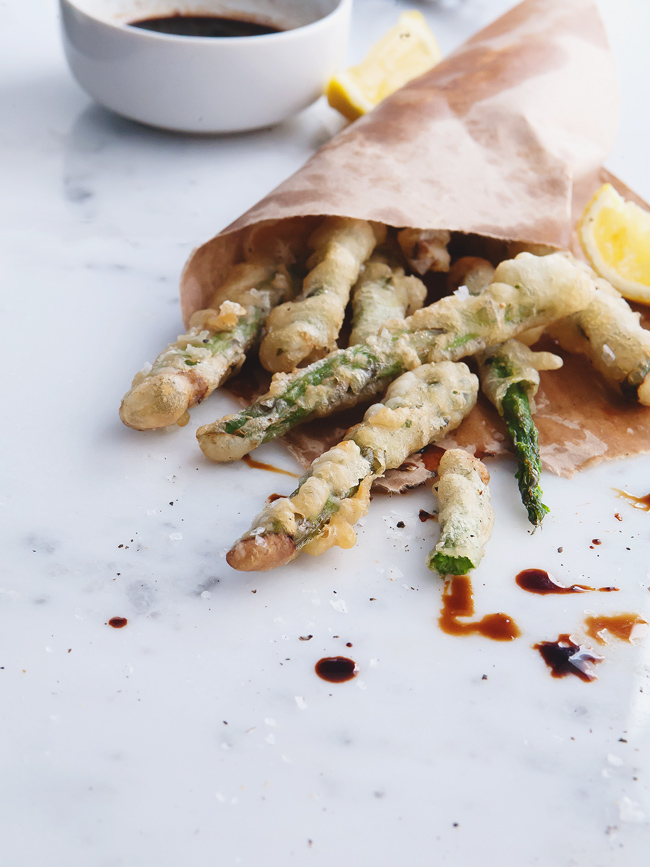
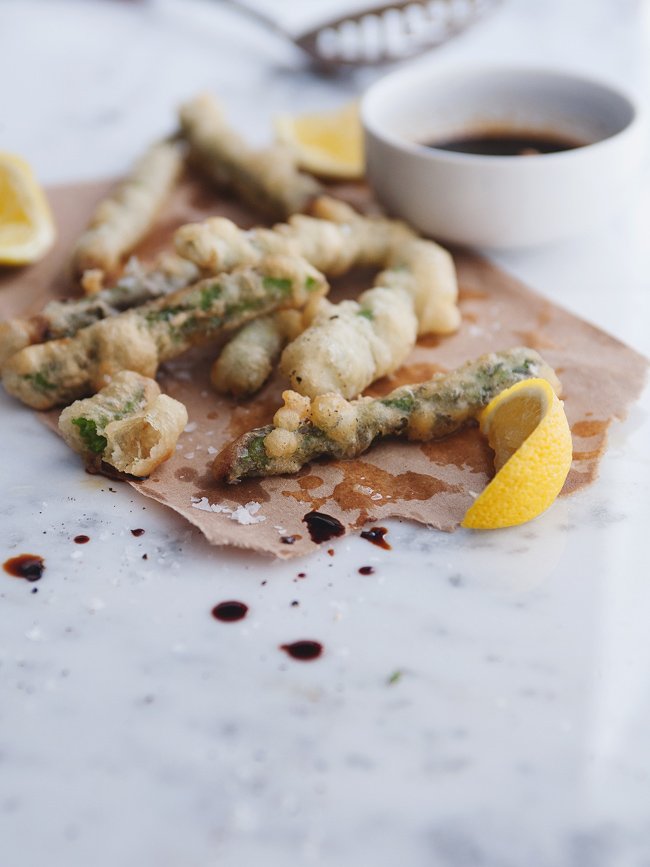
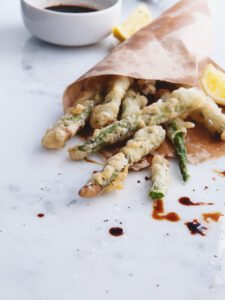
This tempura, though less virtuous, is still elegantly simple. Equal amounts of flour and mineral water result in a light, crisp top layer covering a steaming, sumptuous mass of asparagus underneath. Post-deep-fry, the vegetable has a melt-in-the-mouth quality, which I like contrasted against a soy sauce and ginger dipping sauce.
Also, FYI, tempura can be reinvigorated with some time in the oven. I tossed some—hours-old, mind you, and soggy—onto a pizza, and it tasted great.

ASPARAGUS TEMPURA
Serves 4
Adapted from Goop
Ingredients:
- 12 medium stalks of asparagus, trimmed, dried, and sliced in half
- Vegetable oil for frying
- 2/3 cup all-purpose flour
- 2/3 cup sparkling water
- sea salt & freshly-ground pepper
- lemon wedges
Directions:
Fill a medium heavy saucepan with about three inches of oil. Heat it up to 375 degrees F.
Place the flour in a medium bowl, then slowly whisk in the water until a smooth paste forms. Do this right before you start deep-frying so that the batter retains the carbonation from the water (which results in a light, airy tempura).
When ready, coat the asparagus in the batter, then gently place it in the oil. Don’t crowd the pan or the asparagus pieces will stick together. Fry until golden, about 2 minutes, then place on a paper towel and sprinkle with salt and pepper. Serve immediately with lemon wedges and soy sauce/ponzu sauce/etc.
Related Posts

Subscribe for New Racipies
Get mental health tips, updates, and resources delivered to your inbox.
Goat Cheese, Roasted Grape, And Walnut Bruschette

In the fall, you’ll find pounds and pounds and pounds of grapes in my fridge. Until last October, the idea of roasting them would have been preposterous to me, not to mention kind of disgusting. Why would someone do such a thing? What could possibly beat the taste of a fresh Concord or Muscat grape fresh off the vine?
Of course, Concords and Muscats aren’t just any old grape, and if I ever come into a significant amount of money, I’ll probably buy a vineyard where I will plant acres and acres and acres of heirloom varieties that will be grown exclusively to be eaten. And I’ll eat them all, don’t think I won’t. (Question: would it still be considered a vineyard if I wasn’t planning on producing wine?) Regular supermarket grapes are just okay in comparison, but I still enjoy eating them plain when they’re extra-firm and tightly clustered.
After trying chicken roasted with grapes a few months ago, however, I’ve finally come around to the roasting camp. I really liked the way the heat turned the grapes into hot bursts of sweetness.
(I realize I may have made a huge deal over a seemingly insignificant issue, but given how ardently I’d felt about grapes and the only correct way of eating them this was a revelation for me.)
(An aside: a friend of mine called me a grape snob a few years back, and the barb continues to sting. Is it really snooty to be obsessed with heirloom grape varieties? I don’t think so.)

I recently, and finally, got around to buying Polpo, A Venetian Cookbook (Of Sorts). My God is it beautiful. From the cover to the binding to the gorgeous, ethereal photos, its looks are enough reason to buy the book. Hint: flip through it if you’re in need of inspiration. It’s eye fuel, if you will.
But beyond its aesthetically pleasing appearance, it is filled with the most tenderly-chosen recipes. Or so I believe. While they’re nothing revolutionary, each has been jotted down with just the barest of guidelines, suggesting an intuitive understanding—and deep love—of the food. My mom passes tried-and-true recipes on to me that are just as vague, just as instinctive.
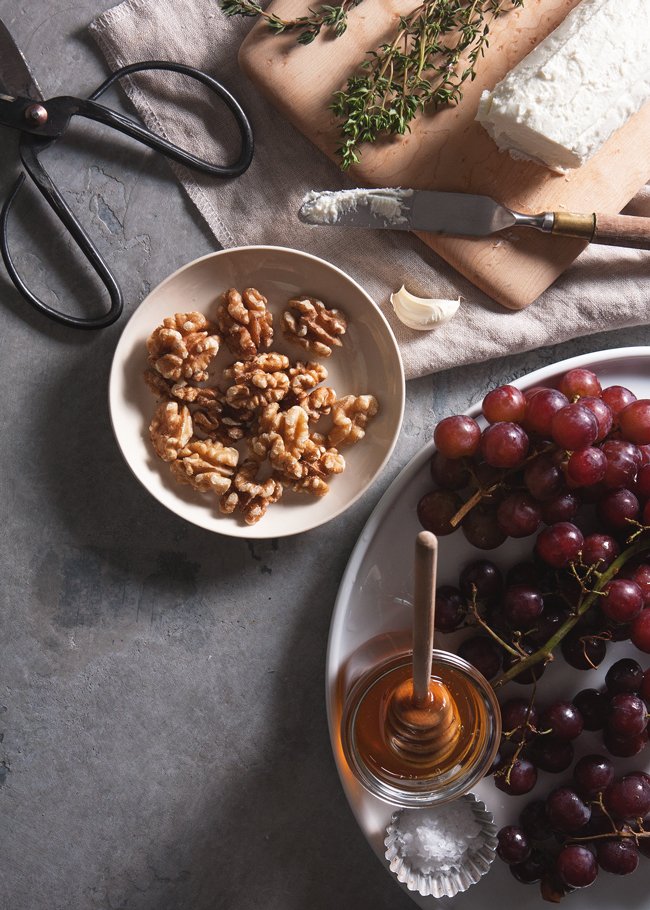
But I’m not here to write a cookbook review. I just wanted to share with you the results of my first stab at a recipe, a bruschette (ever since Emiko’s post, I’ve never been able to pronounce ‘bruschette’ the same way again), made with seedless red grapes, goat cheese, walnuts, honey, and thyme.
It isn’t something that can quickly be thrown together, as it does require briefly roasting the grapes and the walnuts in the oven (in two separate pans, what’s more), but the final product is a feast of incongruous elements: hot, juicy grapes ready to burst and bordering on raisin, the oddness of goat cheese mellowed out by floral honey, roasted walnut that’s almost kind of melted yet pleasingly chewy, thyme with all its connotations of warm lovely peasant food, and the underlying scent and taste of garlic, which tips it over the edge, if you ask me. Altogether, wonderful. Make it! For lunch, as an afternoon snack, as an elegant appetizer at a posh dinner party. It will wow you as it will wow guests.
I love how food blogging makes me that much more open to trying new things. Roasted grapes, what an idea.
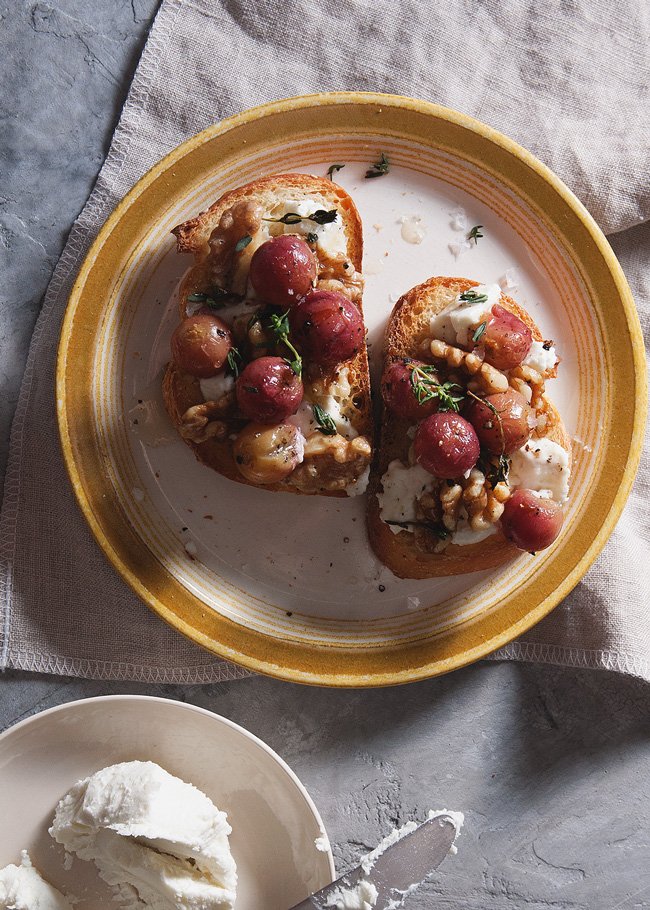
GOAT CHEESE, ROASTED GRAPE, AND WALNUT BRUSCHETTE
From Polpo, A Venetian Cookbook (Of Sorts)
Serves 2
I’m following the format of the book by providing vague measurements. You know what tastes good, so go with your intuition!
Ingredients:
- 10 grapes – any seedless variety
- Small handful of picked thyme leaves
- Extra virgin olive oil
- Sea salt and black pepper
- 10 wanut halves
- 2 thick slices of bread (I used semolina bread)
- 1 garlic clove
- Large handful of crumbly goat cheese
- Honey
Directions:
Preheat the oven to 375 degrees F. In a baking pan, toss the grapes with most of the thyme, olive oil, salt, and pepper. Pop it in the oven for 10 to 15 minutes. In another baking pan, toss the walnuts with some olive oil, and slide it into the oven during the last 5 minutes of roasting the grapes. Remove both from the oven and set aside.
Toast the bread so that it’s pleasantly toasted, but still pliant. Rub the garlic clove into the bread much like you’re using a crayon. Drizzle with some olive oil.
Crumble or smear some goat cheese onto the bread. Add the grapes and walnuts, garnish with some small sprigs of thyme, and drizzle with honey.
Related Posts
Subscribe for New Racipies
Get mental health tips, updates, and resources delivered to your inbox.