
Are Raspberries Acidic and Cause Acid Reflux?

Medically reviewed by Lindsay Ewan, MD Updated Date: January 5, 2026

Raspberries, a mixed sweet-tart flavor blending in the mouth. Most people who eat them say they are just like this. Raspberries are a sweet natural fruit, full of vitamin C and fiber.
While thinking about raspberries as a healthy fruit, one concern always comes up: are raspberries acidic?
Raspberries have an acidic pH in the range of 3.22 to 3.95. Anything with a pH less than 7 is defined as acidic. The lower the pH, the more acidic it is. Anything with a pH close to 1 is very acidic. Things with a pH close to 7 are neutral.
However, being an acidic fruit doesn’t make it any less healthy. Raspberries have certain health benefits that may make people want to include them in their diets.
Today, we will let you know about the wonderful nutritional elements of raspberries. And I will also help you find ways to eat this favorite food, without worsening your acid reflux or gastritis.
Raspberries Acidic, Alkaline or Neutral? How to Find Out?
Raspberries, with their sweet taste and glossy appearance, make a great contribution to our diets. Today we will examine the complete details about raspberries, so that you can judge for yourself whether they are acidic, alkaline or neutral.
| Type of Acid | Amount (mg / 100g of raspberries) |
| Citric acid | 1680 mg/100g |
| Dehydroascorbic acid | 35.8 g/100g |
| Malic acid | 46.2 g/100g |
There is a total of 1762 mg of acids per 100 grams of raspberries. Thus, you can clearly see the reason that raspberries are acidic: they contain a fair amount of organic acids, resulting in their pH of 3.22 to 3.95. So, it can be said certainly that raspberries are acidic.
| Raspberries | pH of Raspberries | Nature |
| Red Raspberries | 3.22 – 3.95 | Acidic |
| Black Raspberries | 3.50 – 4.00 | Acidic |
| Raspberries, New Jersey | 3.50 – 3.82 | Acidic |
| Raspberries, Frozen | 3.18 – 3.26 | Acidic |
| Raspberry Jam | 2.87 – 3.17 | Acidic |
| Raspberry Juice | 2.40 – 3.00 | Acidic |

Now, you may be wondering: If raspberries contain so much organic acid, why do they taste so sweet? The answer lies in the other compounds present in the raspberries. Let’s have a look at them.
| Nutritional element | Amount per cup of raspberries |
| Water | 105 g |
| Protein | 1.5 g |
| Carbohydrate | 14.7 g |
| Fiber | 8 g |
| Vitamin C | 32.2 mg |
| Organic acid | 1732 mg |
From this nutritional analysis, we can see why raspberries are so sweet. They have 15 grams of carbohydrates (mostly sugars) per cup of raspberries. This is the major explanation for the sweetness of raspberries.
Fun fact: Raspberries originate from Turkey but the biggest producer of raspberries is Russia.
Are Raspberries Bad for Acid Reflux? [Health Hazards]
Have you ever wondered why raspberries could be considered both healthy and dangerous at the same time? If you have a history of acid reflux or gastritis, then this is a question you probably ask yourself all the time.
Acid reflux is an abnormal condition in which the acidic fluid of the stomach flows backwards into the esophagus and causes heartburn.
Reflux occurs when the muscle at the top of the stomach, called a sphincter, relaxes too much, and allows gastric contents to move up into the esophagus. This causes symptoms.
The more acidic the contents of the stomach, the worse the symptoms tend to be. Very fatty foods also tend to exacerbate heartburn. Any fruits that contain a large amount of acid may exacerbate acid reflux.
For example, raspberries, strawberries, lemons, grapes, and blueberries are some of the more acidic fruits that can cause acid reflux.
Signs of Having Acid Reflux
There are some general symptoms of acid reflux. Having one of these symptoms doesn’t necessarily mean you have acid reflux.
Sometimes, acidic fruits or greasy fast foods cause temporary signs of acid reflux in people who are otherwise healthy, and generally don’t suffer from reflux.
- Sensation of heartburn, especially after eating acidic or greasy foods
- Frequent regurgitation of sour liquid or semi-solid food particles. This causes the throat to burn as well.
- Difficulty swallowing.
- Bloating, vomiting, bad breath and frequent sour hiccups
How Are Raspberries Causing Acid Reflux?
Raspberries do not exactly cause acid reflux, but since they are acidic, they can exacerbate the symptoms. The stomach is a naturally acidic environment, but eating acidic foods can make it more so.
This doesn’t mean that you can never eat raspberries if you suffer from reflux. Eating them in moderation will likely not harm you in any way.
But, overeating any acidic foods definitely can worsen acid reflux, so they should be eaten in moderation.
Related Article: Are Cherries Acidic? Cherries and GERD: Good or bad?

5 Ways to Eat Raspberries Without Causing Acid Reflux
Raspberries come with lots of health benefits, and everyone should include them in their diet. But what about the people struggling with acid reflux? Here we are to help them out of this situation.
These 5 ways to eat raspberries will help you to enjoy your berries without causing you acid reflux.
Adding Sugar
For reducing the acidity in the raspberries, you can add some sugar in it before having it. Sugar contains a high amount of glucose and it has a pH of 7 which is the perfect pH of neutral compounds. However, be mindful of your overall sugar intake. Jam is one choice of a sweetened form of raspberries.
Cooked Raspberries
It is one of the ancient techniques followed by the people to make the food less acidic. After cooking, the water content dissolves and the acidity reduces by time by breaking the bonds inside the raspberries.
Drinking Milk
Drinking milk could be the easiest solution to get rid of acid reflux after having some raspberries. Milk has a pH of 6.7 to 6.9 which is very close to neutral. This helps lessen the effect of consuming acidic foods.
Chewing Gum
Another cool idea to control acid reflux is to chew gum. Chewing gum is known to stimulate saliva flow, and chewing sugar free gum after a meal can help decrease symptoms of acid reflux.
Drinking Water
Everyone knows we should all be drinking lots of water. This is great for your health for lots of reasons. And one of these is helping with heartburn. Water helps dilute the acidity of the stomach contents, decreasing the chances of having heartburn after eating acidic foods.
Should I Avoid Eating or Start Eating Raspberries?
So, since raspberries have great health benefits, but can also worsen symptoms of reflux, should you eat them or avoid them?
Health Benefits of Raspberries
Raspberries are one of the greatest sources of dietary fiber. They are a great source of vitamin C as well. Vitamin C is one of the most important elements in our daily diet.
Men generally need a minimum 90 mg of vitamin C in their diets, and women need slightly less, about 75 mg per day.
Raspberries can play a significant role in meeting your daily vitamin C intake for your body. Vitamin C plays an important role in maintaining a strong immune system, which helps protect you from bacterial and viral infections.

Fun fact: There are almost 200 species of raspberries. Gold raspberries are the sweetest.
Which One Should I Choose: Raspberries or Strawberries?
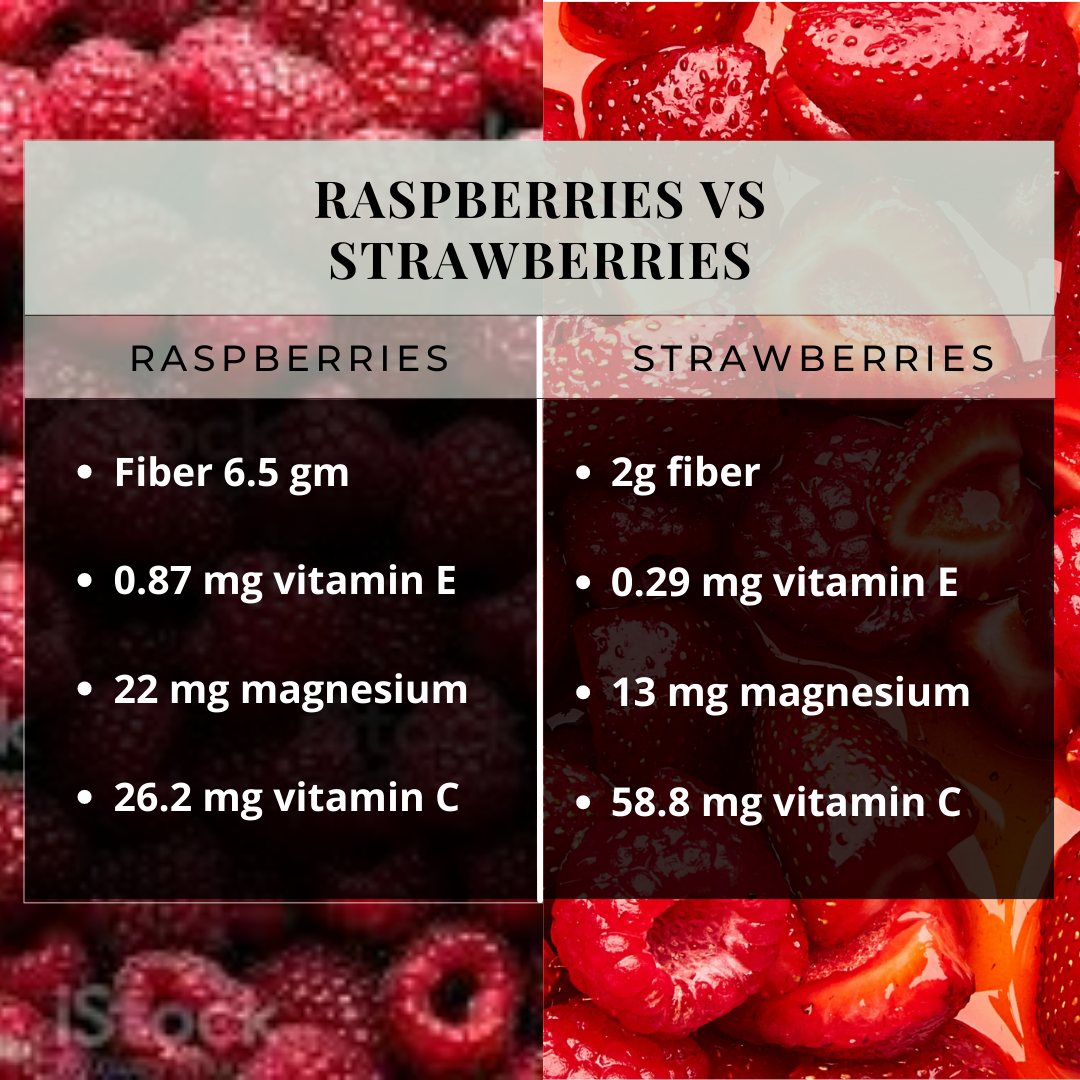
If we compare the nutrition information for raspberries and strawberries, we can see that both contain a lot of dietary fiber and vitamins.
But, raspberries contain more fiber – about 8 grams per cup of raspberries, compared with about 3 grams per cup of strawberries. If your goal is to maximize your fiber intake, raspberries are the way to go.
Another important consideration could be the relative amounts of vitamin C in the two types of berries. Raspberries have about 32 mg per cup of berries, while strawberries have 85 mg per cup. So, if your goal is to maximize vitamin C consumption, strawberries are the better choice.
Related Article: Are Strawberries acidic? Strawberries and acid reflux: Good or bad
Are Frozen Raspberries Acidic?
Frozen raspberries are generally tart berries due to a pH between 3.2 and 4.0. Like fresh raspberries, frozen raspberries are fairly high in fiber.
Freezing berries preserves a lot of their nutrition. They maintain their high levels of antioxidants and minerals, and they are a great source for instant energy.
Are Red Raspberries Acidic?
Red raspberries are the most common berries found in the market. And yes, red raspberries are acidic. If you are concerned about acid reflux symptoms, the best way to consume red raspberries is with some yogurt or milk so that the acid reflux can’t bother your stomach.
FAQs
Are Raspberries Ok for Acid Reflux?
Raspberries have a pH of 3.22 to 3.95 which clearly means they are acidic. Acid reflux symptoms can be exacerbated by eating highly acidic foods.
However, having a moderate amount of raspberries won’t cause you any trouble. But if eaten in excessive amounts, they may cause signs of acid reflux.
One of the more significant signs of acid reflux is heartburn.
Are Raspberries Acidic or Alkaline?
Raspberries are acidic with the average pH of 3.6. The pH scale is how we determine if foods (or anything else, for that matter) is acidic or alkaline.
If the level is under 7, then it’s acidic. And the lower the pH, the more acidic the food is. 7 is exactly neutral on the pH scale, and anything over 7 means the food or compound is alkaline.
Which Berries Are Most Acidic?
All three are actually acidic. And different varieties of each can be more or less acidic, so the pH ranges of the three types of berries overlap.
Strawberries have a pH range of 3.0 to 3.5 ,and raspberries have a pH range of 3.2 to 3.6 and at last the blueberries have the pH range of 4 to 5.
This suggests that strawberries tend to be the most acidic, but it really depends on the specific variety of berries, and how ripe they are.
Conclusion
Hopefully, you now understand whether or not raspberries are acidic. We have attempted to provide information about the acidity of this fruit, and ways to eat it without causing discomfort.
These guidelines will help you continue to eat this delicious food without triggering your acid reflux. Fruits such as raspberries contribute important nutrients to our diets, but it is worth paying attention to any exacerbation in reflux symptoms they cause.
Remember, all foods should be eaten in moderation.
Related Posts



Subscribe for New Racipies
Get mental health tips, updates, and resources delivered to your inbox.
Is Spinach Acidic? Spinach and Acid Reflux

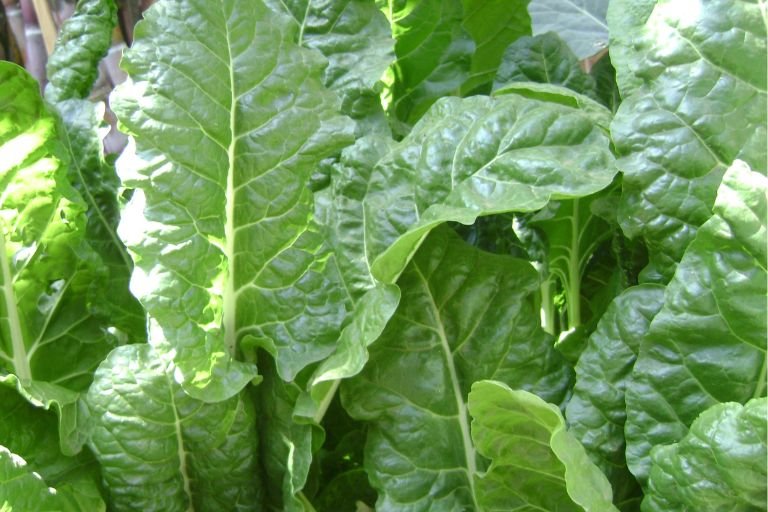
Spinach is often celebrated for its nutritional benefits, but for individuals with acid reflux, it’s important to consider how foods impact their condition. Acid reflux, or gastroesophageal reflux disease (GERD), occurs when stomach acid flows back into the esophagus, causing discomfort and irritation. Dietary choices play a critical role in managing this condition, as certain foods can either trigger or alleviate symptoms.
Among the many leafy greens available, spinach stands out for its versatility and nutrient profile. But how does it affect acid reflux? Is it a trigger food, or can it provide relief? In this article, we’ll explore the acidity of spinach, its effects on acid reflux, and practical tips for incorporating it into a reflux-friendly diet.
Is Spinach Acidic or Alkaline?
Spinach has a mildly acidic natural pH, ranging between 5.5 and 6.8. However, once digested, spinach has an alkaline effect on the body due to its high mineral content, including magnesium, calcium, and potassium. This makes it a favorable choice for people managing acid reflux.
Acidic vs. Alkaline Foods
Foods that leave an alkaline residue after digestion can neutralize stomach acid and reduce reflux symptoms. Spinach’s alkalizing properties make it one of the most recommended leafy greens for those dealing with gastroesophageal reflux disease (GERD).
Spinach and Acid Reflux: Benefits
1. Rich in Alkalizing Minerals
Spinach is packed with magnesium and potassium, which help neutralize stomach acid and soothe the digestive tract.
2. Low in Fat and Calories
Fatty foods are a common trigger for acid reflux because they relax the lower esophageal sphincter (LES). Spinach is naturally low in fat, making it a reflux-friendly option.
3. High in Fiber
Dietary fiber promotes healthy digestion and can help prevent constipation, a condition that can exacerbate acid reflux. One cup of cooked spinach contains approximately 4.3 grams of fiber.
4. Anti-Inflammatory Properties
Spinach contains compounds like beta-carotene and flavonoids, which have anti-inflammatory effects. This can help reduce esophageal irritation caused by acid reflux.
Related to Read: Are Baby Spinach Acidic?
Potential Concerns with Spinach
While spinach is generally safe and beneficial for acid reflux sufferers, some individuals may experience issues:
1. Oxalate Content
Spinach is high in oxalates, which can contribute to kidney stone formation in susceptible individuals. Oxalates do not directly cause acid reflux but may pose risks if consumed in excess.
2. Cooking Methods
How spinach is prepared can influence its effect on acid reflux. For example:
- Raw Spinach: Easier to digest for most people and retains its alkalizing properties.
- Creamed Spinach: Often prepared with dairy and butter, which are high in fat and can trigger acid reflux.
3. Portion Size
Overeating any food, including spinach, can lead to an overfilled stomach, increasing the likelihood of acid reflux. Moderation is key.
How to Include Spinach in an Acid Reflux-Friendly Diet?
To safely incorporate spinach into your diet, consider the following tips:
1. Pair with Alkaline Foods
Combine spinach with other alkaline foods like cucumbers, zucchini, or sweet potatoes for a balanced meal that reduces acidity.
2. Avoid Trigger Ingredients
Avoid adding high-fat dressings, cheese, or acidic condiments like vinegar to spinach dishes.
3. Steam Instead of Frying
Steamed spinach retains its nutrients and is gentle on the stomach. Avoid frying spinach in oil or butter to minimize reflux triggers.
4. Monitor Your Tolerance
Everyone’s tolerance levels differ. Start with small portions of spinach and observe how your body responds.
Author Tip: 7 Kinds of Foods to Avoid with GERD
Spinach-Based Recipes for Acid Reflux
1. Spinach and Quinoa Salad
Ingredients:
- 2 cups fresh spinach
- 1 cup cooked quinoa
- 1/2 cup diced cucumbers
- 1 tbsp olive oil
- A pinch of salt
Instructions: Combine all ingredients in a bowl. Toss with olive oil and enjoy a light, reflux-friendly meal.
2. Spinach and Sweet Potato Smoothie
Ingredients:
- 1 cup fresh spinach
- 1/2 cup cooked sweet potato
- 1 cup almond milk (unsweetened)
- 1 tsp honey (optional)
Instructions: Blend all ingredients until smooth. This nutrient-packed smoothie is soothing and easy to digest.
Author Tip: 7-Day Meal Plan For Gastritis
Scientific Evidence Supporting Spinach for Acid Reflux
Several studies support the inclusion of alkaline foods, including spinach, in managing acid reflux symptoms:
- Alkaline Diets and GERD Relief: A 2018 study in the World Journal of Gastroenterology highlighted the benefits of alkaline foods in reducing GERD symptoms by neutralizing stomach acid.
- Magnesium’s Role: Research published in The American Journal of Clinical Nutrition (2020) emphasized magnesium’s role in reducing acid production and promoting LES function.
- Fiber and Digestive Health: A 2017 study in Nutrients found that high-fiber diets improve digestion and reduce reflux risk.
Final Thoughts
Is spinach acidic? Technically, spinach has a mildly acidic pH, but its alkalizing effect in the body makes it a safe and beneficial choice for those managing acid reflux. By preparing spinach in healthy, low-fat ways and consuming it in moderation, you can enjoy its numerous health benefits without aggravating reflux symptoms.
If you’re unsure about adding spinach to your diet, consult a healthcare provider or dietitian for personalized advice. With mindful choices, spinach can be a delicious and reflux-friendly addition to your meals.
Related Posts
Subscribe for New Racipies
Get mental health tips, updates, and resources delivered to your inbox.