
Is Barley Grass Acidic? Barley Grass and Acid Reflux

Medically reviewed by Aneeza Pervez Updated Date: January 2, 2026

Barley grass, derived from the young shoots of the barley plant, has gained popularity in health circles due to its nutrient-rich profile. It’s known for being packed with vitamins, minerals, and antioxidants, making it a sought-after supplement for overall well-being. However, one common question arises: Is barley grass acidic? And how does it impact individuals suffering from acid reflux?
In this article, we’ll explore whether barley grass is acidic, how it interacts with acid reflux, and the potential benefits it offers for digestive health. Whether you’re considering barley grass for its health benefits or managing acid reflux, this guide will provide scientifically-backed insights to help you make informed decisions.
What is Barley Grass?
Barley grass is the young, green part of the barley plant, harvested before the plant begins to form the seed. It is typically consumed in powdered form or as a juice. Rich in chlorophyll, enzymes, and antioxidants, barley grass is widely known for its potential to enhance overall health. It’s packed with essential nutrients such as vitamin C, iron, calcium, and fiber.
Is Barley Grass Acidic?
To understand whether barley grass is acidic, we must first look at its pH level. The pH scale measures the acidity or alkalinity of a substance, with 0 being extremely acidic, 7 being neutral, and 14 being highly alkaline.
Barley grass, despite its earthy taste, is considered alkaline in nature. When consumed, it has an alkalizing effect on the body. This is an important distinction for people concerned about acid reflux, which is often exacerbated by acidic foods.
pH of Barley Grass:
- Fresh barley grass juice: pH 7-8 (alkaline)
- Dried barley grass powder: pH 8.5 (alkaline)
The alkalizing properties of barley grass help neutralize stomach acid and may offer relief for those struggling with acid reflux.
Related to Read: Are Barley Acidic?
How Barley Grass Affects Acid Reflux?
Acid reflux, or gastroesophageal reflux disease (GERD), occurs when stomach acid frequently flows back into the esophagus, leading to heartburn, chest pain, and irritation. Diet plays a significant role in managing acid reflux, and many people wonder if certain foods, such as barley grass, can help reduce symptoms.
Given its alkaline nature, barley grass can have a soothing effect on the stomach lining and esophagus. It helps reduce the acidity in the stomach, which can lower the chances of acid reflux episodes. Let’s take a closer look at how barley grass can benefit individuals with acid reflux.
Benefits of Barley Grass for Acid Reflux:
According to the research, following are the benefits of barley grass:
- Alkalizing Effect:
- Barley grass helps balance the body’s pH, counteracting the excess acidity in the stomach that causes heartburn and discomfort. The chlorophyll content of barley grass also aids in neutralizing acids in the digestive tract.
- Rich in Fiber:
- Barley grass is high in soluble fiber, which helps promote healthy digestion. This can prevent constipation and improve the overall function of the digestive system, reducing the likelihood of acid reflux.
- Supports the Digestive System:
- Barley grass contains enzymes that can aid in breaking down food more efficiently. This not only improves digestion but also reduces the burden on the stomach, which might otherwise result in excess acid production.
- Soothes the Stomach Lining:
- The antioxidants and anti-inflammatory properties of barley grass help protect the stomach lining from irritation caused by acid reflux. It may also reduce inflammation in the esophagus.
Scientific Research on Barley Grass and Acid Reflux
While anecdotal evidence supports the idea that barley grass can alleviate acid reflux symptoms, scientific studies provide further insight into its potential benefits.
Study 1: Alkaline Diet and GERD Relief
A study published in the Journal of Gastrointestinal Disorders found that an alkaline diet, rich in plant-based foods such as barley grass, helped reduce acid reflux symptoms in patients. The results suggested that consuming alkalizing foods might reduce the frequency and severity of acid reflux episodes.
Study 2: Chlorophyll’s Role in Digestive Health
In a study by the National Institute of Health, chlorophyll was shown to have anti-inflammatory and antioxidant effects, which can benefit the digestive system. Since barley grass is rich in chlorophyll, it may contribute to reducing inflammation in the esophagus caused by acid reflux.
Barley Grass vs. Other Alkaline Foods for Acid Reflux
While barley grass is an excellent alkaline food for managing acid reflux, there are other foods with similar properties that may also help reduce acidity in the stomach.
| Food Item | pH Level | Benefits for Acid Reflux |
| Barley Grass | 8-8.5 | Alkalizes stomach acid, promotes digestion |
| Spinach | 7.5 | Reduces acidity, soothing effect on the esophagus |
| Cucumber | 7.5 | Relieves heartburn and helps hydrate the digestive tract |
| Almonds | 7.5 | Alkaline, rich in fiber to prevent acid reflux |
| Bananas | 6.5 | Natural antacid, soothing to the stomach lining |
Note: It’s important to consult a healthcare provider before making significant dietary changes, especially for individuals with chronic acid reflux or GERD.
Author Tip: 7 Kinds of Foods to Avoid with GERD
How to Include Barley Grass in Your Diet?
Barley grass is versatile and can be incorporated into your diet in various ways. Here are a few popular methods:
- Barley Grass Powder:
- Add one teaspoon of barley grass powder to smoothies, juices, or water.
- Mix it into soups, salads, or cereals for a nutritional boost.
- Barley Grass Juice:
- Fresh barley grass juice can be consumed on its own or mixed with other juices like carrot or cucumber for a refreshing drink.
- Barley Grass Capsules:
- For those who prefer a more convenient option, barley grass is available in capsule form, which can be taken daily as a supplement.
Author Tip: 7-Day Meal Plan For Gastritis
Conclusion
In summary, barley grass is not acidic, but rather alkaline, which can provide beneficial effects for those suffering from acid reflux. Its alkalizing properties help balance stomach acidity, soothe the esophagus, and improve digestion. Additionally, the high fiber content and antioxidants in barley grass further support digestive health and may offer relief from acid reflux symptoms.
For anyone dealing with acid reflux, barley grass can be a valuable addition to your diet, helping to alleviate discomfort and promote overall well-being. However, it’s always recommended to consult with a healthcare professional before making any major dietary changes, especially for individuals with severe acid reflux or GERD.
Related Posts



Subscribe for New Racipies
Get mental health tips, updates, and resources delivered to your inbox.
9 Possible Causes of Rib Pain Right Side Tender to Touch

Are you having pain in the rib, and you can’t even bend down or do simple chores? Let me explain the real cause of rib pain on the right side and its treatment; hang in there.
Two main factors cause rib pain- internal injuries and bruises to inflammation in the pleura. In addition, it indicates conditions like cancer and cardiac problems.
Dealing with rib pain is no joke! The type of pain that’s experienced can be achy, sharp, dull, or tender to the touch. So keep on reading to know everything about rib pain.
Rib Cage Pain: Overview
Nowadays, people often struggle with rib pain. Depending on the category, this pain can be sharp, dull, and sore. Here are 9 reasons that are responsible for rib pain tender to touch. These include some past injuries, lung cancer, or some inflammatory disease.
However, pain on the right rib can be tricky to diagnose. This is because different diseases have different kinds of symptoms. So doctors have to run tests to identify the cause.
Some causes of rib pain that are tender to touch are more common than others. Let’s take a look at them.
Causes of Rib Pain Right Side Tender to Touch
Pain around the ribs and back symptoms can indicate several conditions. That’s why analyzing the causes of this is very important. Here are the possible causes of rib pain:
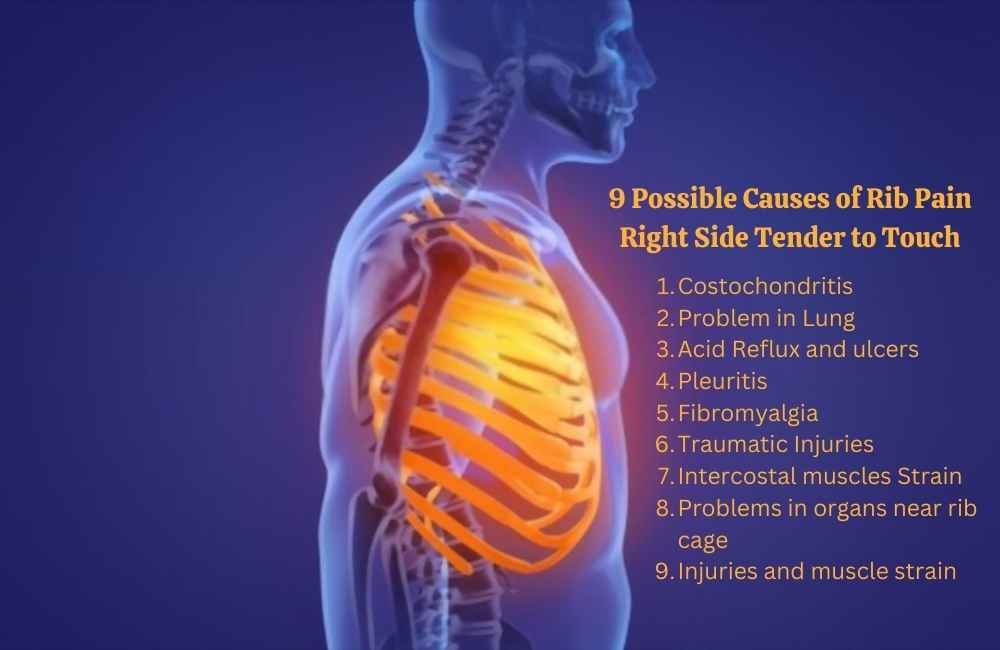
Cause 1 of 9: Costochondritis
This is the most common cause of rib pain right side tender to touch. The name ‘costochondritis’ says all you need to know about this condition. ‘Costo’ refers to the bony portion of your ribs. And ‘chondro’ refers to the cartilage attached to the rib. These are the cartilages that connect the front part of your bony ribs to the sternum.
Doctors use the suffix ‘itis’ to indicate inflammation. So, costochondritis is the inflammation of the costal cartilages. As you’ve read, these cartilages connect your breast bone to the ribs. And they are just beneath your skin. So, any inflammation here will cause rib pain which is tender to the touch.
Specific arthritis, virus, and situations like tuberculosis create this condition. Trauma to the chest and strain due to heavyweights lifting also trigger the causes of Costochondritis.
People diagnosed with Costochondritis usually experience pain across the upper rid. But in severe cases, the pain can run through the back and the abdomen. The pain can be severe to mild and tender to touch depending on the density of the pain.
Cause 2 of 9: Lung Problem
Various lung diseases can be the cause of rib cage pain. These include pneumonia, bronchitis, and lung cancer. In these conditions, the lung tissue and pleura are affected. And this might cause rib pain.
Lung cancer can be fatal. So, you should be on the lookout for its symptoms. These include Chest pain, cough mixed with blood, breathing difficulties, pain under the right rib when breathing, and coughing.
Though the majority of death numbers are more in lung cancer compared to others, early-stage treatment can cure it. So, if you have any of these symptoms, see a doctor immediately.
Pulmonary embolism can cause pain too. Here, blood clots from the legs can travel up to the lungs through the veins. This can make you feel intense chest pain.
Cause 3 of 9: Digestive issues
Heartburn due to Gastroesophageal reflux diseases can make you feel pain in the chest and ribs. You’ll also experience bloating and nausea. The pain can get worse after heavy meals.
In more serious cases, you might develop gastritis and peptic ulcers. These ulcers in the stomach lining can make you suffer from these terrible symptoms like vomiting with blood, and sudden severe abdomen pain. In this case, look for medical help without any delay.
Related Articles:
- Is Tea Acidic? 5 Non-acidic Alkaline Tea for You!
- Are pears acidic? 5 Reasons to add pears in your diet
- Are Apples Acidic? Apples for Acid Reflux [Good or Bad]
- Are Cherries Acidic? Cherries and GERD [Good or Bad]
Cause 4 of 9: Pleuritis
Pleuritis is an inflammation of the pleura. The pleura is a thin double-layered membrane surrounding the lungs. This membrane separates the lungs from the chest wall. This allows your lungs to expand and contract with minimum friction.
In pleuritis, rubbing those inflamed lines can create real deal pain in the chest. Patients get normal within two to 12 days on their own. That’s why you don’t need to worry about which doctor to consult for rib cage pain in this case. However, if the pain is too severe, you might opt to see a doctor.
Cause 5 of 9: Fibromyalgia
Fibromyalgia is a chronic condition presenting with burning, stabbing, or throbbing rib pain. Study shows that women are more likely to get this condition.
Though Fibromyalgia is a very common cause of rib pain, it is hard to treat and diagnose. Rib cage and sometimes chest pain, fatigue, morning stiffness, and mental fog are the symptoms to look for.
Cause 6 of 9: Traumatic Injuries
Trauma to the rib cage can give you serious rib pain on the left side or right side. Breakage, bruises, and even broken ribs due to falling while running on the ground, or car accidents can be the causes.
Swelling and sore pain while touching are the symptoms of traumatic rib injuries. So, if you are wondering, what makes ribs sore to touch? It’s probably an injury.
Cause 7 of 9: Intercostal muscles Strain
There are intercostal muscles inside our rib cage. These muscles can get strained due to heavy physical activities and injuries.
It can cause rib pain and tenderness in the affected area.This acute pain can get worse while deep breathing, or bending over.
You can face back rib pain even for a simple reason like wrong posture and exercise.
Cause 8 of 9: Problems in organs near the rib cage
Problems related to areas near the rib cage like gallstones, liver, kidney, or pancreatitis can lead to referred rib pain. Pain around the ribs and back symptoms can be an underlying situation for cardiac issues.
The pain under the right rib cage when bending over or doing household chores can be a heart attack indicator. Consult a doctor without any delay.
Cause 9 of 9: Problems in the ribs themselves
Some diseases affect the bones of your body. The common one is osteoporosis. In this condition, the calcium of your bones gradually decreases and makes your bones weaker.
Osteoporosis doesn’t cause any bone pain. However, it can make the bones brittle. So, they can fracture easily, sometimes even without trauma. So, if you had osteoporosis, then you might develop rib pain due to bone injury.
Different types of cancers can affect the bone too. Sometimes, these can cause rib cage pain too. But there will be other symptoms as well. But these are quite rare.
When to seek medical help for rib pain?
Rib pain could be an underlying symptom of conditions like heart attack and severe injuries. If you are thinking that you can get away without a doctor’s help, then you are wrong.
Seek medical help right away If you have any accidents or injuries. Minor accidents like falling or strain from over-exercising can lead to major damage.
Though in some cases you might get better with time. But if you are doubting any of the following symptoms, then take immediate action without further delay.
- Sharp pain while breathing or moving
- Shortage of breath
- High fever and loss of appetite
- The pain gets worse at night
- Pain traveling through the shoulder to arm
- Severe leg pain
- Light-colored stool or yellowish urine
- Cough mixed with blood
- Sudden weight loss
Rib cage pain treatments
Rib pain right side tender to touch treatment depends on the cause of the pain. However, to reduce pain, doctors use two types of methods. Have a look-
Pain due to Costochondritis
In the case of Costochondritis which means rib cartilage inflammation, the doctor can use a cold compress to reduce that and suggest over-the-counter medicines.
If the pain isn’t significant, then they might prescribe you anti-inflammatory medicines like NSAIDs. Other treatments involve injecting steroids into the affected spot.
Pain due to bone cancer
The doctor will run a couple of tests and apply different procedures to bone cancer patients. Because treatment for this depends on the origin and type of cancer.
Bone cancer can spread from the rib as well as other parts of your body. So after the determination of the actual origin, the doctor might suggest a removal surgery or biopsy of abnormal growths.
If the surgery radiates any risk factors or is impossible for you, then your doctor may perform chemotherapy or radiation therapy to shrink them first to do the surgical removal later on.
7 Prevention ways of rib cage pain
Though some advice can help you to prevent rib pain, remember to consult a doctor before taking any initiative. If you are looking for how to prevent rib cage pain at home, then your doctor might suggest:
- Take your medicines within time.
- Do a little stretching warm-up to strengthen your muscles before lifting heavy weights or any exercises.
- If you have a smoking habit, try to quit it to avoid cancer and lung issues that can trigger rid cage pain.
- Sanitize your hands frequently to prevent germs from getting into the body and give you diseases that can cause rib pain.
- Take care of yourself at home according to the doctor’s advice. Like, Taking an ice bag to injuries and showering with lukewarm water to soothe the pain.
- If you are experiencing rib pain because of internal injuries, muscle strain, or rib fracture, then give your body proper rest for a healthy recovery.
- Have a proper conversation before taking any steps.
Also, health screening is another best way to stay healthy and get actual health conditions before getting worse.
Conclusion
Rib pain at night or anytime can be a huge obstacle for you to finish your day-to-day task. In severe cases, It’s difficult to move or even breathe while having pain.
Whether the pain is due to serious injuries, inflammation, or pulled muscles, don’t try anything at home without consulting a doctor. Hope this article was helpful to you.
Related Posts
Subscribe for New Racipies
Get mental health tips, updates, and resources delivered to your inbox.