
Are Longans Acidic? “Dragon Eye” Fruit pH

Medically reviewed by Jaclyn Weiner, RD, RDN, MEd, MS Updated Date: October 14, 2026
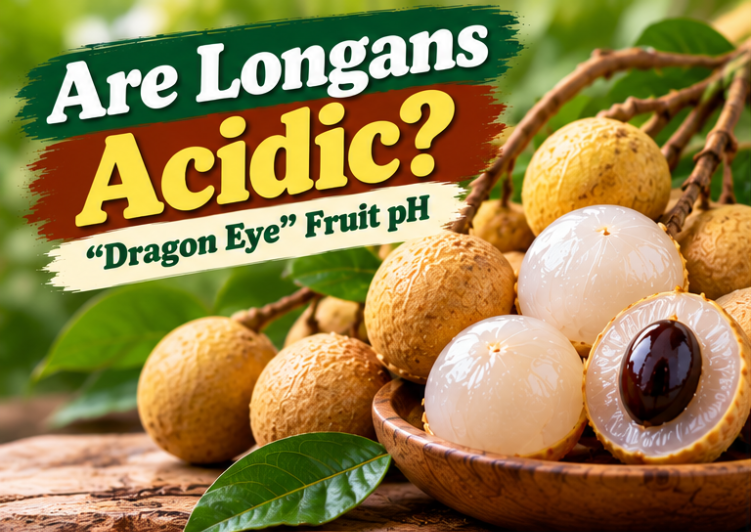
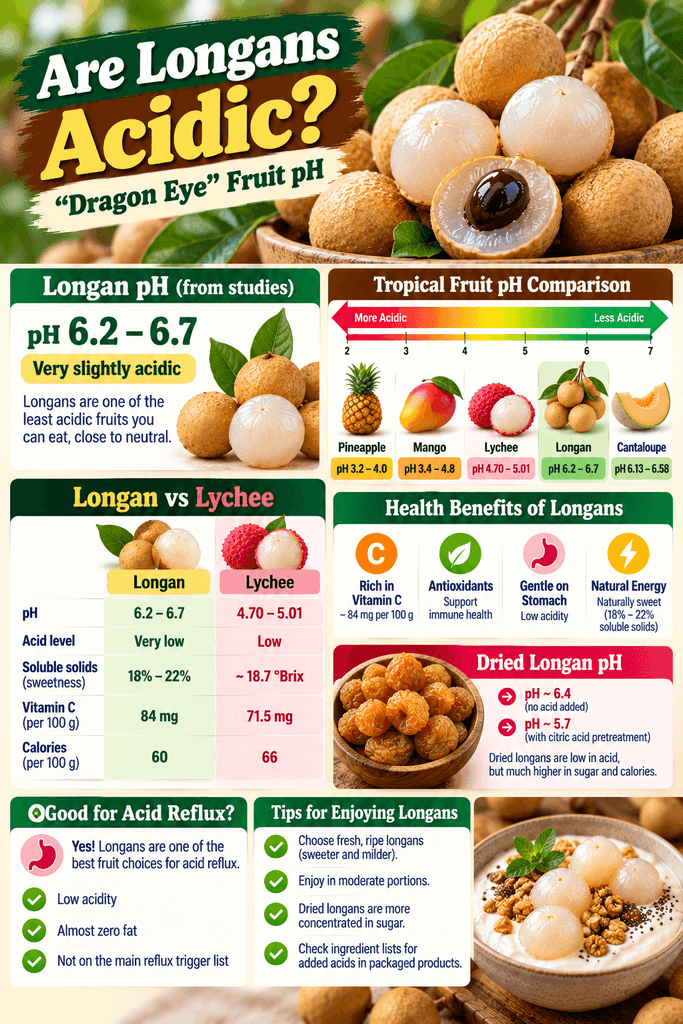
Longans are barely acidic at all. They’re one of the least acidic fruits you can eat. The University of California’s postharvest program reports that longan has low titratable acidity and a pH of about 6.2 to 6.7 (Kader, UC Davis Postharvest Center). That’s close to neutral (pH 7) and in the same range as cantaloupe and avocados. It also makes longans noticeably less acidic than their close cousin, the lychee (pH 4.70 to 5.01).
If you have acid reflux, sensitive teeth, or a touchy stomach, longans are one of the gentlest fruit choices out there. This guide explains longan pH, how fresh and dried longans compare, where longans rank among other fruits, and how to enjoy them.
Key Takeaways
- Longans are only very slightly acidic, with a pH of about 6.2 to 6.7, close to neutral.
- They’re less acidic than lychees, which measure about pH 4.70 to 5.01.
- Their sweetness comes from sugar, not low acid alone. Longans contain about 18% to 22% soluble solids (mostly sugar).
- Dried longans are also low in acid (about pH 6.4 in one study) but are about 5 times more concentrated in sugar and calories.
- They’re one of the best fruits for acid reflux, though their sugar content means portions still matter.
- Fresh longans are rich in vitamin C, with about 84 mg per 100 g.
Are Longans Acidic? The Short Answer
Barely. Technically, anything with a pH below 7 is acidic, so longans fall just inside that line. But at about pH 6.2 to 6.7, they’re close to neutral, about as acidic as cantaloupe or avocado.
The FDA’s widely used pH table doesn’t list longan (FDA), so here’s what other sources report:
| Longan sample | pH | Other acidity notes | Source |
| Fresh longan | 6.2–6.7 | “Titratable acidity is low” | Kader, UC Davis |
| Dried longan, no acid pretreatment | 6.4 | Not measured | Tassanaudom & Kengkhetkit, 2009 |
| Dried longan, dipped in citric acid | 5.7 | Acid was added during processing | Tassanaudom & Kengkhetkit, 2009 |
Values vary with cultivar, ripeness, and processing. We found few published pH measurements for longan, so these figures come from a limited number of sources.
Notice the last row: when dried longans were pretreated with citric acid to improve their color, their pH dropped to 5.7. Some commercial dried or canned longan products may include added acids, so check the ingredient list if you’re very acid-sensitive.
Longan vs Lychee: Which Is More Acidic?
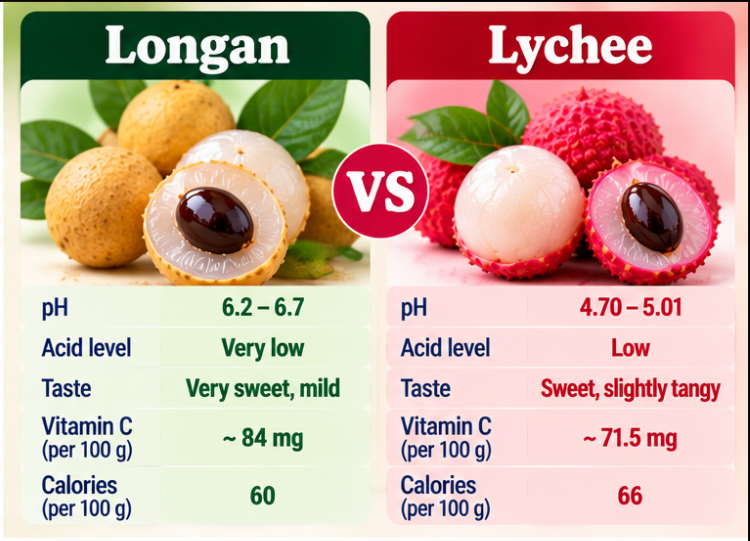
Longans and lychees are close relatives, and they look similar inside: translucent white flesh around a shiny dark seed. But their acidity is noticeably different.
| Longan | Lychee | |
| pH | About 6.2–6.7 | 4.70–5.01 |
| Acid level | Very low, close to neutral | Low |
| Soluble solids (sweetness) | About 18%–22% | About 18.7 °Brix in one Indian study |
| Vitamin C (per 100 g) | 84 mg | 71.5 mg |
| Calories (per 100 g) | 60 | 66 |
Sources: longan pH and soluble solids from UC Davis; lychee pH from the FDA; lychee soluble solids from Singh et al., 2013; nutrition from USDA FDC 169089 and 169086.
A pH difference of about 1.5 units means lychee is roughly 30 times more acidic than longan, since each pH step is a tenfold change. Both are gentle fruits, but longan is the milder of the two. Read our full guide to lychee acidity for more on its malic acid content and safety tips.
Why Do Longans Taste So Sweet?
Longans have a sweet, musky, almost honey-like flavor. That comes from two things working together:
- Very little acid. UC Davis describes longan’s titratable acidity as low (Kader, UC Davis), so there’s almost no tartness to balance the sugar.
- Plenty of sugar. Soluble solids range from about 18% to 22%, and UC Davis suggests a minimum of 20% as a sign of harvest maturity (Kader, UC Davis). University of Florida describes the pulp as “flavorful and sweet with 12-21% soluble solids” (Crane et al., UF/IFAS FC49).
With so little acid, longans taste purely sweet rather than sweet-tart like mangoes, pineapple, or apricots.
How Longans Compare to Other Fruits
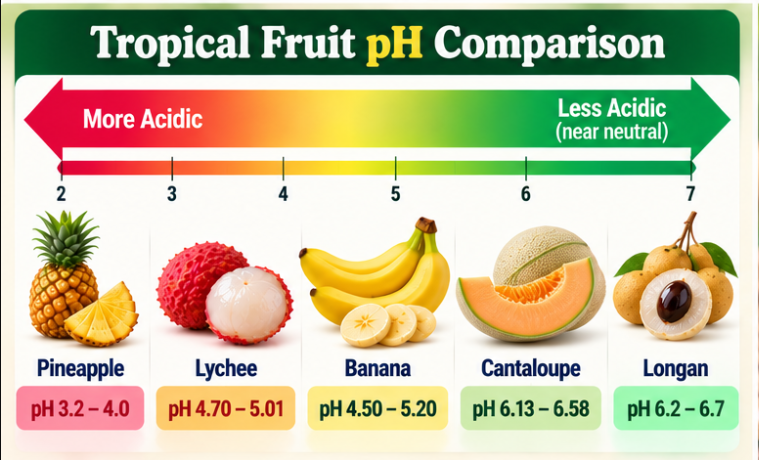
Here’s where longans fall on the pH scale compared with other fruits (FDA):
| Fruit | Approximate pH |
| Lemon juice | 2.00–2.60 |
| Passion fruit pulp (studies) | About 2.4–3.2 |
| Pineapple | 3.20–4.00 |
| Mangoes, ripe | 3.40–4.80 |
| Guava, fresh (studies) | About 3.7–4.2 |
| Persimmons | 4.42–4.70 |
| Bananas | 4.50–5.20 |
| Lychee | 4.70–5.01 |
| Papaya | 5.20–6.00 |
| Watermelon | 5.18–5.60 |
| Melons, honeydew | 6.00–6.67 |
| Cantaloupe | 6.13–6.58 |
| Longan (UC Davis) | About 6.2–6.7 |
| Avocados | 6.27–6.58 |
Source: FDA, Approximate pH of Foods and Food Products; longan from UC Davis; passion fruit and guava from published studies.
A few takeaways:
- Longans are at the very bottom of the fruit acidity scale, alongside cantaloupe, honeydew, and avocados.
- They’re milder than other low-acid favorites like bananas, lychees, dragon fruit, and persimmons.
- They’re far gentler than tangy tropical fruits like passion fruit, pineapple, guava, and starfruit.
For the full picture, see our complete guide to acidic foods.
Fresh vs Dried Longans
Dried longans, sometimes sold as “dragon eye” fruit in Asian markets, are popular in snacks, teas, and desserts. University of Florida notes that in other producing countries, longans are commonly dried and canned (UF/IFAS FC49).
| Per 100 g | Fresh longans | Dried longans | About how many times more |
| Water | 82.8 g | 17.6 g | — |
| Calories | 60 | 286 | about 4.8× |
| Carbohydrates | 15.1 g | 74 g | about 4.9× |
| Vitamin C | 84 mg | 28 mg | about 3× less |
| Potassium | 266 mg | 658 mg | about 2.5× |
| pH | About 6.2–6.7 | About 6.4 (no acid added) | similar |
Sources: USDA FoodData Central, Longans, raw (FDC 169089) and Longans, dried (FDC 169907); pH from UC Davis and Tassanaudom & Kengkhetkit, 2009. Multiples are our own rounded calculations.
What this means:
- Dried longans stay low in acid. In the Thai study, dried longans with no acid pretreatment measured pH 6.4, about the same as fresh (Tassanaudom & Kengkhetkit, 2009).
- But they’re very concentrated. Drying removes most of the water, so dried longans pack about 5 times more calories and carbohydrates per gram. The same study measured soluble solids of 70 to 72 °Brix in dried longans, compared with about 18% to 22% in fresh fruit.
- Vitamin C drops. Fresh longans have 84 mg per 100 g, but dried longans have only about 28 mg, even though everything else is concentrated.
We see the same concentration pattern with other dried fruits, like dried apricots and dates. For acid reflux, dried longans are still low in acid, but small portions are wise because of the sugar and calorie load.
Are Longans Good for Acid Reflux?
For most people, longans are an excellent fruit choice for reflux. They aren’t on the National Institute of Diabetes and Digestive and Kidney Diseases (NIDDK) list of foods that may worsen reflux, which includes citrus fruits, tomatoes, alcohol, chocolate, coffee and caffeine, high-fat foods, mint, and spicy foods (NIDDK). They’re also nearly neutral in pH and very low in fat.
Reflux triggers still vary from person to person. The American College of Gastroenterology’s 2022 guideline recommends that people with GERD identify their own triggers and avoid eating within 2 to 3 hours of bedtime (Katz et al., 2022).
Tips for eating longans with reflux

- Choose fresh longans when you can. They’re lower in sugar and calories per bite than dried.
- Keep dried longan portions small, since they’re much more concentrated.
- Pair them with other gentle foods, like oatmeal, Greek yogurt, or cottage cheese.
- Use longans as a swap for sharper fruits like pineapple, citrus, or passion fruit in fruit salads and smoothies.
- Check labels on canned or dried longans for added citric acid or heavy syrup.
- Eat them earlier in the day. NIDDK suggests eating meals at least 3 hours before lying down if you have nighttime symptoms (NIDDK).
For a broader list, see our guide to foods to avoid with GERD. If you have heartburn more than twice a week, trouble swallowing, or symptoms that don’t improve, talk with your doctor.
Longans, Teeth, and Gastritis
Teeth: Longans are nearly neutral in pH, so they’re one of the gentlest fruits for tooth enamel. Their sugar is still worth keeping in mind, especially with sticky dried longans. The American Dental Association recommends eating acidic foods as part of a meal, rinsing with water or having milk or cheese afterward, and waiting about an hour before brushing (American Dental Association). The same habits help with sugary snacks. Our article on whether apples are good for your teeth covers similar questions.
Gastritis: Very low-acid fruits are usually the easiest to tolerate with gastritis, so fresh longans are a reasonable fruit to try in small amounts. Our 7-day meal plan for gastritis has more gentle meal ideas.
Longan Nutrition
Per 100 grams, fresh longans provide (USDA FDC 169089; UF/IFAS FC49):
| Nutrient | Per 100 g |
| Water | 82.8 g |
| Calories | 60 |
| Carbohydrates | 15.1 g |
| Fiber | 1.1 g |
| Protein | 1.3 g |
| Fat | 0.1 g |
| Vitamin C | 84 mg |
| Potassium | 266 mg |
| Copper | 0.17 mg |
| Riboflavin | 0.14 mg |
A few highlights:
- Vitamin C: At 84 mg per 100 g, a single 100-gram serving covers most or all of the adult Recommended Dietary Allowance of 75 to 90 mg per day (NIH Office of Dietary Supplements).
- Potassium: 266 mg per 100 g.
- Low fiber, mostly sugar: Longans have only about 1.1 g of fiber per 100 g, and most of their carbohydrate is sugar. If you’re managing blood sugar, keep portions moderate. Our guide on whether apples are good for diabetics covers how to think about fruit and blood sugar.
Storing longans
University of Florida notes that longans have a relatively short shelf life at room temperature, but you can keep them in plastic bags in the refrigerator for 5 to 7 days (UF/IFAS FC49).
Acid-Smart Ways to Enjoy Longans
Fresh longans are easy to eat: crack the thin shell, pop out the translucent fruit, and discard the seed. Here are a few ideas:
- Smoothies: Blend peeled, seeded longans into our fruit yogurt shake for natural sweetness without added acid.
- Breakfast bowls: Top oatmeal or yogurt with fresh longans and our pumpkin pie spice granola.
- Creamy desserts: Serve longans with our whipped ricotta with mixed berries or a scoop of ginger ice cream.
- Tropical treats: Chop a few longans into our tropical dream rice krispie treats.
- Dried longan snacks: Add a few chopped dried longans to trail mix or oatmeal, but keep the portion small.
The longan swaps haven’t been tested in our kitchen, so adjust to taste.
Kitchen tip: Remove the seed before serving longans to young children, and cut the fruit into small pieces.
Frequently Asked Questions
Are longans acidic or alkaline?
Longans are only very slightly acidic. UC Davis reports a pH of about 6.2 to 6.7, which is close to neutral. That makes them one of the least acidic fruits.
Are longans less acidic than lychees?
Yes. Longans measure about pH 6.2 to 6.7, while the FDA lists lychee at 4.70 to 5.01. That means lychee is roughly 30 times more acidic than longan.
Are longans good for acid reflux?
For most people, yes. They’re nearly neutral in pH, low in fat, and not on NIDDK’s list of common reflux triggers. Watch portions, especially with dried longans.
Are dried longans acidic?
Not much. One study found dried longans measured pH 6.4 without any acid pretreatment, but 5.7 when dipped in citric acid during processing. Dried longans are also much higher in sugar and calories per gram.
Why are longans called “dragon eye”?
The name comes from the fruit’s appearance. When you peel a longan, the dark seed showing through the translucent white flesh looks like an eye [VERIFY: etymology is widely reported but not from a cited source].
Are longans healthy?
Yes, in reasonable amounts. Fresh longans are rich in vitamin C (84 mg per 100 g), low in fat, and hydrating. They’re also fairly high in natural sugar and low in fiber.
How should you store longans?
Keep fresh longans in plastic bags in the refrigerator, where they’ll last about 5 to 7 days, according to University of Florida.
The Bottom Line
Longans are barely acidic, with a pH of about 6.2 to 6.7, close to neutral. They’re less acidic than lychees, bananas, and nearly every other fruit, and they sit in the same group as cantaloupe and avocados. Their honey-like sweetness comes from lots of sugar and very little acid.
For people with acid reflux, sensitive teeth, or a touchy stomach, fresh longans are one of the gentlest fruits you can choose. Just keep portions sensible, especially with dried longans, which are about 5 times more concentrated in sugar and calories.
Keep exploring with Are Lychees Acidic?, Are Dragon Fruits Acidic?, Are Bananas Acidic?, or our complete guide to acidic foods.
Medical disclaimer: This article is for general information only and isn’t a substitute for professional medical advice. If you have frequent heartburn, GERD, diabetes, or ongoing digestive symptoms, talk with your doctor or a registered dietitian.
References
- Kader AA. Longan: Recommendations for Maintaining Postharvest Quality. UC Davis Postharvest Research and Extension Center.
- Tassanaudom U, Kengkhetkit N (2009). The color attribute improvement of dried longans. NU Science Journal 6(S1):114–122. PDF
- Crane JH, Balerdi CF, Sargent S, Maguire I. Longan Growing in the Florida Home Landscape (FC49). UF/IFAS Extension.
- USDA FoodData Central. Longans, raw (FDC 169089); Longans, dried (FDC 169907); Litchis, raw (FDC 169086).
- Singh A, et al. (2013). Physico-chemical changes in litchi cv. Rose Scented. Indian J. Hortic. 70(3):328–332. PDF
- U.S. FDA. Approximate pH of Foods and Food Products.
- NIH Office of Dietary Supplements. Vitamin C Fact Sheet.
- NIDDK. Eating, Diet & Nutrition for GER & GERD.
- Katz PO, et al. (2022). ACG Clinical Guideline for GERD. doi:10.14309/ajg.0000000000001538
- American Dental Association. Dietary Acids and Your Teeth.
Related Posts


Subscribe for New Racipies
Get mental health tips, updates, and resources delivered to your inbox.
Are Red Apples Acidic? Exploring Red Apples and Acid Reflux


Apples are a beloved fruit worldwide, celebrated for their crisp texture, natural sweetness, and numerous health benefits. However, when it comes to their acidity and potential effects on digestive health, especially for individuals prone to acid reflux, questions often arise. Are red apples acidic? Can they help or worsen acid reflux symptoms? Let’s dive deep into the acidity of red apples, their nutritional benefits, and their impact on acid reflux management.
Understanding the Acidity of Red Apples
What Makes Red Apples Acidic? The Role of Malic Acid
Red apples, like all apple varieties, are mildly acidic. Their acidity stems primarily from malic acid, a natural compound responsible for the fruit’s tangy flavor. Malic acid, along with smaller amounts of ascorbic acid (Vitamin C), contributes to apples’ overall pH, which typically ranges between 3.3 and 3.9. This places them on the acidic side of the pH scale, which spans from 0 (highly acidic) to 14 (alkaline).
Interestingly, malic acid has a dual role. While it makes apples acidic, it also provides health benefits, including improved energy production and reduced fatigue. Furthermore, the acid content decreases as apples ripen, making fully ripened red apples slightly less acidic compared to greener varieties.
Comparing Red Apples and Green Apples in Acidity
According to the research published in the International Journal of Pharmaceutical Science and Research, when considering acidity, not all apples are created equal. Green apples, such as Granny Smith, are notably more acidic, with a pH closer to 3.2, compared to red apples like Red Delicious or Fuji. This difference in acidity makes red apples a more stomach-friendly choice, particularly for individuals managing conditions like gastroesophageal reflux disease (GERD)
For those with sensitive stomachs or acid reflux, opting for sweeter apple varieties is often advised. Sweet apples generally have lower acidity and higher sugar content, which can help mask their tartness and reduce the perception of sourness.
Author Tip: Are Apples Acidic?
Can Red Apples Trigger Acid Reflux Symptoms?
How Red Apples Affect People with Acid Reflux
Acid reflux, commonly known as heartburn, occurs when stomach acid flows back into the esophagus, causing discomfort. While red apples are acidic, their effect on acid reflux is not straightforward. For most individuals, red apples are considered a reflux-friendly food due to their natural fiber content and relatively low acid levels compared to other fruits like oranges or lemons.
Some studies suggest that the fiber in apples helps regulate digestion and prevent acid reflux episodes by promoting proper stomach emptying.
However, the mild acidity of apples may irritate those with heightened sensitivity to acidic foods, so moderation and variety in diet are key.
Red Apples vs. Processed Apple Products (Juice, Sauce, etc.)
It’s worth noting that while fresh red apples are generally well-tolerated, processed apple products like juice or applesauce can be less friendly for individuals with acid reflux. Apple juice, for instance, often has a pH of 3.35 to 4.00, making it similarly acidic but lacking the beneficial fiber found in whole apples. Additionally, commercial juices may contain added sugars, which can exacerbate reflux symptoms.
Applesauce, though softer on the digestive system, is often less effective in managing reflux due to its lower fiber content. When incorporating apples into your diet for reflux relief, it’s best to consume them in their whole, unprocessed form.
Are Red Apples Right for You?
Red apples, with their mild acidity and abundant nutritional benefits, are an excellent dietary choice for most people, including those managing acid reflux. Their high fiber content, coupled with natural sweetness, makes them both a satisfying and gut-friendly option. However, individual tolerance varies, so it’s important to monitor how your body responds to apples and adjust your consumption accordingly.
By incorporating red apples into a balanced, low-acid diet and avoiding trigger foods, you can enjoy their numerous health benefits while keeping acid reflux symptoms at bay. Whether enjoyed fresh, baked, or blended into smoothies, red apples can be a delicious and healthful addition to your daily routine.
Benefits of Red Apples for Digestive Health
Why Sweet Apples Are Better for Acid Reflux?
Sweet red apple varieties, such as Gala, Fuji, and Red Delicious, are preferred for their milder acidity and higher natural sugar content. These characteristics make them less likely to trigger acid reflux symptoms compared to tart apples like Granny Smith. Sweet apples also stimulate saliva production, which helps neutralize stomach acid and reduce the likelihood of heartburn
How Apples Support Gut Health?
Beyond their effects on acid reflux, red apples are a powerhouse of nutrients that support overall digestive health. They are rich in dietary fiber, primarily in the form of pectin, which promotes regular bowel movements and maintains a healthy gut microbiome. Fiber also helps stabilize blood sugar levels, making apples an excellent snack choice for sustained energy.
Moreover, red apples are packed with antioxidants such as flavonoids and polyphenols, which reduce inflammation and may protect against chronic diseases, including those affecting the digestive tract.
Tips for Consuming Apples Safely with Acid Reflux
Best Times to Eat Apples for Reflux Prevention
Timing plays a crucial role in managing acid reflux symptoms. Consuming apples between meals rather than immediately after can minimize the risk of heartburn. Eating an apple on an empty stomach may also be beneficial, as it can help neutralize stomach acid before it becomes problematic. Conversely, pairing apples with heavy or acidic meals may increase the likelihood of reflux symptoms.
Portion Sizes and Preparation Tips
For those with acid reflux, portion control is essential. Eating a medium-sized apple (about one cup of chopped fruit) is typically sufficient to enjoy its benefits without overwhelming the digestive system. To further reduce acidity, peeling the apple can be helpful, as the skin contains a higher concentration of certain acids. However, this also removes some of the fiber, so it’s important to weigh the benefits based on individual tolerance.
Common Misconceptions About Apples and Acid Reflux
Are Apples Alkalizing Foods?
Despite their acidity, apples are sometimes classified as alkaline-forming foods. This confusion arises because, after digestion, apples leave behind alkaline residues in the body, which may help balance overall pH levels. However, this does not mean that apples neutralize stomach acid directly.
Do Apples Neutralize Stomach Acid?
While anecdotal evidence suggests that eating an apple can alleviate heartburn, scientific research is limited. Apples’ natural sugars and fibers may provide temporary relief by soothing the stomach lining and promoting proper digestion. However, their effectiveness as a standalone remedy varies from person to person.
Red Apples in a Balanced Diet for GERD Management
Pairing Apples with Other Low-Acid Foods
For individuals managing GERD (gastroesophageal reflux disease), incorporating red apples into meals can provide a gentle, fiber-rich option. However, pairing apples with other low-acid foods enhances their digestive benefits. Foods like bananas, oatmeal, and yogurt (low-fat or plant-based options) complement apples well, offering a soothing effect on the stomach lining while reducing the risk of triggering reflux.
For example, an apple-banana smoothie made with almond milk is an excellent reflux-friendly breakfast or snack. Adding a tablespoon of flaxseeds or chia seeds increases fiber and omega-3 fatty acids, further supporting gut health.
Foods to Avoid When Eating Apples
While apples are generally safe for most people with reflux, combining them with certain foods can negate their benefits. Acidic or fatty foods such as citrus fruits, fried items, or tomato-based sauces should be avoided alongside apples, as they may exacerbate symptoms. Similarly, high-sugar apple desserts, like pies or caramel apples, can trigger acid reflux due to their added sugars and fats.
If you enjoy baked apples, opt for a recipe that minimizes sugar and fat. Baking apples with a sprinkle of cinnamon and a drizzle of honey is a healthier alternative that preserves the fruit’s natural goodness.
Author Tip: 7 Kinds of Foods to Avoid with GERD
What Are Some Creative Ways to Eat Apples for Acid Reflux?
There are numerous ways to incorporate red apples into a reflux-friendly diet. Some ideas include:
- Slicing apples and pairing them with almond butter for a nutrient-rich snack.
- Adding chopped apples to oatmeal or yogurt for a satisfying breakfast.
- Baking apples with a sprinkle of cinnamon for a healthy dessert.
- Including thin apple slices in a turkey or chicken sandwich for added crunch and sweetness.
Frequently Asked Questions
Are All Red Apples Equally Acidic?
No, not all red apples have the same acidity level. Varieties such as Red Delicious and Fuji are sweeter and less acidic compared to more tart options like Pink Lady or Braeburn. These sweeter apples are better suited for individuals with sensitive stomachs or acid reflux issues.
How Do Apples Compare to Other Fruits for Acid Reflux?
Red apples are often considered one of the most reflux-friendly fruits due to their moderate acidity and high fiber content. In comparison, citrus fruits like oranges and grapefruits are highly acidic and may aggravate symptoms. Bananas and melons, being less acidic, are also excellent choices for those managing acid reflux.
Can Eating Apples Prevent GERD Symptoms?
While apples cannot cure GERD, they can play a role in symptom management. Their fiber content helps regulate digestion, and their low-fat nature prevents excessive pressure on the stomach. Including apples as part of a balanced diet with other GERD-friendly foods may help reduce the frequency and severity of symptoms.
Is Apple Juice Good for Acid Reflux?
Fresh apple juice, while nutritious, is not as effective as whole apples for managing acid reflux. Juice lacks fiber and is often more concentrated in sugars, which can worsen symptoms. For those who prefer juice, diluting it with water can reduce its acidity.
Do Cooked Apples Have the Same Benefits as Fresh Ones?
Cooked apples retain many of their nutritional benefits, including fiber, but they may lose some vitamin C during the cooking process. Baking or steaming apples without adding excessive sugar or fat can make them easier to digest and equally beneficial for acid reflux management.
Final Thoughts
Incorporating red apples into your diet is not just about managing acid reflux; it’s about embracing a wholesome food that supports overall well-being. As you experiment with different varieties and preparations, focus on balance, moderation, and pairing apples with complementary foods. With thoughtful choices, you can enjoy the best of what red apples have to offer.
Related Posts
Subscribe for New Racipies
Get mental health tips, updates, and resources delivered to your inbox.