
Are Sun-Dried Tomatoes Acidic? Concentrated pH Explained

Medically reviewed by Jaclyn Weiner, RD, RDN, MEd, MS Updated Date: October 10, 2026
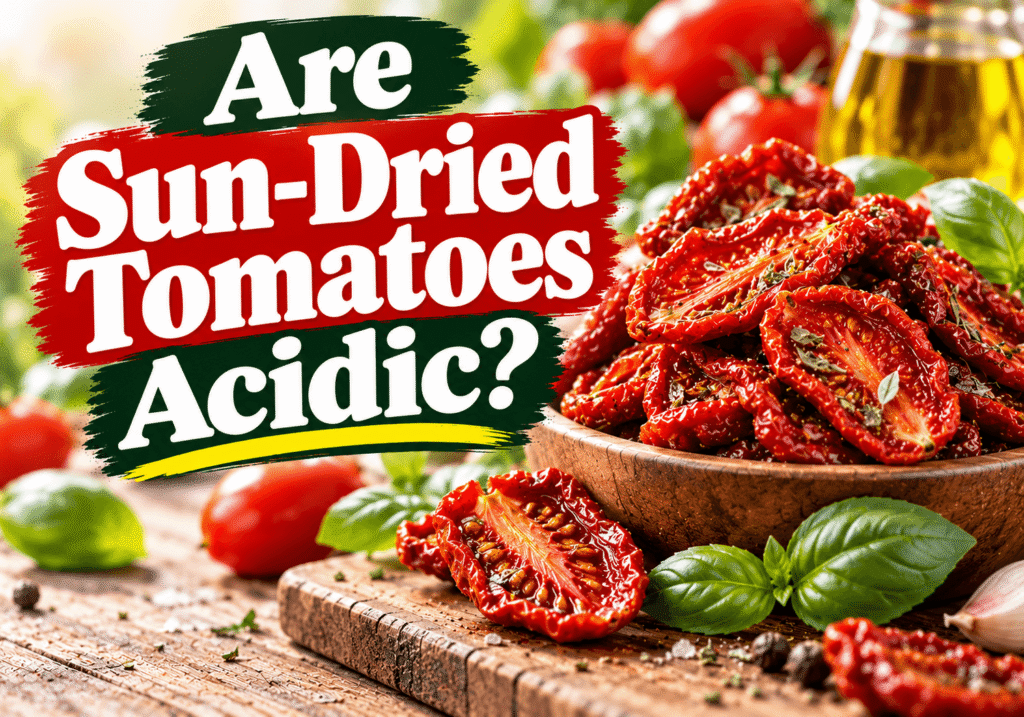
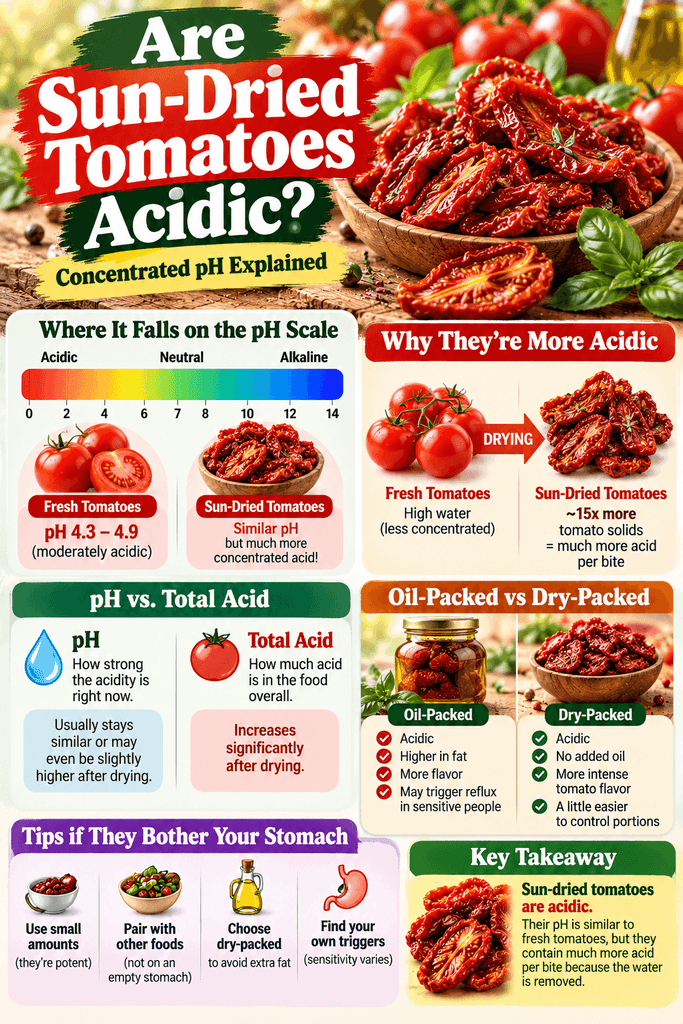
Yes, sun-dried tomatoes are acidic. They’re made from tomatoes, which have a pH of about 4.3 to 4.9 when fresh (FDA), and drying doesn’t remove their natural acids. But here’s the part most people get wrong: drying makes sun-dried tomatoes far more concentrated, not necessarily lower in pH. Removing water packs roughly 15 times more tomato into every bite, so you get much more acid per bite, even though the pH number itself may barely change.
That difference matters if you get heartburn, have sensitive teeth, or love oil-packed sun-dried tomatoes from a jar. In this guide, we’ll explain what “concentrated” really means for acidity, why pH and total acid aren’t the same thing, how oil-packed and dry-packed versions compare, and how to enjoy sun-dried tomatoes if your stomach is sensitive.
Key Takeaways
- Sun-dried tomatoes are acidic, because the citric and malic acids in fresh tomatoes stay behind when the water evaporates.
- Drying concentrates everything. Based on USDA data, sun-dried tomatoes hold about 15 times more tomato solids per gram than fresh tomatoes, including acids, sugar, potassium, and lycopene.
- Concentrated doesn’t automatically mean lower pH. Studies show dried tomatoes have higher total (titratable) acidity, but pH can stay similar or even rise slightly.
- For reflux, the dose matters more than the pH. A small amount of sun-dried tomato delivers a lot of tomato, often with oil, garlic, and herbs.
- Oil-packed sun-dried tomatoes add fat, another possible heartburn trigger, and homemade versions must be stored safely to prevent botulism.
- Small amounts go a long way. Using sun-dried tomatoes as a flavor accent is the easiest way to enjoy them with less acid.
New to tomato acidity? Start with our main guide, Are Tomatoes Acidic?, then come back here.
Are Sun-Dried Tomatoes Acidic? The Short Answer
Sun-dried tomatoes are acidic because tomatoes naturally contain citric acid and malic acid. When tomatoes are dried in the sun or a dehydrator, the water evaporates, but those acids don’t. They stay in the tomato, now packed into a much smaller, chewier piece.
There’s no official pH value for sun-dried tomatoes in the FDA’s widely used food pH table. The closest references are fresh tomatoes and concentrated tomato products (FDA):
| Tomato food | Approximate pH (FDA) |
| Ketchup | 3.89–3.92 |
| Tomato paste | 3.50–4.70 |
| Tomatoes, canned | 3.50–4.70 |
| Tomato juice | 4.10–4.60 |
| Tomato puree | 4.30–4.47 |
| Fresh tomatoes | 4.30–4.90 |
| Sun-dried tomatoes | Not listed |
Source: FDA, Approximate pH of Foods and Food Products.
Notice something interesting: tomato paste, which is cooked down to remove most of its water, has a pH range that overlaps heavily with fresh tomatoes. Concentrating tomatoes doesn’t send the pH plunging. To understand why, we need to look at what pH actually measures.
pH vs. Total Acid: Why “Concentrated” Is Confusing
When people hear that sun-dried tomatoes are “concentrated,” they often assume they must have a much lower pH, like lemon juice. That’s not quite how acidity works. There are two different ways to measure how acidic a food is:
1. pH: how strong the acidity is right now
pH measures how many free hydrogen ions are present in the food’s liquid. It’s a scale from 0 to 14, where lower numbers are more acidic and each step is a tenfold change. pH tells you how sharp or “strong” the acidity is at that moment.
2. Titratable acidity: how much acid there is in total
Titratable acidity measures the total amount of acid in a food, including acid that isn’t currently free. Food scientists measure it by slowly adding a base until all the acid is neutralized. It tells you how much acid a food contains overall, which is closer to what people mean by “how much acid am I eating?”
Why drying changes one more than the other
Tomatoes contain natural buffers, compounds that resist changes in pH. In a study of tomato acids, researchers found that potassium was linked to acidity, while phosphorus helped buffer the fruit (Mahakun et al., 1979). When you remove water, you concentrate the acids, but you also concentrate those buffers. That’s one reason the pH doesn’t simply drop in step with the water loss.
Research on dried tomatoes backs this up:
- Total acid goes up. A 2012 study comparing drying methods found that dried tomato slices had higher titratable acidity than fresh slices (Owusu et al., 2012).
- pH doesn’t necessarily go down. A 2024 study of plum tomatoes found that sun-dried and solar-dried samples had higher pH levels (slightly less acidic by pH) than the fresh control samples (Ibraheem and Bakori, 2024).
So the honest answer to “are sun-dried tomatoes more acidic than fresh tomatoes?” is: they contain more acid per bite, but their pH isn’t necessarily lower. For your stomach and teeth, the amount of acid you eat in one sitting usually matters more than the pH number on its own.
How Concentrated Are Sun-Dried Tomatoes?
USDA FoodData Central makes the concentration easy to see. Fresh red tomatoes are about 94.5% water, while plain sun-dried tomatoes are only about 14.6% water (USDA FDC 170457; USDA FDC 168567).
Here’s what that means per 100 grams:
| Per 100 g | Fresh red tomato | Sun-dried tomato | Roughly how many times more |
| Water | 94.5 g | 14.6 g | — |
| Calories | 18 | 258 | about 14× |
| Potassium | 237 mg | 3,427 mg | about 14× |
| Lycopene | 2,573 mcg | 45,902 mcg | about 18× |
| Fiber | 1.2 g | 12.3 g | about 10× |
| Sugars | 2.6 g | 37.6 g | about 14× |
| Vitamin C | 13.7 mg | 39.2 mg | only about 3× |
Sources: USDA FoodData Central, Tomatoes, red, ripe, raw (FDC 170457) and Tomatoes, sun-dried (FDC 168567). Multiples are rounded.
Most nutrients rise by about 14 times, matching the water loss. In other words, 100 grams of sun-dried tomatoes contains roughly the solids of about 1.5 kilograms (over 3 pounds) of fresh tomatoes. The tomato’s natural acids are concentrated in the same way.
Vitamin C is the exception. It rises only about 3 times, because vitamin C is easily damaged by heat and long storage (NIH Office of Dietary Supplements). Much of it is likely lost during long hours of drying.
What this means in real life
The concentration cuts both ways:
- A small amount of sun-dried tomato packs a big punch. Five or six pieces can contain the acid and flavor of a whole fresh tomato or more.
- But most people eat them in small amounts. You’re more likely to toss a tablespoon of chopped sun-dried tomatoes into pasta than to eat a whole bowl of them.
So per bite, sun-dried tomatoes are much “stronger” than fresh ones. Per serving, it depends entirely on how much you use.
Sun-Dried vs Fresh vs Other Tomato Products
How do sun-dried tomatoes compare with the other tomato foods you probably have in your kitchen?
| Tomato food | Water content | Acid per bite | Typical serving |
| Fresh tomato | Very high (about 94–95%) | Low | Large (slices, wedges) |
| Cherry tomatoes | Very high (about 92–93%) | Low to moderate | Medium (a handful) |
| Roma tomatoes | Very high (about 95%) | Low | Usually cooked into sauce |
| Tomato sauce | High | Moderate | Large (pasta, pizza) |
| Tomato paste | Low | High | Small (a spoonful) |
| Sun-dried tomatoes | Very low (about 15% plain; about 54% oil-packed) | High | Small (a few pieces) |
Water content from USDA FoodData Central entries for each food where available. “Acid per bite” is a general comparison based on concentration, not a lab measurement.
Sun-dried tomatoes behave a lot like tomato paste: intensely concentrated, used in small amounts, and very flavorful. A similar pattern applies to other dried fruits. For example, see our guide to dried apricots, where drying also concentrates natural fruit acids and sugars.
Oil-Packed vs. Dry-Packed Sun-Dried Tomatoes
You’ll find sun-dried tomatoes sold two ways: dry-packed (leathery pieces in a bag) and oil-packed (soft pieces in a jar of oil, often with herbs). Here’s how they differ.
| Per 100 g | Sun-dried (dry) | Sun-dried, packed in oil, drained |
| Calories | 258 | 213 |
| Water | 14.6 g | 53.8 g |
| Total fat | 3.0 g | 14.1 g |
| Fiber | 12.3 g | 5.8 g |
| Potassium | 3,427 mg | 1,565 mg |
Sources: USDA FoodData Central, Tomatoes, sun-dried (FDC 168567) and Tomatoes, sun-dried, packed in oil, drained (FDC 169384).
Is the oil acidic?
Plain oil isn’t acidic in the way tomatoes are. Oil doesn’t contain water, so pH doesn’t really apply to it. But oil-packed sun-dried tomatoes can still be relevant for acidity and reflux in a few ways:
- Added acid: Some jarred products include vinegar, lemon juice, or citric acid in the packing. Check the ingredient list.
- Fat: Oil adds fat, and the National Institute of Diabetes and Digestive and Kidney Diseases (NIDDK) lists fatty foods among possible reflux triggers, alongside tomatoes (NIDDK).
- Garlic and herbs: Many oil-packed products include garlic, which bothers some people with reflux.
If you’re acid-sensitive, dry-packed sun-dried tomatoes that you rehydrate in warm water may be the simpler choice. You control what goes in with them, and you can pour off the soaking water. If you use oil-packed tomatoes, drain them well and pat off extra oil.
Sodium
Salt content varies a lot between brands. Some sun-dried tomatoes are salted before drying, and oil-packed versions may be seasoned. USDA lists plain sun-dried tomatoes at 107 mg of sodium per 100 g and the oil-packed, drained version at 266 mg per 100 g, but many store brands contain more. Always check the Nutrition Facts label (USDA FDC 168567; USDA FDC 169384).
Sulfites
Some dried fruits and vegetables are treated with sulfites to preserve their color. The FDA requires sulfites to be declared on the label when a food contains 10 parts per million or more (University of Nebraska FARRP, citing 21 CFR 101.100). Sulfites aren’t an acid issue, but if you’re sensitive to them, read the ingredient list on dried tomato products.
Food Safety: Storing Sun-Dried Tomatoes in Oil
This is the most important safety point in the whole article. Homemade sun-dried tomatoes in oil can carry a botulism risk if they’re not stored correctly.
Oregon State University Extension explains that low-acid foods can carry Clostridium botulinum bacteria, and that oil creates an oxygen-free environment where the bacteria can grow (Oregon State University Extension). Their guidance for dried tomatoes in oil:
- Dry the tomatoes completely, until leathery or crisp, with no remaining moisture.
- If you pre-treat them, use only bottled lemon or lime juice. Other liquids can raise the pH.
- Refrigerate for up to 6 months, or freeze for longer storage. Cold storage is required for safety.
- If you add garlic or herbs, refrigerate and use within 4 days, or freeze.
Commercial oil-packed sun-dried tomatoes are made with tested processes. Follow the label’s storage instructions, and refrigerate them after opening if the label says so.
Even though tomatoes are acidic, don’t assume that makes homemade tomato-in-oil mixtures automatically safe. Tomatoes sit close to the pH 4.6 safety line, and garlic and herbs are low-acid foods. Our main tomato guide explains why tomatoes are a borderline food for safe canning and preserving.
Are Sun-Dried Tomatoes Bad for Acid Reflux?
They can be, especially in larger amounts. NIDDK lists tomatoes and tomato products among the foods that may make reflux symptoms worse (NIDDK). Sun-dried tomatoes are an especially concentrated tomato product, and oil-packed versions add fat as well.
But reflux triggers vary from person to person. The American College of Gastroenterology’s 2022 GERD guideline recommends that people identify their own triggers rather than avoiding every possible food, and avoid eating within 2 to 3 hours of bedtime (Katz et al., 2022).
Why sun-dried tomatoes may hit harder
- More tomato per bite. A couple of tablespoons of chopped sun-dried tomato can equal a whole fresh tomato.
- Oil and fat. Oil-packed versions add fat, another common trigger.
- Garlic, herbs, and chili. Often included in jars and recipes.
- Rich dishes. Sun-dried tomatoes often show up in creamy pastas, pizza, and pesto, which stack several triggers together.
Tips for enjoying sun-dried tomatoes with reflux
- Use them as a garnish, not a main ingredient. Start with 2 or 3 chopped pieces in a dish.
- Choose dry-packed and rehydrate them in warm water, then discard the soaking water.
- If you use oil-packed, drain and blot them with a paper towel.
- Pair them with low-acid foods like pasta, basmati rice, potatoes, or greens.
- Skip extra acidic ingredients in the same dish, such as balsamic vinegar or lots of lemon juice.
- Eat earlier in the day, at least 2 to 3 hours before bed.
- Keep a food diary to see whether sun-dried tomatoes bother you more than fresh ones.
For a broader list, see our guide to foods to avoid with GERD. If you have heartburn more than twice a week, trouble swallowing, or symptoms that don’t improve, talk with your doctor.
Gentler swaps for sun-dried tomatoes
If sun-dried tomatoes trigger your symptoms, these swaps can add similar color, sweetness, or savory depth:
- Roasted red bell peppers add sweetness and color to pasta, sandwiches, and dips.
- Roasted carrots or butternut squash bring natural sweetness to grain bowls.
- Black olives add a salty, savory bite to Mediterranean dishes.
- Toasted pine nuts add richness to pasta and salads.
- Mashed avocado works well in sandwiches where you might use sun-dried tomato spread.
Sun-Dried Tomatoes, Teeth, and Mouth Sores
Teeth: The American Dental Association says how often and how long your teeth are exposed to acid matters, and suggests eating acidic foods as part of a meal (American Dental Association). Sun-dried tomatoes are chewy and can cling to teeth, and they’re also high in natural sugar (about 37.6 g per 100 g, per USDA). Eat them with meals instead of snacking on them straight from the bag, and rinse with water afterward.
Mouth sores: Mayo Clinic lists spicy or acidic foods among the foods that can trigger canker sores in some people (Mayo Clinic). Concentrated, salty sun-dried tomatoes can sting a sore, so skip them until it heals.
Gastritis: People with gastritis often find concentrated, acidic, or oily foods uncomfortable. If that’s you, try small amounts or skip sun-dried tomatoes until symptoms settle. See our 7-day meal plan for gastritis for gentler ideas.
Sun-Dried Tomato Nutrition: The Upside of Concentration
Acidity aside, concentration also gives sun-dried tomatoes some impressive nutrition numbers. Here’s what USDA lists for 100 grams of plain sun-dried tomatoes (USDA FDC 168567):
| Nutrient | Per 100 g |
| Calories | 258 |
| Protein | 14.1 g |
| Carbohydrates | 55.8 g |
| Fiber | 12.3 g |
| Sugars | 37.6 g |
| Potassium | 3,427 mg |
| Iron | 9.1 mg |
| Niacin | 9.1 mg |
| Vitamin C | 39.2 mg |
| Lycopene | 45,902 mcg |
A few highlights:
- Lycopene: Sun-dried tomatoes are one of the most concentrated sources of lycopene, the red pigment in tomatoes. Lycopene from processed tomato products appears to be better absorbed than from fresh tomatoes. In one study, people absorbed about 2.5 times more lycopene from tomato paste than from fresh tomatoes when both meals contained oil (Gärtner et al., 1997). Sun-dried tomatoes in a little olive oil follow the same idea, though they weren’t tested in that study.
- Potassium and fiber: Even a small portion adds useful amounts.
- Calories and sugar: Because they’re concentrated, calories and natural sugar add up quickly if you eat a lot of them.
Since most people use sun-dried tomatoes in small amounts, think of them as a flavor booster that also adds a bit of nutrition, not a main vegetable.
How to Use Sun-Dried Tomatoes (Acid-Smart)
Sun-dried tomatoes bring a deep, sweet-tangy flavor to many dishes. If they agree with you, try them in these recipes from our kitchen:
- Summer Greek-style pasta: Add a few chopped sun-dried tomatoes for extra depth.
- Caprese salad: Mix a few sun-dried strips in with fresh tomatoes and mozzarella.
- Garlic rosemary spelt focaccia: Press a few pieces into the dough before baking.
- Pasta puttanesca: A small handful of sun-dried tomatoes intensifies the sauce. Save it for days your stomach feels fine.
- Broccoli rabe and egg pizza: Scatter a few slivers over the top.
- Ramps pesto: Blend in a couple of sun-dried tomatoes for a red-tinted pesto.
- Kale avocado salad: A few chopped pieces add sweetness and color.
Kitchen tip: To soften dry-packed sun-dried tomatoes, soak them in warm water for about 10 to 20 minutes until pliable, then drain. Using fresh water instead of the packing oil keeps the dish lighter.
Frequently Asked Questions
Are sun-dried tomatoes more acidic than fresh tomatoes?
They contain more acid per bite because the water has been removed, but their pH isn’t necessarily lower. Studies show dried tomatoes have higher total (titratable) acidity, while pH can stay similar or even rise slightly.
What is the pH of sun-dried tomatoes?
There’s no official FDA value for sun-dried tomatoes. Fresh tomatoes are about pH 4.3 to 4.9, and concentrated products like tomato paste range from 3.5 to 4.7.
Are sun-dried tomatoes bad for acid reflux?
They can be, especially in larger amounts or when packed in oil with garlic. Use small amounts, drain off the oil, pair them with low-acid foods, and avoid eating them late at night.
Are oil-packed sun-dried tomatoes more acidic?
Not necessarily. The oil itself isn’t acidic, but some jars include vinegar or citric acid, and the oil adds fat, which can trigger reflux. Check the ingredients and drain them well.
Are sun-dried tomatoes healthy?
Yes, in moderation. They’re rich in lycopene, potassium, fiber, and iron, but they’re also concentrated in calories and natural sugar, and some brands are high in sodium.
Are homemade sun-dried tomatoes in oil safe?
Only if stored correctly. Oregon State University Extension says to dry them fully, refrigerate them for up to 6 months or freeze them, and use mixtures with garlic or herbs within 4 days if refrigerated.
Can I reduce the acidity of sun-dried tomatoes?
You can make them gentler by soaking dry-packed tomatoes in warm water and discarding the soaking water, using smaller amounts, and pairing them with creamy or starchy foods. You can’t remove their natural acids completely.
The Bottom Line
Sun-dried tomatoes are acidic, and they’re far more concentrated than fresh tomatoes. Drying removes most of the water, packing roughly 15 times more tomato into every gram. That means more total acid per bite, even though the pH itself may not drop much, and some studies show it can even rise slightly.
For most people, sun-dried tomatoes are a delicious, nutrient-dense flavor booster. If you’re sensitive to acid, focus on how much you eat: use a few pieces as an accent, choose dry-packed or well-drained versions, avoid stacking them with other triggers, and eat them earlier in the day. And if you make your own sun-dried tomatoes in oil, follow safe storage rules every time.
Want to keep exploring? Read Are Tomatoes Acidic?, Are Roma Tomatoes Acidic?, Are Cherry Tomatoes Acidic?, or browse our complete guide to acidic foods.
Medical disclaimer: This article is for general information only and isn’t a substitute for professional medical advice. If you have frequent heartburn, GERD, stomach pain, or mouth sores that don’t heal, talk with your doctor or a registered dietitian.
References
- U.S. Food and Drug Administration, CFSAN. Approximate pH of Foods and Food Products. April 2007. Copy used: https://riverstonehealth.org/wp-content/uploads/FDA-Approximate-pH-of-Foods.pdf
- Owusu J, Ma H, Wang Z, Amissah A. Effect of drying methods on physicochemical properties of pretreated tomato (Lycopersicon esculentum Mill.) slices. Croatian Journal of Food Technology, Biotechnology and Nutrition. 2012;7(1–2):106–111. https://hrcak.srce.hr/index.php/clanak/126547
- Ibraheem KA, Bakori NA. Impact of various drying techniques on the nutritional components of plum tomato. Proceedings of the 3rd International Electronic Conference on Processes (MDPI), 2024. https://sciforum.net/paper/17920
- Mahakun N, Leeper PW, Burns EE. Acidic constituents of various tomato fruit types. Journal of Food Science. 1979;44(4):1241–1244. https://agris.fao.org/search/en/records/65df7afe4c5aef494fe2d0d4
- USDA FoodData Central. Tomatoes, sun-dried (FDC ID 168567). https://fdc.nal.usda.gov/fdc-app.html#/food-details/168567/nutrients
- USDA FoodData Central. Tomatoes, sun-dried, packed in oil, drained (FDC ID 169384). https://fdc.nal.usda.gov/fdc-app.html#/food-details/169384/nutrients
- USDA FoodData Central. Tomatoes, red, ripe, raw, year round average (FDC ID 170457). https://fdc.nal.usda.gov/fdc-app.html#/food-details/170457/nutrients
- NIH Office of Dietary Supplements. Vitamin C: Fact Sheet for Health Professionals. https://ods.od.nih.gov/factsheets/VitaminC-HealthProfessional/
- Raab C, Woodburn M. Herbs and Vegetables in Oil (SP 50-701). Oregon State University Extension, revised 2025. https://extension.oregonstate.edu/catalog/pub/sp-50-701-herbs-vegetables-oil
- Food Allergy Research & Resource Program (FARRP), University of Nebraska–Lincoln. Sulfites – USA (summarizing 21 CFR 101.100). https://farrp.unl.edu/sulfites-usa
- NIDDK. Eating, Diet, & Nutrition for GER & GERD. https://www.niddk.nih.gov/health-information/digestive-diseases/acid-reflux-ger-gerd-adults/eating-diet-nutrition
- Katz PO, Dunbar KB, Schnoll-Sussman FH, et al. ACG Clinical Guideline for the Diagnosis and Management of GERD. Am J Gastroenterol. 2022;117(1):27–56. https://doi.org/10.14309/ajg.0000000000001538
- American Dental Association, MouthHealthy. Dietary Acids and Your Teeth. https://www.mouthhealthy.org/all-topics-a-z/dietary-acids-and-your-teeth
- Mayo Clinic. Canker sore: Symptoms and causes. https://www.mayoclinic.org/diseases-conditions/canker-sore/symptoms-causes/syc-20370615
- Gärtner C, Stahl W, Sies H. Lycopene is more bioavailable from tomato paste than from fresh tomatoes. Am J Clin Nutr. 1997;66(1):116–122. https://pubmed.ncbi.nlm.nih.gov/9209178/
Related Posts
Subscribe for New Racipies
Get mental health tips, updates, and resources delivered to your inbox.
Are Barley Acidic? Barley and Acid Reflux

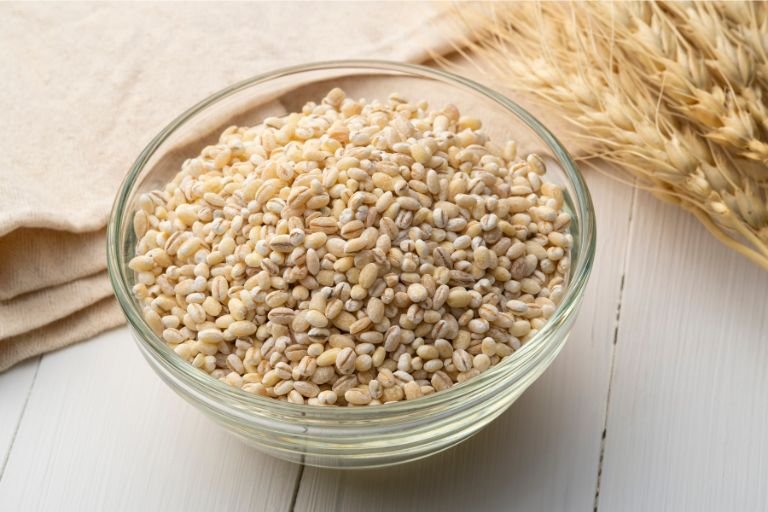
Barley, a highly nutritious and versatile grain, has been a dietary staple for thousands of years, thanks to its affordability, accessibility, and health benefits. Found in soups, salads, bread, and drinks like barley water, it’s a common addition to meals worldwide. But if you’re dealing with acid reflux or concerned about the acidity of foods in your diet, you may wonder: “Is barley acidic, and is it safe for people with acid reflux?”
Barley’s pH level, its effects on digestion, and its potential benefits for acid reflux make it a topic worth exploring. In this guide, we’ll discuss whether barley is acidic or alkaline, its nutritional profile, and practical ways to incorporate it into a reflux-friendly diet. By the end of this article, you’ll have a thorough understanding of how barley fits into your dietary plans and whether it can support your digestive health.
Is Barley Acidic or Alkaline?
Barley is classified as a mildly acidic to neutral food, with a pH level ranging from 5.5 to 6.5. This pH level places it in the low-acidity range, making it significantly less acidic than foods like citrus fruits, vinegar, or coffee, which have pH levels well below 4.
Because barley falls into the mildly acidic category, it is generally well-tolerated by most individuals, including those with acid reflux. When prepared simply—by boiling or steaming—it’s considered a “safe zone” food for reflux sufferers.
What Does the pH of Barley Mean for Acid Reflux?
Barley’s moderate pH, combined with its high fiber content and low fat levels, makes it easier on the stomach compared to highly processed or acidic foods. Foods with a neutral or slightly acidic pH are less likely to aggravate reflux symptoms, making barley a suitable option for those looking to manage heartburn and indigestion.
Related to Read: Are Brussels Sprouts Safe for Acid Reflux?
Nutritional Profile of Barley
Barley is packed with essential nutrients that make it a powerhouse grain for digestive health. Here’s a detailed breakdown of what makes barley so beneficial:
1. Rich in Fiber
Barley is one of the richest sources of dietary fiber, especially beta-glucan, a soluble fiber known for its digestive benefits. Fiber helps regulate bowel movements, promotes healthy gut bacteria, and reduces the frequency of acid reflux episodes by preventing overeating.
2. Packed with Vitamins and Minerals
Barley contains key vitamins and minerals such as:
- Magnesium: Helps relax the muscles of the esophagus and stomach, potentially reducing acid reflux.
- Selenium and Zinc: Support overall immunity and help repair damaged tissues, including those in the digestive tract.
- B Vitamins: Aid in energy production and improve digestive function.
3. Low in Fat
High-fat meals are one of the primary triggers of acid reflux, as they relax the lower esophageal sphincter (LES). Barley is naturally low in fat, making it a reflux-friendly grain.
4. High in Antioxidants
Barley contains antioxidants such as lignans and phenolic compounds, which reduce inflammation in the digestive tract and promote better gut health.
5. Contains Complex Carbohydrates
Barley’s slow-digesting carbohydrates provide sustained energy and stabilize blood sugar levels, which can indirectly help manage acid production in the stomach.
Can Barley Trigger Acid Reflux?
While barley is generally considered safe for people with acid reflux, individual reactions can vary. Here are a few factors that might influence whether barley triggers reflux:
1. Portion Size
Overeating—even foods that are otherwise safe—can put pressure on the stomach, leading to acid reflux. Stick to moderate portions of barley to prevent discomfort.
2. Individual Sensitivities
Barley is high in fiber, which can sometimes cause bloating or gas in individuals who are not used to it. These symptoms might mimic or exacerbate acid reflux. To avoid this, introduce barley gradually into your diet.
3. Preparation Methods
Fried or heavily seasoned barley dishes can aggravate acid reflux. Opt for boiled, steamed, or lightly seasoned preparations to minimize the risk.
4. Gluten Content
Barley contains gluten, so individuals with gluten intolerance or celiac disease should avoid it entirely.
Health Benefits of Barley for Acid Reflux Management
Barley isn’t just a safe option for reflux sufferers—it can actively promote digestive health. Here’s how:
1. Soothes the Digestive Tract
The soluble fiber in barley forms a gel-like substance in the stomach, which can coat and soothe the esophagus and stomach lining, reducing irritation caused by stomach acid.
2. Promotes Gut Health
The beta-glucans in barley act as prebiotics, feeding the healthy bacteria in your gut. A balanced gut microbiome is essential for reducing inflammation and improving digestion.
3. Reduces Acid Production
Barley’s slow-digesting carbohydrates help stabilize blood sugar levels and reduce the production of excess stomach acid.
4. Aids in Weight Management
Since being overweight is a major risk factor for acid reflux, barley’s high fiber and low-calorie content can support weight loss efforts, further reducing reflux symptoms.
How to Prepare Barley for Acid Reflux Relief?
Preparation matters when it comes to making barley safe for acid reflux. Follow these tips:
1. Cook It Simply
Boil or steam barley and avoid adding acidic or spicy ingredients like tomatoes, vinegar, or chili powder.
2. Pair with Alkaline Foods
Combine barley with alkaline vegetables like spinach, zucchini, cucumbers, or kale to balance the meal’s pH.
Related to Read: Are Salads Healthy?
3. Avoid High-Fat Additions
Skip adding butter, cream, or fried ingredients to barley dishes, as these can relax the LES and trigger reflux.
Reflux-Friendly Barley Recipes
Here are a few easy and nutritious recipes:
1. Barley Vegetable Soup
Combine cooked barley with carrots, celery, and a light vegetable broth for a comforting meal.
2. Barley Salad
Toss cooked barley with olive oil, cucumbers, parsley, and a sprinkle of flax seeds for added nutrition.
3. Barley Porridge
Cook barley with almond milk or oat milk, and top with bananas or honey for a reflux-friendly breakfast.
4. Barley Water
Simmer barley in water, strain, and drink the liquid. Barley water is known for its soothing properties.
Scientific Insights About Barley and Digestion
Scientific studies further highlight barley’s role in improving digestion:
- Gut Health: Research published in Nutrients (2019) shows that barley’s prebiotic beta-glucans improve gut health by promoting beneficial bacteria.
- Acid Reduction: Studies in Clinical Gastroenterology confirm that fiber-rich diets help regulate stomach acid levels, reducing GERD symptoms.
FAQs About Barley and Acid Reflux
1. Is barley safe for acid reflux?
Yes, barley is generally safe for acid reflux sufferers when consumed in moderate portions and prepared simply.
2. Does barley water help with acid reflux?
Yes, barley water can soothe the digestive tract and reduce acidity, making it a popular home remedy.
3. Is barley gluten-free?
No, barley contains gluten, so it’s not suitable for those with gluten intolerance or celiac disease.
4. Can I eat barley daily?
Yes, but start with small portions if you’re new to high-fiber foods.
5. Is barley better than rice for acid reflux?
Barley has more fiber and nutrients than white rice, making it a better choice for digestive health.
Final Thoughts
Barley is a mildly acidic grain that offers numerous health benefits, particularly for digestive wellness. Its high fiber content, low fat levels, and gentle acidity make it an excellent choice for people managing acid reflux. By incorporating barley into your meals in moderation and preparing it in reflux-friendly ways, you can enjoy its nutritional benefits without worrying about triggering symptoms.
Give barley a try—it’s a wholesome grain that can support your journey toward better digestive health.
Related Posts
Subscribe for New Racipies
Get mental health tips, updates, and resources delivered to your inbox.